
Salem spreads across both banks of the Willamette River. Most of the city lies in Marion County, while West Salem, across the river, is in Polk County. Mill Creek, Pringle Creek, Shelton Ditch and a handful of smaller streams wind through neighborhoods, and the Eola, Salem and Waldo hills frame the valley floor.
We don't do the restoration work ourselves; Fire & Water Energy runs a referral line. If a leak, flood or fire has hit your home or business, call (866) 937-3230 and we'll try to put you in touch with an independent restoration contractor who works in the area. Whether someone is available depends on local providers. Learn more on how it works and read our referral disclosure.
Creeks, cold snaps and record heat in the mid-Willamette Valley
Wikipedia puts Salem's yearly precipitation at a little over 40 inches, and roughly a sixth of it typically lands in December alone. November and January are close behind, while July is almost bone dry. Snow averages only a few inches and skips some years entirely, yet the record low is −12°F and the record high is 117°F, so the swings can be dramatic.
Marion County appears in several FEMA major disaster declarations since 2000: severe winter storms in 2004 (DR-1510), record and near-record snow in 2009 (DR-1824), a winter storm with flooding, landslides and mudslides in 2012 (DR-4055), wildfires and straight-line winds in 2020 (DR-4562), and a severe winter storm in 2021 (DR-4599). Fire is part of the local story too: the state capitol burned in 1855 and again in 1935.
Stopping leaks and drying out: water damage restoration in Salem
The usual culprits here follow the seasons. Late fall rains test roofs, gutters and downspouts; poorly graded lots let water pool against foundations and seep into crawlspaces. During an uncommon hard freeze, uninsulated pipes along exterior walls or under the house can split, and the leak often isn't noticed until the thaw.
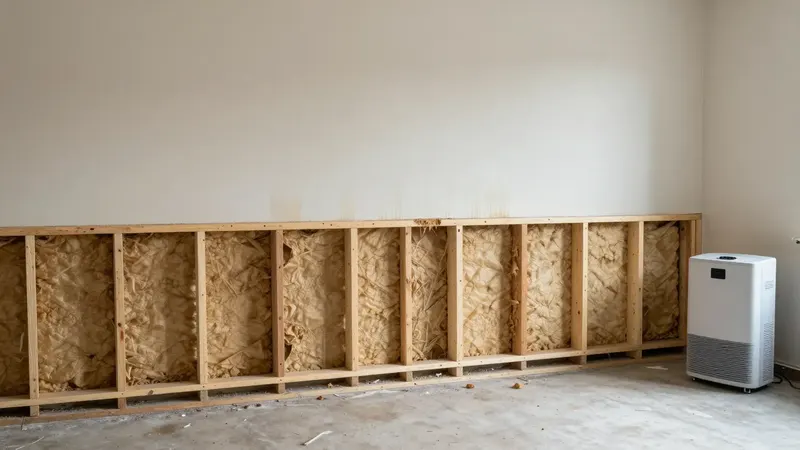
For water damage restoration in Salem, a typical contractor will locate and stop the source, pull out standing water with water extraction equipment, take moisture readings, and run air movers and dehumidifiers until framing and subfloors test dry. Rebuilding comes after; that's water damage repair. Stains overhead often point to an attic or plumbing issue covered under ceiling water damage repair.
Federal disaster declarations that included Marion County
FEMA records show Marion County was included in 5 major disaster declarations for weather or fire events from 2000 through 2026 (3 severe storm, 1 fire, 1 flood, by FEMA incident type). Declarations are made at the county level, so they do not mean every neighborhood in Salem was affected. The most recent:
- 2021 – Severe Winter Storm (DR-4599)
- 2020 – Wildfires and Straight-line Winds (DR-4562)
- 2012 – Severe Winter Storm, Flooding, Landslides, and Mudslides (DR-4055)
- 2009 – Severe Winter Storm, Record and Near Record Snow (DR-1824)
- 2004 – Severe Winter Storms (DR-1510)
Source: OpenFEMA Disaster Declarations Summaries, retrieved 2026-10-10. Counts include major disaster (DR) declarations with hurricane, flood, severe storm, tropical storm, fire, tornado, coastal storm, winter or ice storm, mudslide and dam/levee incident types.
Water, fire or storm damage in Salem?
Call (866) 937-3230 and tell us what happened at your Salem property.
Soot, odor and wildfire season
A kitchen or electrical fire can coat every surface in a home with soot, and smoke odor works its way into insulation, carpet and cabinets. Contractors commonly board up openings, remove charred materials, clean residues according to surface type, and use air filtration and deodorization to address lingering odor. Our pages on fire damage cleanup and smoke odor removal explain the stages.
The 2020 FEMA declaration for wildfires and straight-line winds included Marion County. Even homes far from the fire lines can collect fine ash on decks and in HVAC systems when smoke settles over the valley, so replacing filters and having vents checked afterward is worth considering.
Willamette flooding, landslides and winter storm cleanup
Properties near the river, around Minto-Brown Island, or along the creeks are the ones most exposed when heavy rain persists for days. Hillside lots in the surrounding hills face a different issue: saturated soil and debris flows, which the 2012 declaration named alongside flooding. Ice and snow loads can also bring down trees and damage roofs.
Treat floodwater from outside as contaminated. A reputable company will usually cut out wet drywall and remove soaked carpet and insulation rather than trying to save them. See flood damage restoration and storm damage cleanup.
Preventing mold in a damp valley climate
Long, gray, wet months give mold plenty of chances, particularly in crawlspaces, closets on outside walls and bathrooms without good ventilation. Anything that stays wet beyond a day or two is at risk, and no amount of scrubbing helps if the moisture keeps returning.
The EPA suggests that patches smaller than roughly 10 square feet are often a do-it-yourself job, while bigger areas, mold in ductwork, or growth after sewage or floodwater should go to a professional. Expect containment, HEPA air filtration and removal of damaged materials on larger jobs; see mold removal.
Practical safety steps for Salem homeowners
- Call 911 for fire, injuries, gas smells or wires down, and leave the building if it feels unsafe.
- Close the main water valve for plumbing failures and stay out of water that may be in contact with electricity.
- Register for local emergency notifications through OR-Alert; you can search by county or ZIP code.
- Document everything with photos and notes before cleanup begins. Coverage depends on your policy; check with your insurer or agent before discarding items.
Neighborhoods and nearby communities
Areas in and around Salem that callers often mention include:
- West Salem
- North Salem
- Downtown
Nearby communities with their own pages (straight-line distance from Salem):
- Four Corners · 3 mi
- Keizer · 3 mi
- Hayesville · 4 mi
- Independence · 10 mi
- Monmouth · 12 mi
- Silverton · 13 mi
Salem restoration FAQs
Which months bring the most rain to Salem?
December is usually the wettest month, followed by January and November. That's when gutters overflow, crawlspaces take on water and creeks run high. Summer, by contrast, is very dry.
Is West Salem handled differently because it's in Polk County?
For emergency alerts and some local services, West Salem falls under Polk County rather than Marion County. When signing up through OR-Alert, search by your ZIP code so you land on the right local system. Our referral line works the same on either side of the river.
Can a short freeze really burst pipes here?
Yes. Hard freezes are uncommon, but the record low is well below zero and many homes have pipes in crawlspaces or exterior walls. Insulating exposed lines and letting faucets drip during a cold snap reduces the risk.
Can you find help in Keizer or Independence too?
We try to connect callers with independent contractors around the area, including nearby communities such as Keizer, Independence and Silverton. Availability varies, so call (866) 937-3230 and we'll see who may be able to help.
Who should I call first after a basement or crawlspace floods?
If there's any electrical risk, gas smell or injury, call 911 first. Once it's safe, stop the water source if you can, photograph the damage and contact your insurer. Then a restoration contractor can extract water and start drying.
Restoration guides
- Water Damage Restoration
- Water Extraction
- Flood Damage Restoration
- Storm Damage Cleanup
- Fire Damage Cleanup
- Mold Removal