
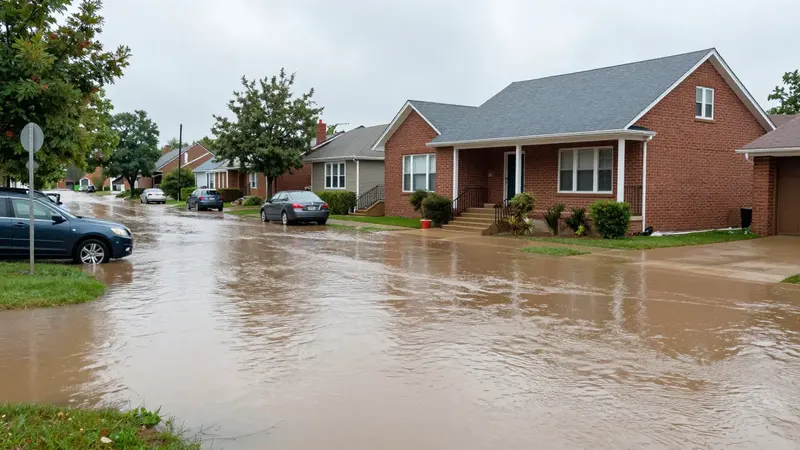
Water surrounds much of this city: the bay shore at Ocean View and Willoughby Spit, the Lafayette River, and the branches of the Elizabeth. That geography, plus summer thunderstorms and the odd tropical system, means wet crawl spaces, soaked carpet and warped flooring are common reasons people go looking for help.
Our service is a phone referral line rather than a restoration company. Dial (866) 937-3230 and we'll try to put you in touch with an independent restoration contractor serving Norfolk, depending on who is available locally. You can read about the referral steps and our disclosure page before calling.
Sinking ground, rising water and summer storms
According to Wikipedia, the land under the city is slowly subsiding, and researchers at the Virginia Institute of Marine Science estimated in 2013 that sea level here could climb 5.5 feet or more by 2100 if trends continue. Some low streets already flood at high tide, without any storm at all. Of roughly 96 square miles inside the city limits, about 43 are water.
Average yearly precipitation is a little over 49 inches, with July and August the wettest months thanks to thunderstorms. Tropical systems usually brush past rather than make landfall, and the riskiest stretch runs from mid-August through September. Federal disaster declarations that included the city since 2000 cover Hurricane Isabel (2003), the 2009 flooding linked to Tropical Depression Ida and a nor'easter, Hurricane Irene (2011) and Hurricane Matthew (2016).
Leaks, wet crawl spaces and older plumbing
Many homes here sit on crawl spaces close to the water table, so a slow supply-line drip or a failed sump can leave joists and subfloor damp for weeks before anyone notices. The city also has historic houses, including the 1792 Moses Myers House in Freemason, and older homes of any era may have aging pipes and roof flashing that give way during a heavy downpour. Long, muggy summers also mean air-handler drain pans and condensate lines overflow more often than in drier places.
Winters are usually mild, but the city hit −3°F in January 1985, so an exposed pipe can still split in a hard freeze. When people search for water damage restoration in Norfolk, the typical job involves pumping or extracting water, opening up wet cavities, and running dehumidifiers until moisture meters show the framing is dry. Replacing ceilings and floors comes later as water damage repair.
Federal disaster declarations that included Norfolk city
FEMA records show Norfolk city was included in 4 major disaster declarations for weather or fire events from 2000 through 2026 (3 hurricane, 1 severe storm, by FEMA incident type). Declarations are made at the county level, so they do not mean every neighborhood in Norfolk was affected. The most recent:
- 2016 – Hurricane Matthew (DR-4291)
- 2011 – Hurricane Irene (DR-4024)
- 2009 – Severe Storms and Flooding Associated with Tropical Depression Ida and a Nor'east (DR-1862)
- 2003 – Hurricane Isabel (DR-1491)
Source: OpenFEMA Disaster Declarations Summaries, retrieved 2026-10-10. Counts include major disaster (DR) declarations with hurricane, flood, severe storm, tropical storm, fire, tornado, coastal storm, winter or ice storm, mudslide and dam/levee incident types.
Water, fire or storm damage in Norfolk?
Call (866) 937-3230 and tell us what happened at your Norfolk property.
Fire, soot and the water that follows
Fire has shaped the city before: a waterfront blaze in 1804 destroyed about 300 buildings. Today the usual causes are household ones, like cooking, heating equipment and electrical faults, and the cleanup is a mix of charred debris, soot film on walls and the water firefighters left behind.
A reputable company will usually secure the structure, then handle soot removal, odor treatment and drying in a planned sequence. Ask how they will deal with smoke residue inside ductwork and whether contents will be cleaned on site or packed out.
Cleaning up after tidal flooding and tropical rain
When a storm pushes water up the Elizabeth and Lafayette rivers at the same time rain is falling, drains can back up and low lots fill quickly. Floodwater from streets and storm drains should be treated as contaminated, which changes what can be saved: soaked carpet, pad, insulation and the lower portion of drywall generally have to go.
Contractors doing flood cleanup commonly remove those materials, clean and disinfect what remains, and then dry the structure. If a sewer line backed up into the house, ask about sewage cleanup procedures and protective gear. Wind and roof problems after a storm fall under storm damage cleanup.
Why mold moves fast in bayside homes
Humid air off the bay and rivers keeps indoor moisture high from late spring into fall. Mold tends to show up first behind baseboards, on crawl-space framing and inside closets on outside walls after any leak or flood.
EPA guidance treats an area under roughly 10 square feet as something many homeowners can clean themselves, provided the moisture problem is fixed. Bigger patches, recurring growth or anyone in the household with asthma or allergies are good reasons to bring in a mold removal contractor.
A short safety checklist for Norfolk residents
- For fire, injury, a gas smell or downed lines, get out and call 911.
- Never wade through water that may be touching wiring or an outlet.
- If an evacuation was ordered, wait for local officials to declare the area safe before going back, as state emergency managers advise.
- Look up your hurricane evacuation zone (A through D) at KnowYourZoneVA.org before the season peaks.
- Record damage with photos and short videos, and keep anything you replace until the adjuster has seen it if possible.
- Contact your insurer or agent. Whether a loss is covered depends on your policy, and the state notes that standard homeowners coverage excludes flood.
Neighborhoods and nearby communities
Areas in and around Norfolk that callers often mention include:
- Freemason
- West Freemason
- Berkley
- Willoughby Spit
- Ocean View
- Downtown
- Ghent
- Fairmount Park
- Colonial Place
- Larchmont
- North Shore
- Edgewater
- Lafayette Shores
- Lochaven
- Campostella
- Sewell's Point
- NEON District
Nearby communities with their own pages (straight-line distance from Norfolk):
- Portsmouth · 1 mi
- Chesapeake · 2 mi
- Hampton · 13 mi
- Virginia Beach · 17 mi
- Suffolk · 18 mi
- Newport News · 19 mi
Norfolk restoration FAQs
Why does my Norfolk street flood when it isn't even raining?
Wikipedia notes that some parts of the city flood regularly at high tide because the land is low and slowly sinking while sea level rises. Higher tides, especially combined with onshore wind, can push water into streets and low yards. That is one reason crawl spaces and ground-level rooms here deserve regular checks.
When is the riskiest time for tropical storms?
The Atlantic season runs June 1 to November 30. Locally, the highest risk is generally from mid-August through the end of September, when tropical systems most often brush the area.
Will flood insurance help if I buy it after a storm forms?
Probably not for that storm. The Virginia Department of Emergency Management says a new flood policy usually has a 30-day waiting period before it takes effect. Talk to your agent about timing and what your policy actually covers.
I live in an older Norfolk house. Does that change the cleanup?
It can. Older homes may have plaster walls, original wood floors or aging plumbing that need different drying and repair approaches than newer construction. Ask a contractor how they handle older materials and whether lead-safe practices apply to your home's age.
Do you work with contractors near Portsmouth and Chesapeake too?
We try to connect callers across the region with independent contractors, including the neighboring cities of Portsmouth and Chesapeake. Whether someone is available depends on local providers at the time you call.