
Eugene is the seat and by far the largest city of Lane County, sitting near where the McKenzie River joins the Willamette, right next to Springfield. Amazon Creek starts near Spencer Butte and runs through town, and forested foothills surround the valley on three sides. From Whiteaker and River Road to the Southwest Hills, the risks shift with elevation and distance from water.
Fire & Water Energy connects people with independent restoration contractors; we are a referral service and do not perform the work. Call (866) 937-3230 and we'll try to find an independent contractor who serves your area. Availability depends on local providers. Read how it works and our referral disclosure for details.
A decade of declarations: storms, floods and fire in Lane County
Lane County has been included in ten FEMA major disaster declarations since 2000. Winter dominates the list: severe winter storms with high winds in 2002 (DR-1405), winter storms in 2004 and 2014, and storms involving flooding, landslides and mudslides in 2012, 2016, 2017, 2019, 2024 and 2026. The 2020 declaration (DR-4562) covered wildfires and straight-line winds.
Wikipedia's climate data puts average rainfall near 41 inches, with December the wettest month at over 7 inches. The rain year from mid-1973 to mid-1974 brought more than 75 inches. Roughly 52 mornings a year dip to freezing or below, and the city reached −12°F in December 1972. Snow rarely piles up, though a January 1969 storm dropped over 41 inches; ice storms are uncommon but do occur.
What causes most indoor water losses in Eugene
Steady autumn and winter rain is the main driver: overflowing gutters, worn roofing, leaky skylights and downspouts that dump next to the foundation. Homes with crawlspaces may gather standing water for weeks before anyone looks. When temperatures dip below freezing, pipes in unheated spaces can crack, and a sporadic ice storm can bring down limbs that puncture a roof.
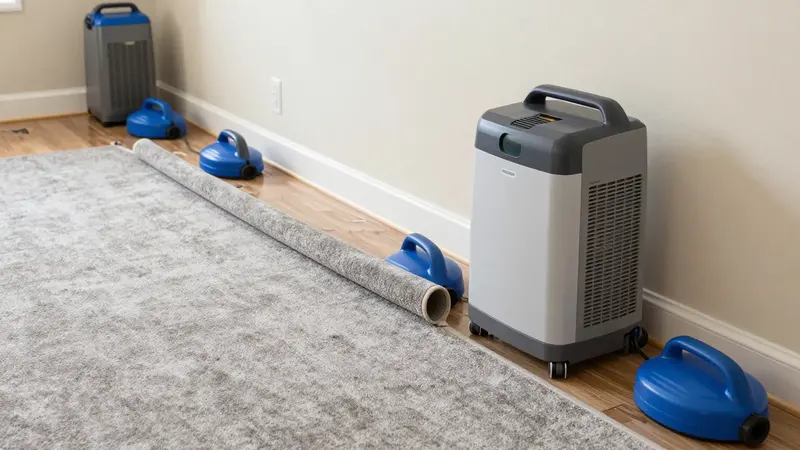
A typical Eugene water damage restoration job starts with stopping the source and removing water, then moisture mapping and a drying plan with air movers and dehumidifiers. Contractors commonly take readings each day until materials reach dry standard, then move to water damage repair. Learn more on water damage restoration and emergency water removal.
Federal disaster declarations that included Lane County
FEMA records show Lane County was included in 10 major disaster declarations for weather or fire events from 2000 through 2026 (8 severe storm, 1 fire, 1 flood, by FEMA incident type). Declarations are made at the county level, so they do not mean every neighborhood in Eugene was affected. The most recent:
- 2026 – Severe Storms, Straight-line Winds, Flooding, Landslides, and Mudslides (DR-4907)
- 2024 – Severe Winter Storms, Straight-line Winds, Landslides, and Mudslides (DR-4768)
- 2020 – Wildfires and Straight-line Winds (DR-4562)
- 2019 – Severe Winter Storms, Flooding, Landslides, and Mudslides (DR-4432)
- 2017 – Severe Winter Storm and Flooding (DR-4296)
- 2016 – Severe Winter Storms, Straight-line Winds, Flooding, Landslides, and Mudslides (DR-4258)
Source: OpenFEMA Disaster Declarations Summaries, retrieved 2026-10-10. Counts include major disaster (DR) declarations with hurricane, flood, severe storm, tropical storm, fire, tornado, coastal storm, winter or ice storm, mudslide and dam/levee incident types.
Water, fire or storm damage in Eugene?
Call (866) 937-3230 and tell us what happened at your Eugene property.
Fire, soot and smoke from beyond the city
Inside a home, even a small fire can spread soot through the HVAC system and leave acidic residue that etches surfaces if left too long. A reputable company will usually stabilize the property, remove debris, clean soot with methods suited to each material and treat odors at the source. See soot removal and smoke damage cleanup.
With forests surrounding the valley, smoke can drift in during fire season; the county's 2020 declaration covered wildfires and straight-line winds. Lane County Emergency Management links to a live wildfire camera system on its site. If ash has coated your property or your indoor air smells of smoke, swapping filters and asking a contractor to check ducts and attic insulation is sensible.
Flooding, debris flows and wind: after the storm passes
Low ground along the rivers and Amazon Creek is where high water tends to show up first, while hillside homes deal with saturated slopes; five of the county's declarations mention landslides and mudslides. Fern Ridge Reservoir to the west is maintained by the Army Corps of Engineers for winter flood control, but that doesn't remove local drainage risks.
Outdoor floodwater carries contaminants, so soaked drywall, carpet and insulation are generally removed. Related services: flood cleanup and storm water damage restoration.
Damp months and mold growth
Eugene's long rainy season and cool temperatures mean surfaces dry slowly. Crawlspaces, basements, window frames and closets on north-facing walls are classic trouble spots. Mold can appear within a day or two on anything that stays wet, so the drying step matters as much as the cleaning.
Per EPA guidance, small areas below about 10 square feet are often manageable by a homeowner. Bigger patches, hidden growth or mold following dirty water are better handled by a professional who uses containment and HEPA filtration. Our mold remediation page covers the process.
Safe first steps in Eugene
- Dial 911 for fire, injury, gas odors or downed lines; leave if the structure seems unsound.
- Close the water main for plumbing leaks, and keep away from wet areas near outlets or panels.
- Sign up for Lane Alerts through Lane County Emergency Management to get local notifications.
- Take dated photos and keep damaged items until your adjuster sees them. Whether a loss is covered depends on your specific policy, so confirm with your insurer or agent.
Neighborhoods and nearby communities
Areas in and around Eugene that callers often mention include:
- Bethel
- Cal Young
- Churchill
- Fairmount
- Friendly
- Harlow
- Jefferson Westside
- Laurel Hill
- River Road
- Santa Clara
- Southwest Hills
- Trainsong
- West University
- Whiteaker
Nearby communities with their own pages (straight-line distance from Eugene):
- Springfield · 3 mi
- Cottage Grove · 18 mi
- Sweet Home · 30 mi
- Lebanon · 35 mi
- Corvallis · 36 mi
- Albany · 40 mi
Eugene restoration FAQs
How do I get emergency alerts in Eugene?
Lane County Emergency Management runs Lane Alerts, with a sign-up for notifications on the county website. The same page links to a live wildfire camera system and Oregon's incident map.
Why does Lane County have so many disaster declarations?
Since 2000 the county has been part of ten FEMA major disaster declarations, mostly for winter storms, flooding, landslides and wind, plus the 2020 wildfire declaration. The mix of river valley, forested foothills and heavy winter rain exposes it to several hazards.
Is my Eugene crawlspace likely to hold water in winter?
It can. With about 41 inches of rain a year concentrated in late fall and winter, crawlspaces with poor drainage or a missing vapor barrier often collect water. Check after big storms and look for musty odors or cupping floors upstairs.
Do you refer contractors in Springfield and nearby towns?
We try to connect callers with independent contractors in Springfield, Creswell, Junction City, Veneta and other communities near Eugene. Availability depends on local providers, so call (866) 937-3230 to ask.
Should I worry about smoke residue if the fire was miles away?
Smoke from distant wildfires can still leave fine ash on outdoor surfaces and in HVAC filters. If odor lingers indoors or you see residue on surfaces, a restoration contractor can assess whether cleaning is needed.
Restoration guides
- Water Damage Restoration
- Emergency Water Removal
- Flood Cleanup
- Storm Water Damage Restoration
- Soot Removal
- Mold Remediation