
Rocky Mount straddles Nash and Edgecombe counties, with the line between them following the railroad tracks through downtown. The Tar River runs west to east across the city, tumbling over Upper Falls and Little Falls as it leaves the Piedmont for the flatter Coastal Plain.
When water, smoke or wind has damaged your property, phone (866) 937-3230. Fire & Water Energy is a referral service and does not do the restoration work itself; we try to put you in touch with an independent contractor serving the Twin Counties area, subject to availability. If you want to know exactly what we do before calling, check how it works and the referral disclosure.
The Tar River, Floyd and a rainy late summer
The city sits only about 85 feet above sea level, and the river drops some 25 feet inside city limits. Wikipedia records about 48.56 inches of precipitation a year, with September the wettest month at 6.15 inches, right in the heart of hurricane season.
That pattern turned disastrous in 1999. Hurricane Dennis, passing as a tropical storm in August, dropped about 20 inches of rain, and Hurricane Floyd added nearly 17 more that September. Much of the water rose overnight, many residents had to be rescued, and parts of the lower Tar exceeded the 500-year flood level. Nash County has since been included in FEMA major disaster declarations for a Severe Winter Storm (2000), a Severe Ice Storm (2002), Hurricane Isabel (2003), Hurricane Irene (2011), Hurricane Matthew (2016) and Tropical Storm Helene (2024).
Why indoor water damage happens here and how it gets fixed
Wind-driven rain from tropical systems finds gaps around chimneys, flashing and older windows. Winter lows average around 31°F and the record dips to -8°F, so pipes in crawl spaces and uninsulated walls can freeze. Houses in the Rocky Mount Mills Village, built between 1885 and 1940, and other older districts may have aging supply lines and drains that fail without much warning.
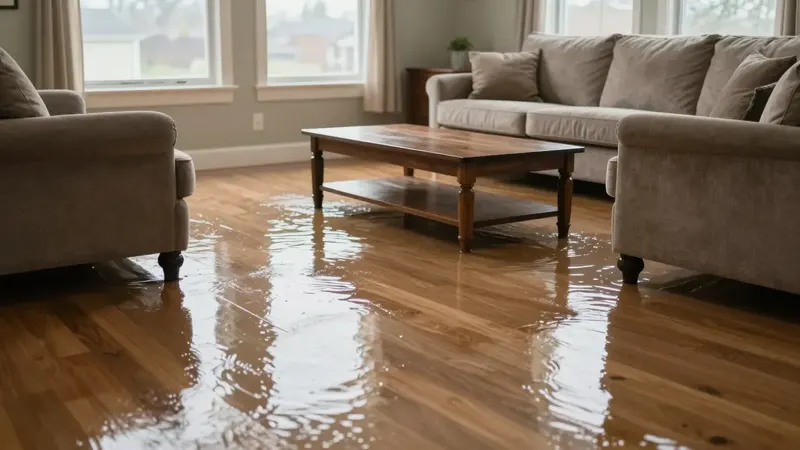
When you need water damage restoration in Rocky Mount, a contractor typically finds and stops the leak, extracts water, removes saturated materials that cannot be saved and dries the structure with monitored equipment. Background reading: water damage repair and water extraction for Twin Counties homes.
Federal disaster declarations that included Nash County
FEMA records show Nash County was included in 6 major disaster declarations for weather or fire events from 2000 through 2026 (3 hurricane, 1 tropical storm, 1 severe ice storm, 1 severe storm, by FEMA incident type). Declarations are made at the county level, so they do not mean every neighborhood in Rocky Mount was affected. The most recent:
- 2024 – Tropical Storm Helene (DR-4827)
- 2016 – Hurricane Matthew (DR-4285)
- 2011 – Hurricane Irene (DR-4019)
- 2003 – Hurricane Isabel (DR-1490)
- 2002 – Severe Ice Storm (DR-1448)
- 2000 – Severe Winter Storm (DR-1312)
Source: OpenFEMA Disaster Declarations Summaries, retrieved 2026-10-10. Counts include major disaster (DR) declarations with hurricane, flood, severe storm, tropical storm, fire, tornado, coastal storm, winter or ice storm, mudslide and dam/levee incident types.
Water, fire or storm damage in Rocky Mount?
Call (866) 937-3230 and tell us what happened at your Rocky Mount property.
Smoke and fire losses in historic and newer houses
Wood framing in century-old homes can burn quickly, and smoke travels through open wall cavities and attic spaces that newer construction would seal off. Heaters and generators used during ice storm outages add to the risk.
After the fire department clears the scene, a restoration firm commonly secures the building, removes burned debris, cleans soot from surfaces and HVAC parts, and treats odors. Both fire damage restoration and soot removal are explained in more depth elsewhere on the site.
Cleaning up after river flooding and hurricane wind
River and storm floodwater is considered Category 3, meaning it can carry sewage, fuel and other contaminants. Anything porous that soaked in it, from carpet pads to drywall, is usually cut out rather than dried in place. Fallen trees and torn shingles after a hurricane let rain in for days if openings are not covered.
Contractors often start with tarping and board-up, then pump out standing water, muck out mud, disinfect and run drying equipment. See flood damage restoration and hurricane damage cleanup.
Mold risk in hot, humid eastern Carolina summers
Summer highs near 90°F combined with heavy humidity mean that a soaked crawl space or wall cavity can grow mold within days. After a flood, mold may show up in places the water never visibly reached.
The EPA suggests that patches smaller than roughly 10 square feet are often a do-it-yourself job, while larger growth or mold tied to contaminated water is better left to professionals who use containment and air filtration. Our mold removal page has more.
Rocky Mount safety checklist before cleanup begins
- Dial 911 for fire, injuries, gas smells or people trapped by rising water.
- Never drive through flooded roads; currents near the Tar can be stronger than they look.
- Turn off electricity at the main only if you can reach it from a dry spot.
- Record damage with photos and video and make a list of ruined items.
- Talk to your insurer or agent about what is covered; flood coverage is often a separate policy.
For drainage issues, the city stormwater management page is the starting point. You can also see our North Carolina coverage list.
Neighborhoods and nearby communities
Areas in and around Rocky Mount that callers often mention include:
- Edgemont
- Falls Road
- Lincoln Park
- Rocky Mount Central City
- Rocky Mount Mills Village
- Villa Place
- West Haven
Nearby communities with their own pages (straight-line distance from Rocky Mount):
- Tarboro · 15 mi
- Wilson · 17 mi
- Greenville · 33 mi
- Winterville · 36 mi
- Roanoke Rapids · 37 mi
- Goldsboro · 40 mi
Rocky Mount restoration FAQs
How bad was the 1999 Tar River flood in Rocky Mount?
Hurricane Floyd brought nearly 17 inches of rain on ground already soaked by Hurricane Dennis a few weeks earlier. The Tar River reached its worst flooding on record, much of it overnight, and many residents needed rescue.
Which storms led to federal disaster declarations for Nash County?
FEMA lists six since 2000, including Hurricane Isabel, Hurricane Irene, Hurricane Matthew and Tropical Storm Helene, along with winter and ice storms in 2000 and 2002. A county declaration does not mean every neighborhood was damaged.
My house is in an older district. Does that change the cleanup?
It can. Older plaster walls, original wood floors and aging plumbing may need different drying approaches than modern drywall. Ask any contractor how they handle historic materials before work starts.
Will you find someone if I live on the Edgecombe County side?
We try to connect callers on either side of the county line with an independent contractor who serves that area. Availability depends on local providers, especially after a regional hurricane.
When is mold most likely after a leak here?
Hot, sticky summers speed up growth, so dry wet materials as soon as safely possible. If you notice a musty smell or spotting more than a couple of days after a leak, have the area inspected.
Restoration guides
- Flood Damage Restoration
- Hurricane Damage Cleanup
- Water Damage Repair
- Water Extraction
- Fire Damage Restoration
- Mold Removal