
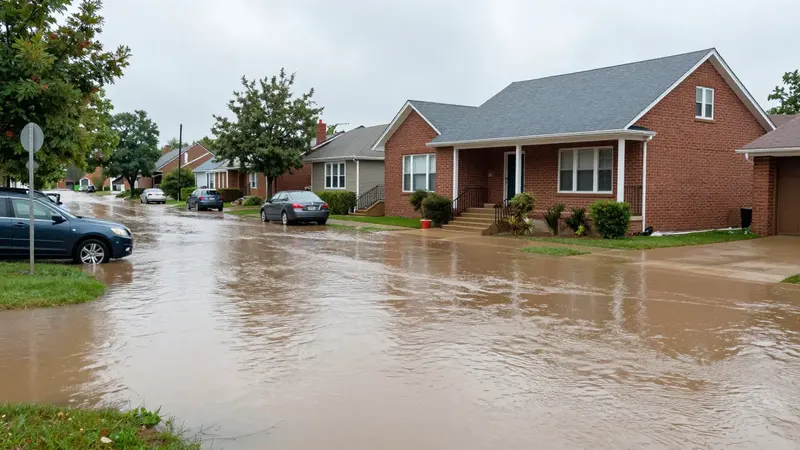
The Wayne County seat sits low on North Carolina's Coastal Plain, about 108 feet above sea level, with Stoney Creek cutting through the east side between downtown and Seymour Johnson Air Force Base. That mix of rivers, flat ground and roughly 52 inches of yearly rain means wet carpets and soaked drywall are a familiar problem here.
Fire & Water Energy does not do restoration work; we run a referral line. Call (866) 937-3230 and we will try to pair you with an independent restoration contractor who works in Goldsboro, subject to who is available at the time. The process page and referral disclosure explain what we do and do not handle.
Two rivers, a creek and a hurricane track
The Neuse River marks the city's southern edge, while the Little River, which also supplies the municipal water system, runs along the west. When Hurricane Floyd stalled over eastern North Carolina in 1999, the Neuse at Goldsboro crested at 28.85 feet, topping the mark set after Hurricane Fran in 1996.
Wayne County has been part of seven FEMA major disaster declarations since 2000: the Severe Ice Storm (2002), Hurricane Isabel (2003), Hurricane Irene (2011), Hurricane Matthew (2016), Hurricane Florence (2018), Hurricane Dorian (2019) and the 2020 severe storms, tornadoes and flooding. Rain is spread fairly evenly through the year, with a slight peak in late summer and early fall, which lines up with hurricane season.
Leaks, overflows and soaked floors indoors
Not every wet room is a river story. Summers average highs near 91 degrees, so air conditioners run hard, and a clogged condensate line or rusted drain pan can quietly wet a ceiling or subfloor. Water heaters, dishwasher connections and washing machine hoses are other common culprits, along with roof leaks after a strong thunderstorm.
Winters are mostly mild, but January lows average around 34 degrees, and some years bring a foot or more of snow. Pipes in crawl spaces or on exterior walls can split during a hard cold snap. For water damage restoration in Goldsboro, a typical contractor stops the source, measures moisture behind walls and under flooring, removes standing water and sets up dehumidifiers and air movers. Ask how they will confirm materials are dry before any water damage repair or rebuilding begins.
Federal disaster declarations that included Wayne County
FEMA records show Wayne County was included in 7 major disaster declarations for weather or fire events from 2000 through 2026 (5 hurricane, 1 severe storm, 1 severe ice storm, by FEMA incident type). Declarations are made at the county level, so they do not mean every neighborhood in Goldsboro was affected. The most recent:
- 2020 – Severe Storms, Tornadoes, and Flooding (DR-4543)
- 2019 – Hurricane Dorian (DR-4465)
- 2018 – Hurricane Florence (DR-4393)
- 2016 – Hurricane Matthew (DR-4285)
- 2011 – Hurricane Irene (DR-4019)
- 2003 – Hurricane Isabel (DR-1490)
Source: OpenFEMA Disaster Declarations Summaries, retrieved 2026-10-10. Counts include major disaster (DR) declarations with hurricane, flood, severe storm, tropical storm, fire, tornado, coastal storm, winter or ice storm, mudslide and dam/levee incident types.
Water, fire or storm damage in Goldsboro?
Call (866) 937-3230 and tell us what happened at your Goldsboro property.
After a kitchen fire or smoke event
Even a small stovetop fire can leave greasy residue on cabinets and a smell that lingers in insulation and HVAC ducts. Firefighting water adds a second layer of damage, so drying often has to happen alongside soot work. A reputable company will usually board up openings, inventory what can be cleaned, and test surfaces before choosing cleaning methods.
Ask any contractor how they handle smoke damage cleanup and odor in ductwork, and whether they will photograph contents for your claim. More on the process is on our fire damage restoration page.
Cleaning up when the Neuse rises or a storm passes
River flooding along the Neuse and backwater on Stoney Creek can carry sewage, fuel and farm runoff, so treat it as Category 3 contaminated water. Wet drywall usually has to be cut above the waterline, and insulation, carpet pad and porous items that sat in floodwater are often discarded. Hurricanes and the 2002 ice storm also showed that downed limbs and roof damage can let rain into homes far from any river.
Contractors who offer flood cleanup and storm damage cleanup commonly start with photos and moisture readings, then pump out water, remove ruined materials and dry the structure. The state's FIMAN flood gauges, linked from ReadyNC, show river levels in real time.
Humidity, crawl spaces and mold growth
Hot, humid summers give mold an easy start, especially in crawl spaces, closets on outside walls and anywhere water sat for more than a day or two. Musty odors, staining and warped trim are early signs. EPA guidance says a person can usually clean a patch smaller than about 10 square feet themselves; larger areas, contamination in HVAC systems, or mold after sewage or floodwater call for a professional.
A contractor providing mold remediation typically sets up containment, uses HEPA air filtration, removes affected materials and fixes the moisture source so growth does not return.
First steps for Goldsboro households
- Call 911 if anyone is hurt, you smell gas, or the structure looks unstable.
- If the breaker panel is in a dry spot, cut power to flooded rooms; if reaching it means wading, leave it for your power company or an electrician.
- Keep kids and pets away from Neuse or Stoney Creek backwater, which may hold sewage and sharp debris.
- Take wide and close-up photos of each wet room before anything is hauled out, and save receipts for fans, tarps or hotel nights.
- Check ReadyNC for alerts, open shelters and road conditions during a hurricane or flood.
- Call your insurer or agent early. Coverage depends on your policy; standard homeowners policies often exclude flood, which is usually a separate policy.
Neighborhoods and nearby communities
Nearby communities with their own pages (straight-line distance from Goldsboro):
Goldsboro restoration FAQs
How high has the Neuse River gotten in Goldsboro?
During Hurricane Floyd in 1999 the Neuse at Goldsboro crested at 28.85 feet, breaking the record left by Hurricane Fran in 1996. You can watch current river levels on the state's FIMAN flood gauge network, linked from ReadyNC.
Do Goldsboro homes need to worry about frozen pipes?
Hard freezes are not frequent, but January lows average around 34 degrees and some winters bring heavy snow or ice, as in the 2002 ice storm. Insulate pipes in crawl spaces and on exterior walls, and let faucets drip during deep cold snaps.
Which disasters have hit Wayne County since 2000?
FEMA major disaster declarations covering Wayne County include the 2002 ice storm, Hurricanes Isabel, Irene, Matthew, Florence and Dorian, and severe storms, tornadoes and flooding in 2020. These are county-wide declarations, so damage varied from place to place.
Can you send someone to Mount Olive or Kinston as well?
We do not send anyone ourselves. When you call (866) 937-3230 we try to connect you with an independent contractor that serves your address, including nearby towns like Mount Olive, Kinston or Wilson, depending on who is available.
Is AC condensate a real cause of water damage here?
Yes. With summer highs near 91 degrees, air conditioners run for months, and a blocked drain line or overflowing pan can wet ceilings and subfloors without being noticed. Checking the line before summer is an easy habit.
Restoration guides
- Flood Cleanup
- Water Damage Restoration
- Hurricane Damage Cleanup
- Storm Damage Cleanup
- Mold Remediation
- Smoke Damage Cleanup