
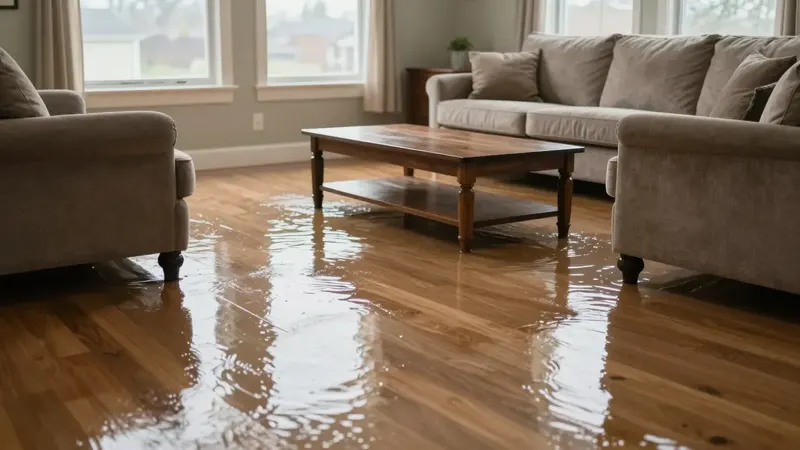
Clayton has grown from fewer than 7,000 residents in 2000 to more than 26,000 by 2020, and thousands of new houses went up along the way. Brand-new construction is not immune to trouble: a failed supply hose, an overflowing AC pan or wind-driven rain can wet drywall and subfloors in any home.
We are Fire & Water Energy, a referral line rather than a restoration firm. Dial (866) 937-3230 and we will try to link you with an independent restoration contractor covering Clayton, subject to who is available. For details, see how our process goes and the referral disclosure.
Neuse River country: rain, heat and winter extremes
The town lies within the Neuse River watershed, and its limits stretch northeast to the river itself, where the Clayton River Walk follows the bank. Rain is plentiful, averaging a little over 52 inches a year, with July the wettest month at about 6 inches. Snow is light, around 3 inches annually, but extremes happen: the record low is -10°F, set in January 1985.
FEMA disaster declarations that covered Johnston County since 2000 include a Severe Winter Storm (2000), a Severe Ice Storm (2002), Hurricane Isabel (2003), Hurricane Irene (2011), the 2011 Severe Storms, Tornadoes, and Flooding event, Hurricane Matthew (2016) and Hurricane Florence (2018).
Why indoor water damage happens in a fast-growing town
Housing units in Clayton climbed from about 6,600 in 2010 to roughly 10,600 in 2020, so a large share of homes are fairly new. In these houses, leaks most often start at plastic supply lines, icemaker connections, water heaters and condensate drains that clog during humid summers. Older homes near downtown face aging pipes and roofs instead.
Searching for water damage restoration in Clayton usually means you need water out and materials dried before mold sets in. A reputable company will typically trace the leak, document moisture levels, extract water and run dehumidifiers until readings return to normal. Compare water damage restoration, emergency water removal and ceiling water damage repair.
Federal disaster declarations that included Johnston County
FEMA records show Johnston County was included in 7 major disaster declarations for weather or fire events from 2000 through 2026 (4 hurricane, 2 severe storm, 1 severe ice storm, by FEMA incident type). Declarations are made at the county level, so they do not mean every neighborhood in Clayton was affected. The most recent:
- 2018 – Hurricane Florence (DR-4393)
- 2016 – Hurricane Matthew (DR-4285)
- 2011 – Hurricane Irene (DR-4019)
- 2011 – Severe Storms, Tornadoes, and Flooding (DR-1969)
- 2003 – Hurricane Isabel (DR-1490)
- 2002 – Severe Ice Storm (DR-1448)
Source: OpenFEMA Disaster Declarations Summaries, retrieved 2026-10-10. Counts include major disaster (DR) declarations with hurricane, flood, severe storm, tropical storm, fire, tornado, coastal storm, winter or ice storm, mudslide and dam/levee incident types.
Water, fire or storm damage in Clayton?
Call (866) 937-3230 and tell us what happened at your Clayton property.
When a kitchen or garage fire leaves soot behind
Cooking and electrical fires are common household causes, and modern open floor plans let smoke spread quickly through a whole level. Synthetic furnishings produce sticky, dark residue that clings to walls, cabinets and HVAC returns.
Contractors commonly start by securing the structure and ventilating, then clean or discard affected contents and deodorize. The steps differ a bit between smoke damage cleanup and full fire damage cleanup, and both pages explain why. Avoid wiping soot yourself with household cleaners, which can smear it deeper into surfaces.
Hurricane rain, creek overflow and storm cleanup
Tropical systems like Matthew and Florence soaked eastern North Carolina for days, and slow drainage can push water into crawl spaces, garages and low yards. Thunderstorms in midsummer bring their own wind and hail, while ice events can snap limbs onto roofs.
After a storm, contractors generally tarp roof openings, remove saturated insulation and flooring, and dry out the framing before repairs begin. Floodwater from outside is treated as contaminated, so porous materials it touched are often discarded. Details are on our flood damage restoration and hurricane damage cleanup pages.
Mold growth in a wet, warm Johnston County summer
With heavy summer rainfall and high humidity, a damp carpet pad or wall cavity can start growing mold within a day or two. Crawl spaces and attics with poor ventilation are typical hiding places.
Per EPA guidance, small areas under about 10 square feet can often be cleaned by a homeowner wearing gloves and an N-95 respirator. Larger or recurring growth, or mold tied to sewage or floodwater, is better handled by a professional who sets up containment. See mold removal.
Safety steps and paperwork for Clayton homeowners
- Dial 911 for fire, injuries, a gas smell or downed lines.
- The Town of Clayton provides electric, water and sewer service; check the Town's utilities page for guidance on water and sewer emergencies after business hours.
- Shut off water at the main valve and keep out of flooded rooms where power is still on.
- Take photos and video, save damaged items for an adjuster if possible, and keep receipts.
- Reach out to your insurer; what is covered depends on your specific policy.
Then phone (866) 937-3230, or browse other North Carolina service areas.
Neighborhoods and nearby communities
Nearby communities with their own pages (straight-line distance from Clayton):
Clayton restoration FAQs
Is my Clayton home at risk from the Neuse River?
Part of the town reaches the Neuse, and the whole town drains into its watershed. Homes far from the river can still flood from heavy rain and poor drainage. Check FEMA flood maps for your address and ask your agent whether flood insurance makes sense.
Who handles a water main or sewer backup problem in town?
The Town of Clayton provides water and sewer service, and its utilities page has information on emergencies outside business hours. A backup inside your home is a separate cleanup job, often treated as contaminated water. A restoration contractor can handle that part.
Do newer houses really get water damage?
Yes. Many homes here were built in the last fifteen years, and leaks from supply hoses, water heaters and AC condensate lines are common in any age of house. Builder warranties may or may not apply, so read yours carefully.
Can Johnston County winters freeze my plumbing?
Winters are usually mild, but the record low of -10 degrees shows hard freezes do arrive. Insulate pipes in crawl spaces, garages and exterior walls. If a pipe splits, close the main valve right away.
Will someone from Fire & Water Energy come out to my Clayton house?
No. We pass callers along to independent contractors who serve the area. Ask any contractor for proof of insurance and a written scope before signing.
Restoration guides
- Water Damage Restoration
- Emergency Water Removal
- Flood Damage Restoration
- Hurricane Damage Cleanup
- Smoke Damage Cleanup
- Mold Removal