
Chartered in 1777, Smithfield is Johnston County's seat and one of the older towns in eastern North Carolina. It sits low, around 125 feet above sea level, with the Downtown Smithfield Historic District along Market Street, the Buffalo Creek Greenway, and Interstate 95 skirting its southeastern edge.
If water, smoke or a storm has damaged your property, call (866) 937-3230. Fire & Water Energy is a referral service: we try to link you with an independent restoration contractor working in Johnston County, and whether one is free depends on local companies. For the fine print on how matching works, read how it works and our referral disclosure.
Neuse River rhythms and Johnston County's disaster list
The Neuse begins near Durham where the Flat and Eno rivers meet, passes through Falls Lake and Raleigh, and continues past Smithfield toward Goldsboro, Kinston and New Bern. It is known for swinging between near-drought lows and spilling over its banks in wet periods, which is the main flood concern for low ground near the river and along creeks such as Buffalo Creek.
Smithfield's humid subtropical climate brings July highs averaging around 92 degrees and January lows near 31. Johnston County has been included in seven FEMA major disaster declarations since 2000: a Severe Winter Storm (2000), a Severe Ice Storm (2002), Hurricane Isabel (2003), Severe Storms, Tornadoes, and Flooding (2011), Hurricane Irene (2011), Hurricane Matthew (2016) and Hurricane Florence (2018). Since the wettest months overlap hurricane season, tropical rain can push the river up quickly.
Water damage restoration Smithfield homeowners commonly need
Hot, sticky summers keep air conditioners running for months, and clogged condensate lines or rusted drain pans regularly leak into ceilings and closets. Older houses near downtown may have aging supply lines and crawl spaces, where a January cold snap can freeze an exposed pipe. Water heaters, dishwashers and washing machine hoses round out the usual list.
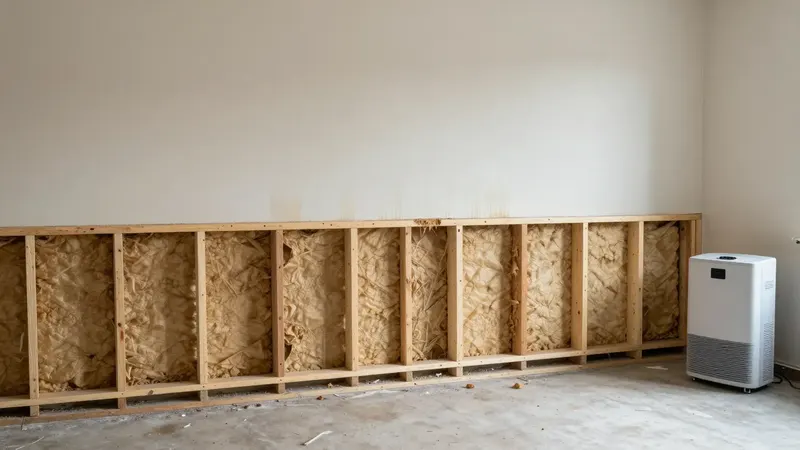
Restoration contractors typically stop the source, extract the water, remove wet pad, baseboard or drywall as needed, and dry the structure with dehumidifiers while measuring moisture each day. Crawl spaces often need their own drying plan. See water damage restoration and emergency water removal for more detail.
Federal disaster declarations that included Johnston County
FEMA records show Johnston County was included in 7 major disaster declarations for weather or fire events from 2000 through 2026 (4 hurricane, 2 severe storm, 1 severe ice storm, by FEMA incident type). Declarations are made at the county level, so they do not mean every neighborhood in Smithfield was affected. The most recent:
- 2018 – Hurricane Florence (DR-4393)
- 2016 – Hurricane Matthew (DR-4285)
- 2011 – Hurricane Irene (DR-4019)
- 2011 – Severe Storms, Tornadoes, and Flooding (DR-1969)
- 2003 – Hurricane Isabel (DR-1490)
- 2002 – Severe Ice Storm (DR-1448)
Source: OpenFEMA Disaster Declarations Summaries, retrieved 2026-10-10. Counts include major disaster (DR) declarations with hurricane, flood, severe storm, tropical storm, fire, tornado, coastal storm, winter or ice storm, mudslide and dam/levee incident types.
Water, fire or storm damage in Smithfield?
Call (866) 937-3230 and tell us what happened at your Smithfield property.
Fire and smoke cleanup near the historic downtown
Older commercial buildings in a historic downtown frequently share walls, so smoke from one storefront can travel into the next. In houses, kitchen fires, dryer vents and heating equipment during cold snaps are common starting points, and firefighting water adds a second layer of damage.
Once the property is released, a contractor will usually board up, remove debris, clean soot from surfaces, deodorize and handle water left from suppression. Ask whether they will test for remaining odor before closing out the job. Our fire damage cleanup page and the soot removal page cover the process.
Flood and hurricane cleanup along the Neuse
Hurricanes Isabel, Irene, Matthew and Florence all brought declarations to the county. When tropical rain falls across the whole upper Neuse basin, the river near Smithfield can rise for days after the storm passes, so property near the banks and in West Smithfield should keep watching river forecasts even after the sky clears. Wind also brings down pines and live oaks onto roofs and power lines.
River water is Category 3, carrying sewage and runoff pollutants. Contractors commonly remove drywall and insulation above the water line, disinfect, dry framing to target moisture levels and only then rebuild. Our flood cleanup and hurricane damage cleanup pages explain what a river-flood job usually involves.
Why mold moves fast in Johnston County summers
With the rainiest months falling in midsummer and temperatures in the 90s, wet materials can start growing mold within a day or two. Crawl spaces, bathrooms and areas behind furniture on exterior walls are frequent hiding spots.
The EPA suggests homeowners can usually clean an area under about 10 square feet, but larger growth calls for a professional using containment and HEPA filtration. Moisture control comes first. Visit mold removal for more.
Safety-first steps in Smithfield
- Call 911 for fires, injuries, gas leaks or downed lines.
- Never walk or drive through moving water near the Neuse or Buffalo Creek; depth and current are hard to judge.
- Keep out of flooded rooms until the electricity is shut off.
- Follow Johnston County emergency management and Town of Smithfield instructions during hurricanes.
- Photograph damage, keep receipts and talk to your insurer or agent; flood damage is normally covered only by a separate flood policy.
Neighborhoods and nearby communities
Areas in and around Smithfield that callers often mention include:
- Downtown Smithfield Historic District
- West Smithfield
Nearby communities with their own pages (straight-line distance from Smithfield):
Smithfield restoration FAQs
Is West Smithfield more exposed to river flooding?
West Smithfield lies across the Neuse from downtown, and land closest to the river on either side is the most exposed when it leaves its banks. Check FEMA flood maps for your specific address rather than assuming based on the neighborhood.
When is the wettest time of year in Smithfield?
Climate normals show the wettest months are July through September, overlapping hurricane season. Annual precipitation averages around 49 inches.
Which hurricanes led to declarations for Johnston County?
Since 2000, FEMA declared major disasters for Hurricane Isabel in 2003, Hurricane Irene in 2011, Hurricane Matthew in 2016 and Hurricane Florence in 2018, along with winter storms in 2000 and 2002 and a 2011 tornado and flooding event.
What does calling (866) 937-3230 get me?
We listen to the situation and try to connect you with an independent restoration contractor serving Johnston County. Fire & Water Energy is a referral service, so the contractor determines availability, cost and the work plan.
Restoration guides
- Water Damage Restoration
- Emergency Water Removal
- Fire Damage Cleanup
- Flood Cleanup
- Hurricane Damage Cleanup
- Mold Removal