
The Colfax County seat sits about six and a half miles south of the Colorado line, with the Raton Range rising immediately to the north. Its cold semiarid climate brings real winters, spring winds and summer thunderstorms, and the city's emergency management office keeps safety guides on everything from winter weather and wildfire to tornadoes, floods and lightning.
Fire & Water Energy is a referral line and does no repair work itself. If you call (866) 937-3230, we'll try to put you in touch with an independent restoration contractor who works in Raton or northeastern New Mexico. Rural availability depends on local providers, so we can't promise a match; the referral disclosure has more.
Snow, deep cold and storms near Raton Pass
Normals from the Raton Filter Plant for 1991–2020 show about 18.60 inches of precipitation and 28.8 inches of snow per year, with records spanning 104°F to -26°F. The municipal airport station has recorded an even colder -31°F. That combination of heavy snow and severe cold is unusual for the state and puts plumbing, roofs and gutters under real stress.
Colfax County has been included in four FEMA major disaster declarations since 2000: severe storms and flooding in 2013 (DR-4148) and 2014 (DR-4199), severe storms, flooding and mudslides in 2013 (DR-4152), and the 2022 wildfires, straight-line winds, flooding, mudflows and debris flows declaration (DR-4652). The county's 2025 hazard mitigation plan is linked from the city's emergency management page.
Burst pipes, ice dams and water damage restoration
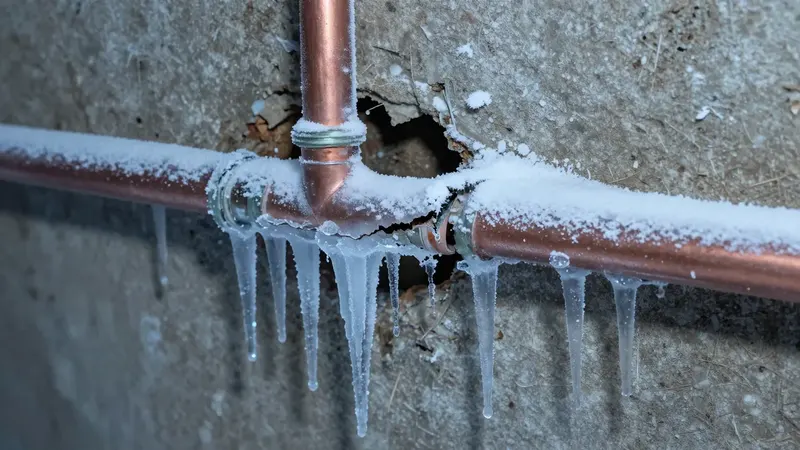
In a town where subzero nights are on record, the most common indoor flood is a pipe that freezes, cracks and then lets go when temperatures rise. Snow loads can also lead to ice dams at the eaves, forcing meltwater under shingles and into attics and ceilings. Older service lines are another concern; the city has posted information about lead service lines on its website.
A contractor handling water damage restoration in Raton would typically shut off the water, extract what has pooled, open up wet cavities if needed and dry the structure while tracking moisture readings. See burst pipe water damage, ceiling water damage repair and structural drying.
Federal disaster declarations that included Colfax County
FEMA records show Colfax County was included in 4 major disaster declarations for weather or fire events from 2000 through 2026 (2 severe storm, 1 fire, 1 flood, by FEMA incident type). Declarations are made at the county level, so they do not mean every neighborhood in Raton was affected. The most recent:
- 2022 – Wildfires, Straight-line Winds, Flooding, Mudflows, and Debris Flows (DR-4652)
- 2014 – Severe Storms and Flooding (DR-4199)
- 2013 – Severe Storms, Flooding, and Mudslides (DR-4152)
- 2013 – Severe Storms and Flooding (DR-4148)
Source: OpenFEMA Disaster Declarations Summaries, retrieved 2026-10-10. Counts include major disaster (DR) declarations with hurricane, flood, severe storm, tropical storm, fire, tornado, coastal storm, winter or ice storm, mudslide and dam/levee incident types.
Water, fire or storm damage in Raton?
Call (866) 937-3230 and tell us what happened at your Raton property.
Heating-season fires and wildfire smoke
Long winters mean furnaces, wood stoves and space heaters run for months, and they are frequent ignition sources. Wildfire is a separate regional threat: the 2022 Colfax County declaration covered wildfires as well as wind and flooding, and the city includes a wildfire guide among its safety plans.
A typical cleanup involves boarding up, removing debris, cleaning soot from surfaces and contents, and deodorizing. Read about fire damage restoration and smoke odor removal to see how the process usually unfolds.
Mudflows, snowmelt and storm damage cleanup
Floods here come from summer thunderstorms, rapid snowmelt and, after wildfire, burned slopes that shed water and debris. The 2013 and 2022 county declarations both listed mud-related hazards. Water from outside should be treated as contaminated because it carries soil and debris.
Cleanup usually means removing mud, cutting out wet drywall and insulation, sanitizing and drying. For roof damage from wind, hail or heavy snow, see storm damage cleanup; for water inside the home, see flood damage restoration.
Mold after leaks and slow winter drying
Cold temperatures slow evaporation, so a leak discovered in January may take much longer to dry than one in July. Attics wetted by ice dams and walls hit by a thawed pipe are common places for mold to start.
EPA guidance treats patches under about 10 square feet as something many homeowners can clean themselves with basic protection. For anything larger, or where contaminated water was involved, consider mold remediation with containment and air filtration.
Safety and preparation for Raton households
- Call 911 for fires, injuries, carbon monoxide symptoms or a gas smell.
- Know where your main water shutoff is before winter, and close it at the first sign of a burst pipe.
- Avoid flooded roads and burn-scar drainages during heavy rain.
- Build a household plan and a 72-hour kit, as the city's Office of Emergency Management recommends.
- Sign up for city notices through Notify Me on the city website.
- Document damage with photos, and check your policy terms with your insurer or agent, since coverage varies.
Neighborhoods and nearby communities
Nearby communities with their own pages (straight-line distance from Raton):
- Taos · 72 mi
- Ranchos de Taos · 75 mi
- Clayton · 76 mi
- Las Vegas · 100 mi
- Chimayo · 104 mi
- Española · 111 mi
Raton restoration FAQs
How do I keep pipes from bursting during a Raton cold snap?
Insulate pipes in exterior walls, crawlspaces and garages, disconnect hoses in fall, and keep heat on even when away. With record lows of -26°F in town and -31°F at the airport, a heating failure can freeze lines quickly.
Where can I find local emergency guides?
The City of Raton Office of Emergency Management website links safety plans for winter weather, wildfire, tornadoes, floods, lightning and earthquakes, plus a 72-hour kit checklist and the Colfax County hazard mitigation plan.
Can snow on my roof cause water damage?
Yes. The area averages close to 29 inches of snow per year, and melting snow can refreeze at the eaves, forming ice dams that push water under shingles. Watch for stains on ceilings or in the attic after thaws.
Is help available outside town, toward the Colorado border?
You can call from anywhere in Colfax County. Northeastern New Mexico is rural, so whether an independent contractor can travel to you depends on providers in the region.
Restoration guides
- Burst Pipe Water Damage
- Ceiling Water Damage Repair
- Structural Drying
- Fire Damage Restoration
- Storm Damage Cleanup
- Mold Remediation