
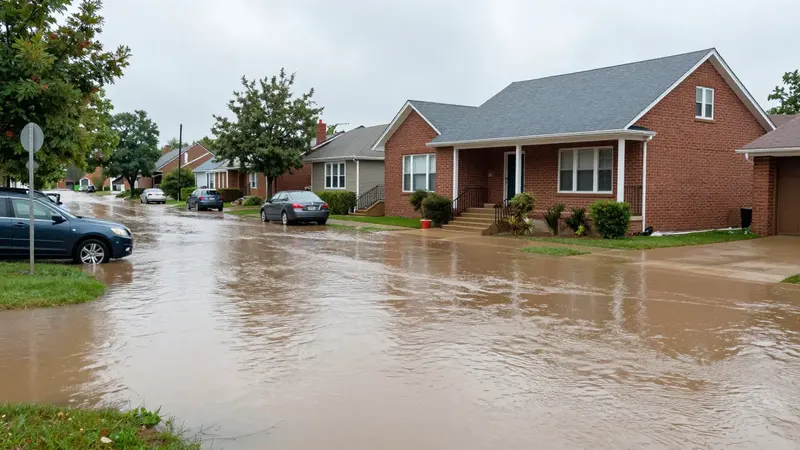
The Sunflower County seat is a compact city of under nine square miles, home to the B.B. King Museum and Delta Interpretive Center and roughly 3,900 housing units. Since 2000, FEMA has included the county in ten major disaster declarations, and most of them name flooding.
Fire & Water Energy is a referral service only, so we never send our own workers. Call (866) 937-3230 and we will try to link you with an independent restoration contractor serving Indianola; whether someone can take the job depends on local providers. Our referral disclosure spells out the arrangement.
Delta terrain, bayous and repeated storm declarations
Sunflower County takes its name from the Sunflower River and stretches about 71 miles north to south, making it the longest county in Mississippi. Its center lies roughly 30 miles east of the Mississippi River. In town, Indian Bayou winds through downtown, and the surrounding land is level Delta country where heavy rain has few places to go.
FEMA lists the county in storm and tornado declarations in 2001, a 2011 event with associated flooding, a 2016 flood, a 2019 declaration and two more in 2020, each including flooding. Hurricane Katrina (2005) and Hurricane Ida (2021) also qualified the county, as did a severe winter storm in 2026.
Typical sources of water damage in Indianola
Hot, humid summers keep air conditioners running for months, and clogged condensate lines or rusted drain pans are a steady source of ceiling and closet leaks. Severe thunderstorms bring wind-driven rain through damaged roofing, and on flat ground, water can pool against foundations and seep in at doors or through crawl spaces.
Freezes are uncommon but not unheard of; the 2026 winter storm declaration is a reminder that exposed pipes can still split. Anyone arranging water damage restoration in Indianola should expect a contractor to extract water, dry with commercial equipment and document moisture levels before water damage repair begins. Our water damage restoration page lays out the full sequence.
Federal disaster declarations that included Sunflower County
FEMA records show Sunflower County was included in 10 major disaster declarations for weather or fire events from 2000 through 2026 (6 severe storm, 2 hurricane, 1 winter storm, 1 flood, by FEMA incident type). Declarations are made at the county level, so they do not mean every neighborhood in Indianola was affected. The most recent:
- 2026 – Severe Winter Storm (DR-4899)
- 2021 – Hurricane Ida (DR-4626)
- 2020 – Severe Storms, Tornadoes, Straight-line Winds, and Flooding (DR-4536)
- 2020 – Severe Storms, Tornadoes, Straight-line Winds, and Flooding (DR-4478)
- 2019 – Severe Storms, Straight-line Winds, Tornadoes, and Flooding (DR-4429)
- 2016 – Severe Storms and Flooding (DR-4268)
Source: OpenFEMA Disaster Declarations Summaries, retrieved 2026-10-10. Counts include major disaster (DR) declarations with hurricane, flood, severe storm, tropical storm, fire, tornado, coastal storm, winter or ice storm, mudslide and dam/levee incident types.
Water, fire or storm damage in Indianola?
Call (866) 937-3230 and tell us what happened at your Indianola property.
Smoke, soot and fire cleanup in the Delta
A fire in a wood-frame house can spread smoke well beyond the burned room, leaving acidic soot that etches fixtures and discolors walls if left too long. Water from firefighting adds a second layer of damage.
A reputable company will usually stabilize the structure, remove debris, clean or replace affected materials and deodorize. See soot removal and fire damage cleanup for more on how that work typically goes.
Cleaning up when storms flood flat land
Because so many Sunflower County declarations pair tornadoes and straight-line winds with flooding, homeowners often face roof damage and rising water together. Tarping and debris removal come first, then drainage and drying.
Water entering from outside should be handled as contaminated. Contractors commonly remove wet drywall and insulation, clean and disinfect, then dry the framing. Our flood damage restoration and storm damage cleanup pages go into detail.
Why mold moves fast in Sunflower County
Indianola's humid subtropical climate means wet materials rarely dry on their own. Mold can begin growing within a day or two on drywall, carpet pad and wood framing.
The EPA notes that areas smaller than about 10 square feet can often be cleaned by the homeowner, while bigger problems are better left to trained remediation workers who use containment. Visit mold removal to learn more.
What to do first in Indianola
- Call 911 for any fire, injury or gas leak.
- Steer clear of flooded roads and fallen lines; water may be deeper or more charged than it looks.
- Cut power only if the panel is dry and safe to reach.
- Wear gloves and boots around floodwater and wash hands often.
- Photograph every room, then make a list of damaged belongings for your claim.
- Follow Sunflower County emergency management instructions during and after storms.
- Your policy terms decide what is covered, so talk with your insurer before discarding major items.
Neighborhoods and nearby communities
Nearby communities with their own pages (straight-line distance from Indianola):
- Cleveland · 21 mi
- Greenville · 24 mi
- Greenwood · 28 mi
- Yazoo City · 44 mi
- Clarksdale · 52 mi
- Grenada · 53 mi
Indianola restoration FAQs
Does Sunflower County get federal disaster declarations for flooding?
Yes. Of the ten FEMA declarations including Sunflower County since 2000, most list flooding, often alongside tornadoes and straight-line winds. Check FEMA's declaration list after a big storm to see whether assistance is available.
Why does water linger around homes in Indianola?
The city sits on flat Delta land, so runoff drains slowly after heavy rain. Keeping gutters, downspouts and yard drains clear helps move water away from the foundation.
How soon should I start drying after a leak?
As soon as it is safe. In Indianola's humid summers, mold can appear within 24 to 48 hours on wet materials, so extraction and drying should not wait for an adjuster's visit; take photos first.
Can I find help if I live outside Indianola, near Moorhead or Leland?
Call (866) 937-3230 and tell us your location. We will try to connect you with an independent contractor covering your area, though we cannot guarantee availability.
Restoration guides
- Flood Damage Restoration
- Storm Damage Cleanup
- Water Damage Restoration
- Water Damage Repair
- Soot Removal
- Mold Removal