
The city climbs from sea level at the Inner Harbor to around 480 feet near Pimlico, crossing the fall line between the coastal plain and the Piedmont. That mix of old housing, hilly streets and a working harbor on the Patapsco River gives local water and fire damage its own character: frozen pipes in drafty rowhouses, basement backups after heavy rain, and smoke that travels through party walls.
Fire & Water Energy is a referral line. When you call (866) 937-3230, we'll try to connect you with an independent restoration contractor serving Baltimore, though availability depends on local providers. Learn more on how referrals work and our referral disclosure.
Snow, nor'easters and late-summer tropical remnants
Wikipedia puts average precipitation at about 45 inches a year and seasonal snowfall around 19 inches, though that swings widely; some winters bring only a trace and others several nor'easters. Arctic air can push temperatures below 20°F, and the record low is −7°F from January 1984. Hurricanes or their remnants can flood downtown in late summer and early fall even though the city sits well inland from typical storm-surge areas.
FEMA major disaster declarations covering the city since 2000 reflect that range: a severe winter storm in 2000, Hurricane Isabel in 2003, two snowstorm declarations in 2010, Hurricane Irene in 2011, severe storms and straight-line winds plus Hurricane Sandy in 2012, and the severe winter storm and snowstorm of 2016.
Rowhouse plumbing, frozen lines and roof leaks
Developers began building entire rowhouse blocks in the 1790s, and the form dominated the city through the 1800s. Older homes like these can have aging supply and drain pipes, flat roofs that pond water, and back walls or rear additions that are hard to keep warm. A cold snap can split a pipe in an exterior wall, and the leak may show up in the neighbor's house as easily as your own.
For water damage restoration in Baltimore, a typical contractor finds and stops the leak, extracts water, opens up plaster or drywall where moisture is trapped, and dries the structure with dehumidifiers and air movers. If a frozen line was the cause, see burst pipe water damage; for stained ceilings below a roof or bathroom, see ceiling water damage repair.
Federal disaster declarations that included Baltimore city
FEMA records show Baltimore city was included in 8 major disaster declarations for weather or fire events from 2000 through 2026 (3 winter storm, 3 hurricane, 2 severe storm, by FEMA incident type). Declarations are made at the county level, so they do not mean every neighborhood in Baltimore was affected. The most recent:
- 2016 – Severe Winter Storm and Snowstorm (DR-4261)
- 2012 – Hurricane Sandy (DR-4091)
- 2012 – Severe Storms and Straight-line Winds (DR-4075)
- 2011 – Hurricane Irene (DR-4034)
- 2010 – Severe Winter Storms and Snowstorms (DR-1910)
- 2010 – Severe Winter Storm and Snowstorm (DR-1875)
Source: OpenFEMA Disaster Declarations Summaries, retrieved 2026-10-10. Counts include major disaster (DR) declarations with hurricane, flood, severe storm, tropical storm, fire, tornado, coastal storm, winter or ice storm, mudslide and dam/levee incident types.
Water, fire or storm damage in Baltimore?
Call (866) 937-3230 and tell us what happened at your Baltimore property.
Fire and smoke in attached homes
The city knows fire well: the Great Baltimore Fire of February 7, 1904, burned more than 70 downtown blocks and over 1,500 buildings. In today's attached housing, a fire in one unit can push smoke and soot through shared walls, cocklofts and roof spaces into adjoining homes.
Restoration companies commonly board up openings, remove charred materials, clean soot from walls and contents, and deodorize. If smoke reached your home from next door, document it right away and ask a contractor about smoke damage cleanup even when there are no flames on your side.
Basement backups and storm flooding
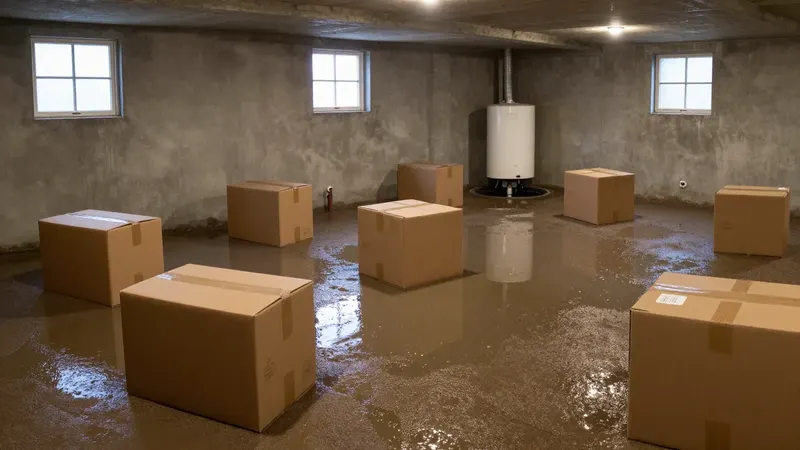
Wikipedia notes that flooding has ruined houses in parts of the city and caused sewage backups linked to the water system's disrepair. When a storm dumps heavy rain, basements below street level can take in both rainwater and sewer water.
Sewage-contaminated water is treated as Category 3, meaning porous materials it touches are typically discarded and the area disinfected. Ask a contractor about sewage cleanup and basement flood cleanup procedures, protective equipment and how they will verify the space is dry.
Mold in basements and behind plaster
Humid summers and damp basements give mold plenty of opportunity, especially after a backup or a slow leak behind old plaster. Musty odors in a lower level are often the first sign.
Per EPA guidance, small areas under about 10 square feet can usually be handled by the homeowner if the moisture problem is solved; larger or hidden growth is a job for a professional mold remediation contractor, who will typically contain the area and use HEPA filtration.
What to do first in a Baltimore emergency
- Dial 911 for fire, injury, gas odors or a building that looks unstable.
- Stay out of flooded basements if water may be near outlets, appliances or the electrical panel.
- Report non-emergency problems such as street flooding or sewer issues through 311 (call 3-1-1 inside the city).
- The city's Office of Emergency Management lists flooding, power outages and large fires among its hazards and offers an emergency alert sign-up on its website.
- Photograph every affected room and item before cleanup and keep receipts.
- Contact your insurer or agent; what is covered depends on your policy, and sewer backup or flood coverage is often separate.
Neighborhoods and nearby communities
Areas in and around Baltimore that callers often mention include:
- Downtown
- Inner Harbor
- Govans
- Roland Park
- Guilford
- Homeland
- Hampden
- Charles Village
- Mount Washington
- Station North
- Mount Vernon
- Federal Hill
- Locust Point
- Fells Point
- Canton
- Highlandtown
- Little Italy
- Greektown
- Armistead Gardens
- Broadway East
- Barclay
- McElderry Park
- Pimlico
- Cheswolde
- Park Heights
- Edmondson Village
- Pigtown
- Carrollton Ridge
- Ridgely's Delight
- Jonestown
- Bolton Hill
- Brewer's Hill
Nearby communities with their own pages (straight-line distance from Baltimore):
Baltimore restoration FAQs
My neighbor's leak damaged my rowhouse. What should I do?
Document the damage with photos, notify your neighbor, and contact your insurer or agent to ask how shared-wall losses are handled under your policy. A contractor can take moisture readings on your side of the wall so the extent of the damage is recorded.
Why does my basement flood with sewage during heavy rain?
Wikipedia notes that flooding in parts of the city has caused sewage backups related to the condition of the water system. Heavy downpours can overload sewer lines and push water up through floor drains. Treat that water as contaminated and avoid contact until it is cleaned up properly.
How can I get local emergency alerts?
The Baltimore City Office of Emergency Management website has a link to sign up for emergency alerts. For non-emergency issues like street flooding, call 3-1-1 from inside the city.
Do hurricanes really affect a city this far up the bay?
Yes. Remnants of tropical systems can cause flooding downtown in late summer and early fall, and Hurricane Isabel (2003), Hurricane Irene (2011) and Hurricane Sandy (2012) were all part of federal disaster declarations that included the city.
Can you find a contractor near Fells Point or Hampden?
We try to connect callers across the city with independent contractors who serve their neighborhood. Availability depends on local providers at the time you call.
Restoration guides
- Water Damage Restoration
- Burst Pipe Water Damage
- Sewage Cleanup
- Basement Flood Cleanup
- Smoke Damage Cleanup
- Mold Remediation