
The parish seat of Lafayette Parish has run a consolidated city-parish government since 1996 and counted about 121,000 residents in 2020. It sits on the western rim of the Atchafalaya Basin, on ground higher than the wetlands around it, so its chief water problem is not river overflow but intense rain that outruns local drainage.
Here is how our service works: Fire & Water Energy takes your call and tries to match you with an independent restoration contractor serving Lafayette. Reach us at (866) 937-3230. We are not the company that does the work, and whether a provider can help depends on who is available nearby. If you want the fine print first, the referral disclosure and how it works page cover it.
Coulees, the Vermilion and Acadiana's heavy rain
Drainage channels such as Isaac Verot Coulee, Coulee Mine, Coulee des Poches and Coulee Ile des Cannes feed the Vermilion River as it crosses the city. Annual precipitation averages close to 63 inches spread over more than 115 days, and summer thunderstorms can drop a lot of that in a single afternoon. Wikipedia notes that the city's flooding tends to be local flash flooding rather than broad inundation.
August 2016 tested that. During the statewide floods, the Vermilion was among more than ten rivers that climbed to moderate, major or record stage, and schools across the area closed. FEMA has also included Lafayette Parish in declarations for Hurricane Rita (2005), Gustav (2008), Isaac (2012), Tropical Storm Harvey (2017), Barry (2019), Laura and Delta (2020), and Zeta and Ida (2021).
From slab leaks to a split pipe in a hard freeze
In a house built on a concrete slab, a pinhole leak in a buried line can show up as warm spots, warped flooring or a jump in the water bill. Overflowing AC drain pans in attics, failed water heaters and roof leaks after strong storms are also common calls.
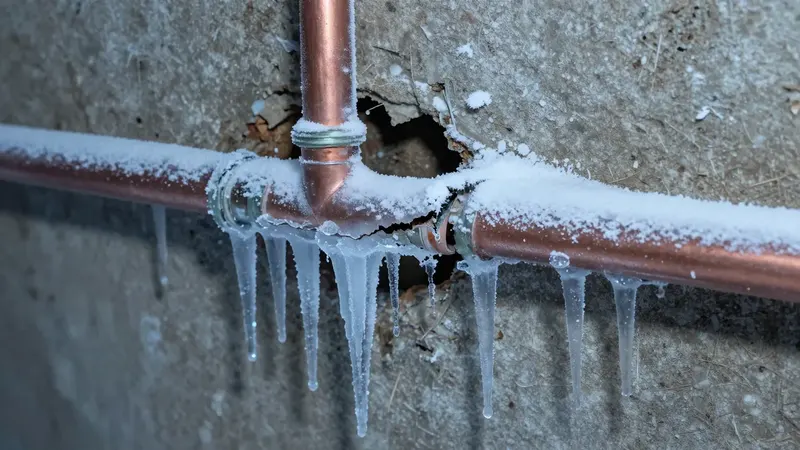
Cold matters more than people expect. On January 22, 2025, during the Gulf Coast blizzard, the city recorded a low of 4 degrees, its coldest on record, and FEMA declared the 2021 winter storms a disaster for the parish. Exposed and attic piping is most at risk. For water damage restoration in Lafayette, a contractor typically shuts off the source, extracts water and dries the structure with monitored equipment; see the water damage repair and structural drying pages for what that looks like.
Federal disaster declarations that included Lafayette Parish
FEMA records show Lafayette Parish was included in 17 major disaster declarations for weather or fire events from 2000 through 2026 (12 hurricane, 2 flood, 1 severe ice storm, 1 severe storm, 1 coastal storm, by FEMA incident type). Declarations are made at the county level, so they do not mean every neighborhood in Lafayette was affected. The most recent:
- 2021 – Hurricane Ida (DR-4611)
- 2021 – Severe Storms, Tornadoes, and Flooding (DR-4606)
- 2021 – Severe Winter Storms (DR-4590)
- 2021 – Hurricane Zeta (DR-4577)
- 2020 – Hurricane Delta (DR-4570)
- 2020 – Hurricane Laura (DR-4559)
Source: OpenFEMA Disaster Declarations Summaries, retrieved 2026-10-10. Counts include major disaster (DR) declarations with hurricane, flood, severe storm, tropical storm, fire, tornado, coastal storm, winter or ice storm, mudslide and dam/levee incident types.
Water, fire or storm damage in Lafayette?
Call (866) 937-3230 and tell us what happened at your Lafayette property.
Restoring a home or historic building after fire
Downtown holds more than eight buildings on the National Register of Historic Places, among them Old Lafayette City Hall and the Cathedral of Saint John the Evangelist. Older masonry, plaster and wood trim hold onto smoke odor and need gentler cleaning than drywall does.
In any house, a cooking or electrical fire leaves soot that spreads through ductwork and fabrics, plus water from the hoses. Restoration companies commonly secure the structure, remove debris, clean or replace affected materials and treat odor. More detail sits on our fire damage restoration and soot removal pages.
Storm runoff, hurricane winds and flood cleanup
Lafayette is about 75 miles from Lake Charles and well inland, yet tropical systems still reach it with heavy rain, falling trees and roof damage. When coulees back up, water enters garages and living areas, and that water is treated as contaminated because it carries sewage and chemicals.
Crews usually remove wet carpet and drywall, clean and disinfect what remains, then dry with dehumidifiers until readings are normal. Tarping a torn roof early limits additional rain damage. Read about flood damage restoration and storm damage cleanup.
Muggy summers and the mold that follows a leak
Hot, damp air means wet materials rarely dry by themselves here, and visible mold can appear within a few days. Check closets on outside walls, under kitchen sinks and around the air handler after any water event.
The EPA suggests that a homeowner may clean an area under about 10 square feet with gloves and an N95 mask; larger areas, hidden growth or contamination from floodwater are jobs for a trained professional. Ask any mold removal company how it will isolate the work area.
Protecting your family and your claim in Lafayette
- For fire, injury, gas odor or rising water inside the home, call 911 first.
- Watch National Weather Service Lake Charles warnings and Lafayette Consolidated Government notices before and during storms.
- Stay off wet floors near outlets until power to that area is off.
- Record damage with dated photos and video, and keep damaged items until your adjuster says otherwise. What gets paid for depends on your policy, so ask your agent or insurer before you sign anything.
- Ask any contractor about state licensing, written estimates and how they document moisture readings.
Neighborhoods and nearby communities
Nearby communities with their own pages (straight-line distance from Lafayette):
Lafayette restoration FAQs
Does Lafayette flood from the Vermilion River?
Most flooding in the city is local flash flooding when heavy rain overwhelms coulees and street drains. The river itself can rise sharply, as it did in August 2016 when it reached flood stage during the statewide floods. Homes near coulees and low spots tend to see water first.
How cold does Lafayette get, and should I worry about frozen pipes?
Hard freezes are rare but real: the city hit 4 degrees during the January 2025 Gulf Coast blizzard. Insulate attic and exterior lines and let faucets drip during a freeze. If a pipe bursts, shut the main valve right away.
Which recent storms brought federal disaster declarations to Lafayette Parish?
FEMA records include Hurricane Laura and Hurricane Delta in 2020, the 2021 winter storms, Hurricane Zeta and Hurricane Ida in 2021, and the 2016 and 2021 flooding events. Declarations apply to the whole parish, not individual neighborhoods.
Can you tell me how soon a contractor will reach my house?
We cannot. Fire & Water Energy only provides referrals; when you call (866) 937-3230 we try to connect you with an independent company, and that company sets its own schedule and pricing.
Restoration guides
- Water Damage Repair
- Structural Drying
- Flood Damage Restoration
- Storm Damage Cleanup
- Mold Removal
- Fire Damage Restoration