
With close to 5,000 housing units counted in 2020 and a history as a named community going back at least to the 1950 census, Madison Heights has a mix of older and newer homes. Winters bring the occasional deep freeze, and summer storms bring wind and heavy rain.
Fire & Water Energy is strictly a matching line for homeowners here. When you phone (866) 937-3230, we try to link you with an independent restoration contractor working in Madison Heights and the Lynchburg area, though we cannot promise one is free at that moment. Our process page and referral disclosure explain, step by step, what happens after an Amherst County caller rings us.
Piedmont weather and the James River valley next door
The community sits around 750 feet above sea level. Weather records kept for neighboring Lynchburg show about 42.8 inches of precipitation a year and roughly 11.6 inches of snow on average, though snowfall swings widely; the 1995–96 winter brought 56.8 inches. Lynchburg's record low of −11°F came on February 20, 2015.
Lynchburg also has a long record of James River flooding, including an 1870 flood that took out the city's bridges and an 1877 flood that ended the James River and Kanawha Canal. Amherst County's FEMA major disaster declarations since 2000 include Hurricane Isabel (2003), a 2010 winter storm, and the 2012 severe storms and straight-line winds.
Frozen lines, worn plumbing and other sources of indoor water
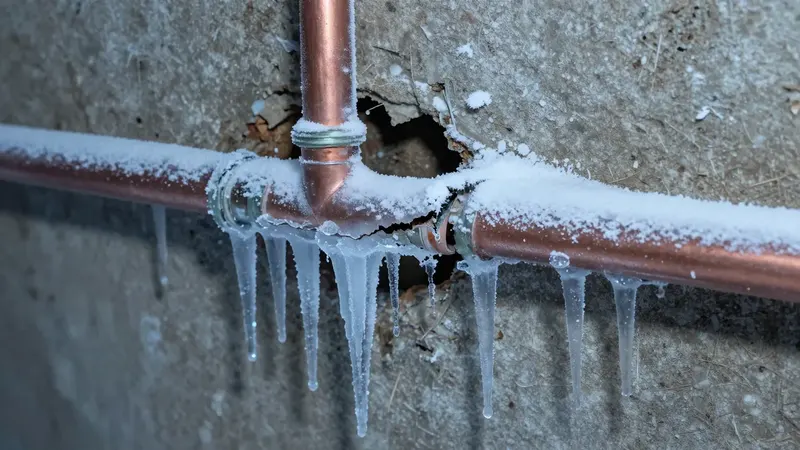
Cold snaps like the one in February 2015 are hard on pipes running through crawlspaces, exterior walls and unheated additions. A split line often goes unnoticed until it thaws and starts spraying. In older houses, galvanized pipe, aging water heaters and tired roof flashing are common culprits too.
A contractor providing water damage restoration in Madison Heights would normally shut off the source, pull out standing water, open wet cavities and dry the structure with air movers and dehumidifiers. If a pipe burst, ask about burst pipe water damage work and the follow-on repairs to drywall and flooring.
Federal disaster declarations that included Amherst County
FEMA records show Amherst County was included in 4 major disaster declarations for weather or fire events from 2000 through 2026 (2 severe storm, 1 winter storm, 1 hurricane, by FEMA incident type). Declarations are made at the county level, so they do not mean every neighborhood in Madison Heights was affected. The most recent:
- 2012 – Severe Storms and Straight-line Winds (DR-4072)
- 2010 – Severe Winter Storm and Snowstorm (DR-1874)
- 2003 – Hurricane Isabel (DR-1491)
- 2000 – Severe Winter Storms (DR-1318)
Source: OpenFEMA Disaster Declarations Summaries, retrieved 2026-10-10. Counts include major disaster (DR) declarations with hurricane, flood, severe storm, tropical storm, fire, tornado, coastal storm, winter or ice storm, mudslide and dam/levee incident types.
Water, fire or storm damage in Madison Heights?
Call (866) 937-3230 and tell us what happened at your Madison Heights property.
Handling soot, smoke odor and fire debris
Wood stoves, space heaters and chimneys see heavy use in a Piedmont winter, and each adds fire risk. After any fire, soot is acidic and can etch fixtures and discolor finishes if it sits too long.
Companies doing fire damage restoration typically remove debris, clean or replace scorched materials, and run deodorization to remove smoke odor from framing and HVAC. Ask how they plan to handle any water the fire department left behind.
Straight-line winds, heavy rain and storm cleanup
The 2012 federal declaration for Amherst County covered severe storms and straight-line winds. Winds like that can drop trees on roofs, peel shingles and break windows, letting rain pour into upper floors. Remnants of tropical systems such as Isabel can saturate the ground and push water into basements.
Storm damage cleanup often starts with tarping and board-up. If floodwater from outdoors entered the home, treat it as contaminated; flood cleanup crews generally remove soaked porous materials and disinfect what remains.
Damp summers and mold growth
Summers in this part of Virginia are hot and humid, which keeps crawlspaces and basements damp. Mold can appear on wet materials within a day or two and spreads quietly behind paneling or under carpet.
The EPA notes that areas larger than about 10 square feet usually warrant professional help. Mold removal should include containment, HEPA air filtering and correction of the moisture source.
What to do first in Madison Heights
- Call 911 if there is fire, injury, a gas smell or signs of collapse, and get out.
- If it is safe, turn off water at the main valve and power to wet areas at the breaker.
- Follow Amherst County and state emergency instructions during storms.
- Photograph rooms and belongings before cleanup, and save damaged item samples if your adjuster may want them.
- Contact your insurance agent; coverage varies by policy, and standard homeowners policies usually exclude flooding.
Neighborhoods and nearby communities
Nearby communities with their own pages (straight-line distance from Madison Heights):
Madison Heights restoration FAQs
How cold do winters get around Madison Heights?
Nearby Lynchburg averages about 36 degrees in January and hit minus 11 degrees on February 20, 2015. Deep freezes like that can burst pipes in crawlspaces and outside walls. Insulate exposed lines and keep a trickle running in extreme cold.
Has Amherst County had federal disaster declarations?
Yes. Since 2000, FEMA declarations for the county include winter storms in 2000 and 2010, Hurricane Isabel in 2003, and severe storms with straight-line winds in 2012. Declarations are county-wide and do not mean every neighborhood was damaged.
Is a contractor from Lynchburg able to work in Madison Heights?
Some firms based in Lynchburg may also take jobs here, since Madison Heights is only about two miles away. Ask any company whether it serves your address, and check whether Virginia or the county requires a license for the work and whether the company holds it.
Can your referral line file or manage my insurance claim for me?
No. We only try to connect you with an independent contractor. Your insurer decides what is covered under your policy, so call your agent and keep thorough photos and receipts.
Restoration guides
- Water Damage Restoration
- Burst Pipe Water Damage
- Storm Damage Cleanup
- Fire Damage Restoration
- Smoke Odor Removal
- Mold Removal