
Named for the laurel trees that once crowded the area, Laurel grew up around a railroad spur that carried coal out of western Henrico. Today it covers about 5.4 square miles of suburban housing, with the Laurel Industrial School Historic District and the restored Laurel Gallery as reminders of its older past.
Fire & Water Energy operates as a referral service, not as a contractor. Dial (866) 937-3230 and we'll look for an independent restoration contractor willing to take a job in Laurel; who is available varies. Check how it works and our referral disclosure to understand the arrangement.
Tropical remnants and winter storms across Henrico
This community has no detailed flood record in the sources we reviewed, so the clearest guide is Henrico County's disaster history. FEMA major disaster declarations including the county since 2000 cover severe winter storms in 2000, Hurricane Isabel in 2003, severe storms, flooding and tornadoes tied to Tropical Depression Gaston in 2004, Hurricane Irene in 2011, and the severe winter storm and snowstorm of 2016.
That pattern points to two seasons of concern: late summer and early fall, when tropical systems can drop heavy rain and topple trees, and winter, when snow loads and hard freezes test roofs and plumbing. Henrico County Emergency Management keeps a Hazard Vulnerability Assessment in its Emergency Operations Plan, updated in 2025.
Typical indoor water damage in western Henrico
Across the roughly 7,500 housing units in Laurel, leaks tend to start with washing machine hoses, failed water heaters, toilet supply lines or an air conditioning condensate line that clogs during a humid summer. Winter cold can freeze pipes in exterior walls or crawlspaces.
When you look for water damage restoration in Laurel, expect a typical contractor to find and stop the source, remove standing water, check hidden areas with moisture meters and dry the structure with air movers and dehumidifiers. Our water extraction page explains the first step.
Federal disaster declarations that included Henrico County
FEMA records show Henrico County was included in 5 major disaster declarations for weather or fire events from 2000 through 2026 (2 hurricane, 2 severe storm, 1 winter storm, by FEMA incident type). Declarations are made at the county level, so they do not mean every neighborhood in Laurel was affected. The most recent:
- 2016 – Severe Winter Storm and Snowstorm (DR-4262)
- 2011 – Hurricane Irene (DR-4024)
- 2004 – Severe Storms, Flooding and Tornadoes Associated W Td Gaston (DR-1544)
- 2003 – Hurricane Isabel (DR-1491)
- 2000 – Severe Winter Storms (DR-1318)
Source: OpenFEMA Disaster Declarations Summaries, retrieved 2026-10-10. Counts include major disaster (DR) declarations with hurricane, flood, severe storm, tropical storm, fire, tornado, coastal storm, winter or ice storm, mudslide and dam/levee incident types.
Water, fire or storm damage in Laurel?
Call (866) 937-3230 and tell us what happened at your Laurel property.
After a house fire: soot, smoke and odor
Kitchen fires, dryer lint and electrical faults are frequent starting points in any suburban neighborhood. Even a small fire can coat several rooms with soot and leave an odor that lingers in HVAC ducts, insulation and fabrics.
Restoration companies generally board up openings, clear debris, clean surfaces and contents, and deodorize. For a closer look, see fire damage cleanup and soot removal.
Storm debris and rainwater intrusion
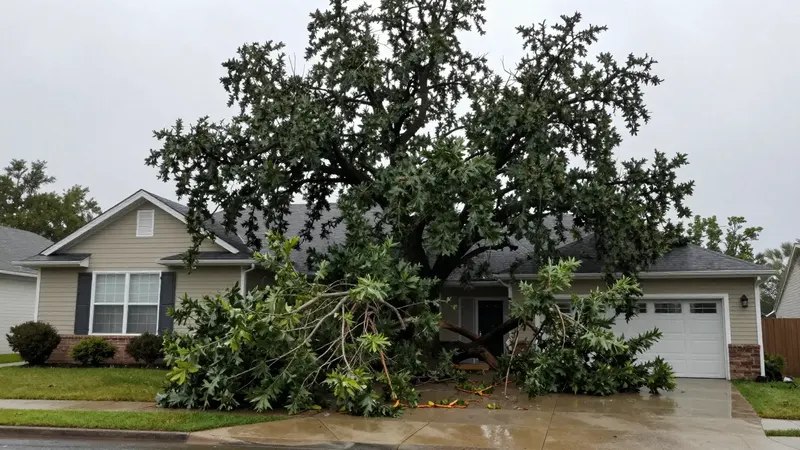
Remnants of tropical systems like Gaston and Irene brought the kind of soaking rain and gusty wind that can send trees onto roofs and push water under doors or into crawlspaces. Rainwater that has crossed the ground carries contaminants, so contractors usually treat it as dirtier than a clean pipe leak.
Typical steps include tarping roof openings, removing wet insulation and drywall, sanitizing and drying. See hurricane damage cleanup and storm water damage restoration for more.
Humidity, crawlspaces and mold
Central Virginia summers are warm and muggy, and crawlspaces or closets that stay damp after a leak give mold a head start. Growth can begin within a day or two on drywall paper, carpet backing and wood.
The EPA's rule of thumb is that areas under about 10 square feet are often a do-it-yourself job, while larger patches or mold following contaminated water should be handled by a professional with containment. Our mold removal overview walks through what that looks like.
Safety and paperwork for Laurel homeowners
- If there is fire, a gas smell, an injury or a collapsing ceiling, call 911 and leave right away.
- Avoid wet areas near outlets and appliances until electricity there is shut off.
- Sign up for Henrico County Emergency Alerts and follow Henrico County Emergency Management.
- Photograph damage room by room and keep receipts for any emergency purchases. Your policy wording decides what is covered, so check with your insurer or agent.
Neighborhoods and nearby communities
Nearby communities with their own pages (straight-line distance from Laurel):
- Glen Allen · 2 mi
- Lakeside · 3 mi
- Tuckahoe · 4 mi
- Short Pump · 6 mi
- Richmond · 7 mi
- East Highland Park · 7 mi
Laurel restoration FAQs
Which major storms have affected Henrico County, including Laurel?
FEMA disaster declarations for Henrico County since 2000 include Hurricane Isabel (2003), flooding and tornadoes associated with Tropical Depression Gaston (2004), Hurricane Irene (2011), and winter storms in 2000 and 2016.
How do I get emergency alerts in Laurel?
Laurel is an unincorporated community, so alerts come from Henrico County. The county offers Henrico County Emergency Alerts through its website.
What should I do first when a pipe bursts in winter?
Shut off the main water valve, turn off power to wet areas if you can do so safely, and move valuables out of the water. Then document the damage and call your insurer or a restoration contractor.
Is a small patch of crawlspace mold something a homeowner can tackle?
EPA guidance suggests small patches under about 10 square feet can often be cleaned by a homeowner with proper protection. Larger growth, or mold that follows floodwater or sewage, is better handled by a professional.
Restoration guides
- Water Damage Restoration
- Water Extraction
- Hurricane Damage Cleanup
- Storm Water Damage Restoration
- Fire Damage Cleanup
- Mold Removal