
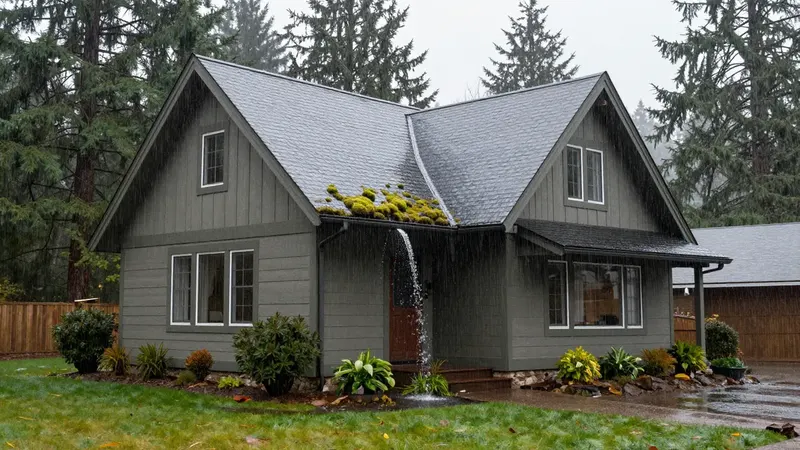
Sandy takes its name from the Sandy River, which Lewis and Clark named in 1805. Settled in the 1850s near the end of the Barlow Road, the last stretch of the Oregon Trail, it grew on logging and sawmills and incorporated in 1911. Today it is the western gateway to the Mount Hood Corridor, about 27 miles east of Portland, with close to 4,700 homes.
Fire & Water Energy doesn't send workers; it runs a referral line. When you call (866) 937-3230, we try to match you with an independent restoration contractor who works in Sandy and nearby foothill communities. Availability depends on which providers are active locally. See how it works and our referral disclosure to know what to expect from us.
Foothill rain, mountain storms and a fire in 1913
Wikipedia reports average annual precipitation of 61.4 inches, with December the wettest month at just over 9 inches and July the driest at under an inch. Summers are mild and dry; winters bring long rainy spells off the Cascades. Clackamas County Disaster Management lists flooding, landslides, wildfire, smoke, winter weather and volcanoes among local hazards.
Clackamas County appears in nine FEMA major disaster declarations since 2000, including severe winter storms in 2004 (DR-1510), record snow in 2009 (DR-1824), the 2011 winter storm with flooding and debris flows (DR-1956), the 2020 wildfires and straight-line winds (DR-4562), and severe storms with flooding and mudslides in 2026 (DR-4907). Fire has shaped the town too: in October 1913 a major blaze destroyed numerous buildings and businesses.
When 60-plus inches of rain finds a way in: water damage restoration in Sandy
With that much rain, roofs, gutters, window flashing and crawlspace vapor barriers are under steady pressure from late fall through spring. Overflowing gutters dump water against foundations, and a small roof defect can feed a ceiling leak for weeks. Cold snaps and winter storms add frozen supply lines to the list.
For water damage restoration in Sandy, contractors commonly stop the source, remove water, use moisture meters to find wet framing behind walls and floors, and dry the structure with air movers and dehumidifiers. Learn about structural drying and storm water damage restoration, which deals with rain driven in through a damaged roof or windows.
Federal disaster declarations that included Clackamas County
FEMA records show Clackamas County was included in 9 major disaster declarations for weather or fire events from 2000 through 2026 (8 severe storm, 1 fire, by FEMA incident type). Declarations are made at the county level, so they do not mean every neighborhood in Sandy was affected. The most recent:
- 2026 – Severe Storms, Straight-line Winds, Flooding, Landslides, and Mudslides (DR-4907)
- 2024 – Severe Winter Storms, Straight-line Winds, Landslides, and Mudslides (DR-4768)
- 2021 – Severe Winter Storm (DR-4599)
- 2020 – Wildfires and Straight-line Winds (DR-4562)
- 2016 – Severe Winter Storms, Straight-line Winds, Flooding, Landslides, and Mudslides (DR-4258)
- 2011 – Severe Winter Storm, Flooding, Mudslides, Landslides, and Debris Flows (DR-1956)
Source: OpenFEMA Disaster Declarations Summaries, retrieved 2026-10-10. Counts include major disaster (DR) declarations with hurricane, flood, severe storm, tropical storm, fire, tornado, coastal storm, winter or ice storm, mudslide and dam/levee incident types.
Water, fire or storm damage in Sandy?
Call (866) 937-3230 and tell us what happened at your Sandy property.
Wildfire smoke drifting down the Mount Hood Corridor
Clackamas County was part of the 2020 wildfire and wind declaration, and the county now treats smoke as a separate hazard. Homes close to forested land can collect ash in gutters and attic vents, and smoke can leave a stale odor in soft furnishings even when no flames come near.
After a structure fire, a typical restoration contractor will board up and tarp the building, remove charred debris, clean soot with methods matched to each surface and treat lingering odor. Our pages on smoke damage cleanup and fire damage cleanup describe the process.
Landslides, high water and winter storm cleanup
Most of the county's storm declarations mention landslides or mudslides alongside flooding, which matters on sloped lots and along drainages in the foothills. Wind and ice storms in 2016, 2021 and 2024 brought trees and power lines down across the county.
Outdoor floodwater should be treated as contaminated, since it can carry soil, sewage and chemicals. A reputable company will usually remove soaked carpet, pad and insulation and cut drywall above the waterline. The flood cleanup and storm damage cleanup pages explain those steps for foothill homes.
Mold prevention in a wet foothill climate
Months of rain and cool temperatures make crawlspaces, attics with poor ventilation and bathrooms prime spots for mold. Growth can begin within a day or two once drywall, wood or carpet stays wet, so quick drying after any leak matters more here than in drier parts of the state.
Under EPA guidance, homeowners can often handle a moldy area smaller than about 10 square feet after fixing the moisture. Larger growth, mold after floodwater, or contamination in ducts should be handled by professionals who isolate the work area and use HEPA filtration. Read about mold removal.
Protecting your household first
- Call 911 for fire, injury, gas odors or fallen power lines, and get out if walls, ceilings or nearby slopes look unstable.
- Register with Clackamas County PublicAlerts for evacuation and severe weather notices.
- Turn off water at the main valve for plumbing leaks, and keep children and pets away from wet areas near electrical outlets.
- Photograph and list damaged items before cleanup. Your specific policy determines coverage, so contact your insurer or agent early.
Neighborhoods and nearby communities
Nearby communities with their own pages (straight-line distance from Sandy):
- Damascus · 10 mi
- Gresham · 11 mi
- Troutdale · 12 mi
- Fairview · 13 mi
- Happy Valley · 13 mi
- Washougal, WA · 14 mi
Sandy restoration FAQs
Which months bring the most rain to Sandy?
December averages a little over 9 inches, and the wettest stretch runs through late fall and winter. July is the driest month, with less than an inch on average. Clean gutters and check roof flashing before the rainy season starts.
Is wildfire smoke a concern even inside town?
Yes. Clackamas County lists smoke as a hazard, and the 2020 wildfire declaration covered the county. Keep HVAC filters on hand, close windows on smoky days and have ductwork checked if ash got inside.
My crawlspace takes on water every winter. Is that normal?
It's common in high-rainfall areas, but it isn't harmless. Standing water raises humidity under the house and can lead to mold and wood rot. A contractor can help dry it, and a drainage professional can look at grading, gutters and a sump system.
Do you cover Estacada, Damascus and Gresham too?
We try to connect callers with independent contractors in nearby communities, including Estacada, Damascus, Gresham and Mount Hood Village. Availability varies, so call (866) 937-3230 and give us your location.
Restoration guides
- Water Damage Restoration
- Structural Drying
- Storm Water Damage Restoration
- Flood Cleanup
- Smoke Damage Cleanup
- Mold Removal