
Founded as Fort Astoria in 1811 and incorporated in 1876, Astoria is the Clatsop County seat and the first permanent American settlement west of the Rocky Mountains. It faces the Columbia on its south shore, looks across Youngs Bay toward Warrenton, and rises to the Astoria Column on Coxcomb Hill. As of 2020 the city had 44 sites and districts on the National Register of Historic Places and roughly 5,300 housing units.
Fire & Water Energy refers callers to contractors; we don't perform restoration ourselves. Call (866) 937-3230 and we'll try to put you in touch with an independent restoration contractor who serves Astoria and the north coast. On the north coast, how soon anyone can come out depends entirely on which independent firms have openings. Read how it works and our referral disclosure for more on our role.
Life at the river's mouth: rain records and winter storms
Most of Astoria's rain arrives in late fall and winter. The record books include a 108-inch water year in 1915–16, more than 36 inches in December 1933 alone, and 5.56 inches in a single day on November 25, 1998. Snow is light and often absent, though 12.5 inches fell in one day in December 1922. The city averages about 31 mornings a year at or below freezing, with a record low of 6°F.
Clatsop County appears in nine FEMA major disaster declarations since 2000. Several involved flooding, landslides and mudslides, including 2006 (DR-1632 and DR-1672), 2007 (DR-1683 and DR-1733), 2011 (DR-1956), 2016 (DR-4258) and 2026 (DR-4907), plus winter storms in 2004 and 2009.
Hillside homes, steady rain and water damage restoration in Astoria
Where houses are older or sit on sloped lots, roofs, gutters, retaining walls and foundations carry a heavy runoff load. Wind-driven rain can work past siding and window trim, and water moving downhill through soil can find its way into basements and crawlspaces. Aging supply lines and drains in older houses add to the mix.
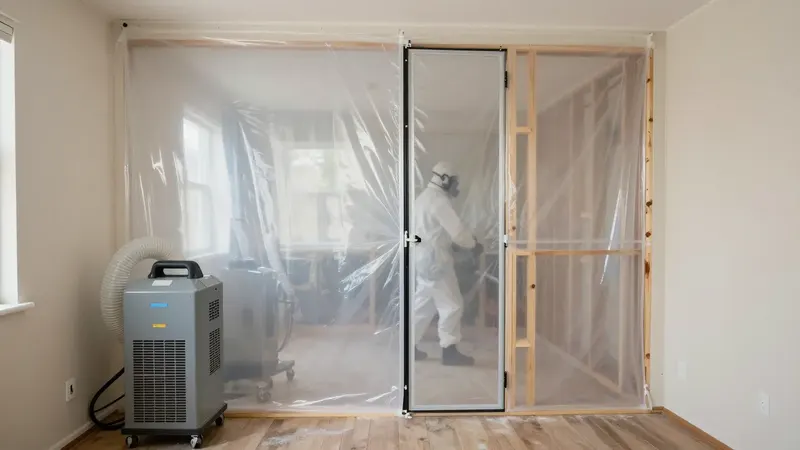
For water damage restoration in Astoria, contractors commonly pinpoint where water is getting in, extract it, check hidden framing with moisture meters and dry the structure with dehumidifiers and air movers. Our guides to basement flood cleanup and structural drying cover those steps.
Federal disaster declarations that included Clatsop County
FEMA records show Clatsop County was included in 9 major disaster declarations for weather or fire events from 2000 through 2026 (9 severe storm, by FEMA incident type). Declarations are made at the county level, so they do not mean every neighborhood in Astoria was affected. The most recent:
- 2026 – Severe Storms, Straight-line Winds, Flooding, Landslides, and Mudslides (DR-4907)
- 2016 – Severe Winter Storms, Straight-line Winds, Flooding, Landslides, and Mudslides (DR-4258)
- 2011 – Severe Winter Storm, Flooding, Mudslides, Landslides, and Debris Flows (DR-1956)
- 2009 – Severe Winter Storm, Record and Near Record Snow (DR-1824)
- 2007 – Severe Storms, Flooding, Landslides, and Mudslides (DR-1733)
- 2007 – Severe Winter Storm and Flooding (DR-1683)
Source: OpenFEMA Disaster Declarations Summaries, retrieved 2026-10-10. Counts include major disaster (DR) declarations with hurricane, flood, severe storm, tropical storm, fire, tornado, coastal storm, winter or ice storm, mudslide and dam/levee incident types.
Water, fire or storm damage in Astoria?
Call (866) 937-3230 and tell us what happened at your Astoria property.
Two downtown fires and modern smoke cleanup
Fire has reshaped Astoria twice. Downtown was devastated in 1883 and again in 1922, when buildings stood mostly on wooden pilings over marshy ground; in 1922 collapsing streets knocked out the water system, and crews used dynamite to blast firebreaks. Both disasters show how quickly fire can spread through closely built older blocks.
After a house or business fire, a typical restoration contractor will board up the building, remove debris, clean soot from surfaces and contents and treat odor. In a climate this humid, soot and moisture together can stain quickly, so drying is part of the job. The fire damage cleanup and soot removal pages walk through that work in order.
Landslides, high water and storm debris
The frequency of landslide and mudslide language in Clatsop County's declarations is a warning for a city that climbs from the riverfront to Coxcomb Hill. Saturated ground after long rains can shift beneath yards, driveways and foundations. Wind and winter storms also bring down trees and damage roofs.
FEMA declarations are county-wide, so they don't pinpoint particular properties. If outdoor water or mud enters your home, treat it as contaminated; a reputable company will usually remove soaked materials and sanitize before drying. Fallen limbs and roof damage are handled under storm damage cleanup; muddy water indoors under flood damage restoration.
Mold where humidity stays above 80 percent
Average monthly humidity here never falls below 80 percent, so damp materials do not air-dry the way they would inland. Closets on outside walls, basements, attics with poor ventilation and bathrooms are where mold usually shows up first.
EPA guidance says small areas under about 10 square feet can often be cleaned by a homeowner once the moisture is fixed. Larger growth, mold after floodwater or sewage, or growth in ducts calls for a professional with containment and HEPA filtration. Our mold remediation page has details.
Astoria safety basics after damage
- Call 911 for fire, injury, gas odor or downed lines, and leave if the building or the slope around it seems unstable.
- Watch for new cracks, sticking doors or moving soil after long rains, signs that the ground may be shifting.
- Locate Clatsop County's alert program through OR-Alert.
- Photograph damage before cleanup. Ask your insurer or agent what your policy includes, since landslide and flood coverage are often handled separately.
Neighborhoods and nearby communities
Areas in and around Astoria that callers often mention include:
- Uniontown
- Downtown
Nearby communities with their own pages (straight-line distance from Astoria):
- Longview, WA · 43 mi
- Kelso, WA · 44 mi
- St. Helens · 54 mi
- Aberdeen, WA · 54 mi
- Centralia, WA · 55 mi
- Forest Grove · 58 mi
Astoria restoration FAQs
Why does mold seem to come back so fast in Astoria?
Average humidity stays above 80 percent all year, so surfaces that get wet stay wet unless they are actively dried. Cleaning without fixing the moisture source and running a dehumidifier usually just buys time. Find the leak or condensation problem first.
Is my hillside home at risk of landslides?
Many Clatsop County disaster declarations since 2000 included landslides or mudslides, so slope movement is a real local concern. Watch for cracks in walls or foundations, tilting fences or trees, and water seeping from hillsides. If you see rapid changes, leave and contact authorities.
What month brings the most rain?
Late fall and winter are the wettest, and the city's single wettest month on record was December 1933 with more than 36 inches. Prepare gutters and drainage in early fall.
Do you help in Warrenton and Seaside too?
We try to connect callers with independent contractors around the north coast, including Warrenton and Seaside. Availability varies, so call (866) 937-3230 and describe where you are.
Restoration guides
- Water Damage Restoration
- Structural Drying
- Basement Flood Cleanup
- Storm Damage Cleanup
- Fire Damage Cleanup
- Mold Remediation