
This unincorporated Baltimore County community was platted in 1909 and boomed when the Glenn L. Martin Company's aircraft plant employed more than 53,000 people during World War II. Much of today's housing traces to that growth and the decades after, so many homes are old enough for worn plumbing, roofs and electrical systems.
Fire & Water Energy hands off calls to independent restoration contractors; it is a referral service and does not do the work. Call (866) 937-3230 and we will try to reach a company covering Essex, though no provider is guaranteed. Our how it works and referral disclosure pages explain the setup for peninsula residents.
Life on a low Chesapeake peninsula
The land here is mostly flat to gently rolling, with tidal rivers on two sides and the open Bay beyond. Baltimore County's climate is humid subtropical, with hot, humid summers and freezing winter nights, and areas near the Bay sit in a milder hardiness zone than the hills to the north.
Hurricane Isabel in 2003 showed what surge can do on this shoreline. Across Baltimore County, more than 400 people had to be rescued from nearby waterfront communities such as Bowleys Quarters, Edgemere and Millers Island, over 300 buildings were destroyed, and about 220,000 customers lost power. FEMA has included the county in ten major declarations since 2000, including Isabel, Hurricane Irene and the remnants of Tropical Storm Lee (2011), Hurricane Sandy (2012), severe storm and flooding in 2018, and five winter storm events.
Water damage in postwar Essex houses
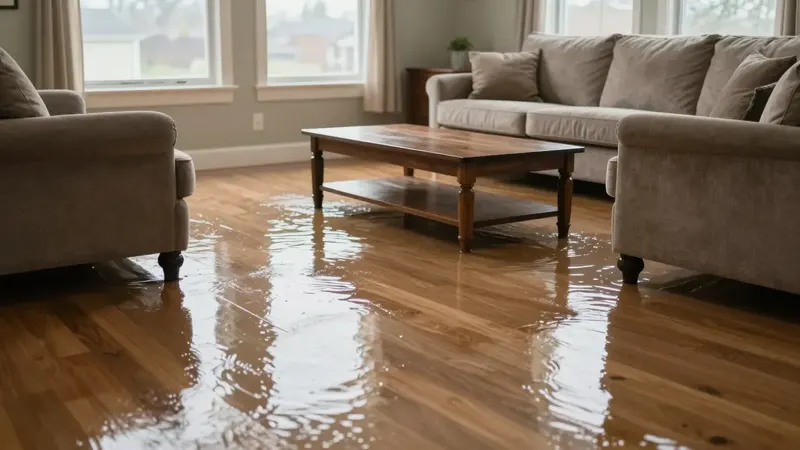
Homes built during and after the wartime boom often have older galvanized supply lines, cast-iron drains and small crawl spaces or basements where moisture lingers. Waterfront lots add a high water table and damp air, so even a slow leak can spread quickly into subfloors.
A contractor providing water damage restoration in Essex will usually stop the leak, remove standing water with water extraction equipment, cut out soaked materials and dry the framing while tracking moisture levels. Rebuilding drywall, floors and trim falls under water damage repair.
Federal disaster declarations that included Baltimore County
FEMA records show Baltimore County was included in 10 major disaster declarations for weather or fire events from 2000 through 2026 (3 winter storm, 3 hurricane, 2 flood, 2 severe storm, by FEMA incident type). Declarations are made at the county level, so they do not mean every neighborhood in Essex was affected. The most recent:
- 2018 – Severe Storm and Flooding (DR-4376)
- 2016 – Severe Winter Storm and Snowstorm (DR-4261)
- 2014 – Snowstorm (DR-4170)
- 2012 – Hurricane Sandy (DR-4091)
- 2011 – Remnants of Tropical Storm Lee (DR-4038)
- 2011 – Hurricane Irene (DR-4034)
Source: OpenFEMA Disaster Declarations Summaries, retrieved 2026-10-10. Counts include major disaster (DR) declarations with hurricane, flood, severe storm, tropical storm, fire, tornado, coastal storm, winter or ice storm, mudslide and dam/levee incident types.
Water, fire or storm damage in Essex?
Call (866) 937-3230 and tell us what happened at your Essex property.
Fire and smoke, from Eastern Boulevard to the waterfront
Fire has marked Essex before: in August 1957 a ten-alarm blaze destroyed a full block of businesses on Eastern Boulevard, and the district never fully recovered. Today, older wiring, space heaters and cooking remain common causes of house fires in aging neighborhoods.
After the fire department leaves, contractors generally secure the property, haul out debris, clean soot from surfaces and contents and deodorize. The sequence is explained on our fire damage cleanup and smoke odor removal pages.
Hurricane surge and Back River flooding
When tropical systems push Bay water up the Back and Middle rivers, low streets, yards and crawl spaces along the shoreline are the first to take water. Brackish surge mixed with runoff is treated as contaminated, so soaked drywall, insulation and carpet usually come out rather than being dried in place.
Wind and fallen trees also damage roofs during these storms. For surge and river water, see flood damage restoration; for roofs, trees and debris, see hurricane damage cleanup.
Bay humidity and mold growth
Waterfront air keeps humidity high most of the summer, and crawl spaces near the water table rarely dry out on their own. Mold often follows any flood or leak within a couple of days if materials are not dried.
The EPA advises that patches under about 10 square feet are often manageable by the homeowner after the moisture is corrected. After floodwater, or for larger areas, a mold remediation contractor is the safer choice.
Steps for Essex households after a storm or leak
- Call 911 for fire, injuries, gas odors or anyone trapped by rising water, and evacuate when officials order it.
- Follow updates from the Baltimore County Office of Homeland Security and Emergency Management.
- Keep out of floodwater; it can hide debris and carry sewage or fuel.
- Leave breakers, outlets and appliances alone if you are standing on a wet floor.
- Photograph the waterline on walls and every damaged item before cleanup.
- Check with your insurer about what applies; flood losses usually need a separate flood policy.
Neighborhoods and nearby communities
Nearby communities with their own pages (straight-line distance from Essex):
Essex restoration FAQs
Did Hurricane Isabel affect the Essex area?
Isabel's 2003 surge hit Baltimore County's eastern waterfront hard, with more than 400 rescues in nearby communities such as Bowleys Quarters, Edgemere and Millers Island and over 300 buildings destroyed. Low-lying properties along the Back and Middle rivers face similar surge risk in strong tropical storms.
Is my Essex home in a flood zone?
At around 39 feet in elevation, with tidal rivers on both sides and marsh near the Bay, some Essex properties may be low enough to see water during strong surge events. Check official flood maps for your address and ask your agent about flood insurance.
Why does my crawl space stay damp?
Waterfront humidity and a high water table keep crawl spaces moist, especially in older homes without vapor barriers. Improving drainage, adding a vapor barrier and fixing leaks quickly all reduce the chance of mold and rot.
Do you take calls from Middle River, Rosedale and Dundalk?
Yes. Callers in Essex and neighbors like Middle River, Rosedale, Rossville and Dundalk are welcome. We try to find an independent contractor serving your area, but cannot promise availability.
Restoration guides
- Flood Damage Restoration
- Hurricane Damage Cleanup
- Water Damage Restoration
- Water Extraction
- Mold Remediation
- Fire Damage Cleanup