
This Cochise County city incorporated in 1956, partly to meet the need for housing near Fort Huachuca, which it annexed in 1971. That history left a wide range of homes, from early off-base housing to newer subdivisions climbing toward the mountains, and many of them face both freeze damage and summer storm runoff.
Fire & Water Energy makes referrals and is not itself a restoration firm. Call (866) 937-3230 and we will try to connect you with an independent restoration contractor who serves Sierra Vista, subject to provider availability. The referral disclosure explains what we do and do not handle.
High-desert weather between the Huachucas and the San Pedro
The Huachuca Mountains rise on the southwest side of town, with Miller Peak at 9,466 feet, and the San Pedro River flows just east of the city limits. The climate is cold semi-arid. Average winter lows run from 20 to 30°F, frost can last into mid- or late April, and the record low is 4°F, set on February 3, 2011. Summer is milder than in the low desert, with a record high of 110°F in June 2017.
The North American Monsoon can produce torrential rain in July and August. Cochise County was part of FEMA's 2000 declaration for severe storms and flooding (DR-1347).
Freeze breaks and other household leaks
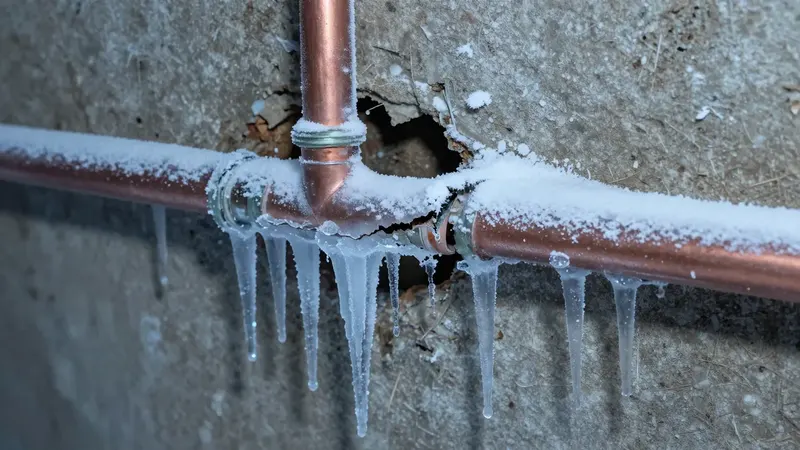
Winter frost here can occasionally turn into a hard freeze, and pipes in exterior walls, garages, crawlspaces and attics are the most exposed. A split line may not leak until it thaws, so damage often shows up the morning after a cold night. Older homes may also have aging supply lines, water heaters and roof flashing.
When you need water damage restoration in Sierra Vista, contractors commonly shut off the water, locate the break, measure how far moisture spread and dry the structure before rebuilding. Read about burst pipe water damage and later water damage repair.
Federal disaster declarations that included Cochise County
FEMA records show Cochise County was included in 1 major disaster declarations for weather or fire events from 2000 through 2026 (1 severe storm, by FEMA incident type). Declarations are made at the county level, so they do not mean every neighborhood in Sierra Vista was affected. The most recent:
- 2000 – Severe Storms and Flooding (DR-1347)
Source: OpenFEMA Disaster Declarations Summaries, retrieved 2026-10-10. Counts include major disaster (DR) declarations with hurricane, flood, severe storm, tropical storm, fire, tornado, coastal storm, winter or ice storm, mudslide and dam/levee incident types.
Water, fire or storm damage in Sierra Vista?
Call (866) 937-3230 and tell us what happened at your Sierra Vista property.
Heating-season fires and smoke residue
Cold nights mean furnaces, fireplaces, wood stoves and space heaters, which are common sources of house fires and puff-back soot. Smoke can travel through ducts and settle on walls, closets and attic insulation far from where a fire started.
A reputable company will usually secure the structure, sort salvageable contents, clean soot with surface-appropriate methods and address odor. Compare fire damage restoration with soot removal.
Summer cloudbursts and mountain runoff
Torrential monsoon rain on the slopes of the Huachucas can send fast runoff downhill through canyons, washes and streets. Gusty winds during these storms can also damage roofs, skylights and windows, letting rain into attics.
If storm water came inside, flood cleanup generally means removing silt and soaked materials, sanitizing and drying. Roof and wind damage is covered under storm damage cleanup.
Mold after freezes and summer leaks
A pipe that thawed slowly inside a wall can keep insulation and drywall wet for days, and the July and August rains add seasonal humidity. Look for staining, bubbling paint or a damp smell near exterior walls.
The EPA says homeowners can usually clean a moldy patch under about 10 square feet themselves, while larger or concealed growth should be handled by trained professionals. See mold removal.
Getting started safely in Sierra Vista
- Call 911 for fire, a gas smell or injuries, and get out if the house seems unsafe.
- Sign up for Cochise County's AlertSense notifications on the county website.
- Before a cold snap, insulate exposed pipes and know where your main water shutoff is.
- Shut off power or water only when you can reach the controls safely and stay dry.
- Photograph damage and keep removed materials until your adjuster says otherwise. Coverage varies by policy, so check with your insurer or agent.
Neighborhoods and nearby communities
Nearby communities with their own pages (straight-line distance from Sierra Vista):
- Sierra Vista Southeast · 9 mi
- Nogales · 40 mi
- Rio Rico · 40 mi
- Vail · 42 mi
- Green Valley · 46 mi
- Douglas · 47 mi
Sierra Vista restoration FAQs
How cold does it get in Sierra Vista, and should I worry about pipes?
Average winter lows fall between 20 and 30°F, and the record is 4°F from February 2011. Frost can continue into April, so insulate exposed pipes and disconnect hoses before winter.
Which months bring the heaviest rain near the Huachucas?
July and August, during the North American Monsoon, bring almost half of the annual rainfall, sometimes as torrential downpours. Check gutters, roof drains and grading before summer.
How do I get emergency alerts in Cochise County?
Cochise County offers AlertSense notifications with a sign-up link on its website. Registering ahead of monsoon and winter storms helps you hear about closures and hazards sooner.
Do you take calls from Bisbee, Benson or Sierra Vista Southeast?
Yes, we accept calls from Sierra Vista and nearby places such as Sierra Vista Southeast, Bisbee and Benson. A referral depends on the independent providers working in your area.
Restoration guides
- Burst Pipe Water Damage
- Water Damage Restoration
- Fire Damage Restoration
- Flood Cleanup
- Storm Damage Cleanup
- Mold Removal