
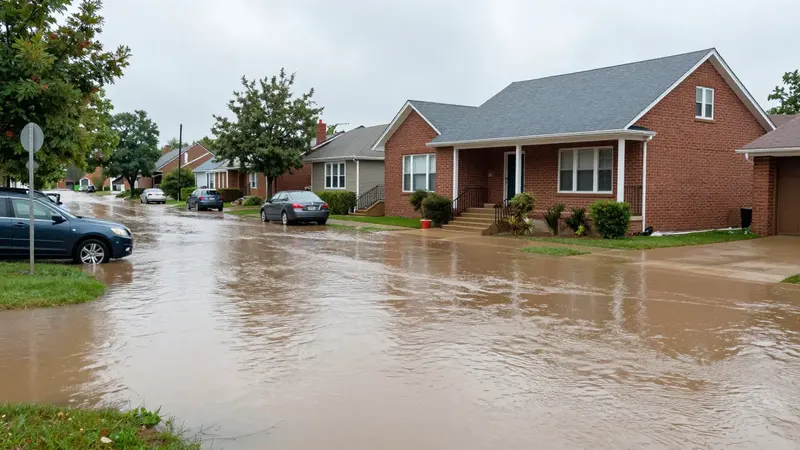
Nogales is the seat of Santa Cruz County and home to three border crossings, including the DeConcini and Mariposa ports of entry. The city shares a single watershed with Nogales, Sonora: its storm drains feed Nogales Wash, which runs north to the Santa Cruz River.
We run a referral line at Fire & Water Energy and never do the restoration work ourselves. Reach us at (866) 937-3230 and we'll try to put you in touch with an independent restoration contractor serving Nogales; whether one is free depends on local companies. Our referral disclosure spells out how that matching works.
A flood-prone wash in a steep border valley
A 2005 flood reduction study by the U.S. Army Corps of Engineers and the boundary commission describes the Nogales Wash watershed as small and rugged, with a narrow valley floor. Water off the hillsides gathers in drainageways and then runs through city streets, and some low areas flood even in relatively common storms.
The record goes back more than a century, with major floods reported in 1905, 1915, 1926, 1930 and 1931. The 1930 flood killed five people, an October 1977 flood took three lives and swamped dozens of homes on both sides of the border, and deadly flooding struck again in July 2003 and July 2004. Santa Cruz County was also part of FEMA's 2000 severe storms and flooding declaration (DR-1347).
Leaks and water damage restoration in Nogales homes
Indoors, the usual sources are familiar: a failed water heater, a split supply line, a washer hose, or a clogged cooling drain. Summer storms add another path, pushing rain under doors, through older roofs and into homes built on slopes where water collects against a wall.
Water damage restoration here generally follows the same order wherever it happens. A contractor stops the source, extracts water, checks framing and floors with moisture meters, opens wet cavities when needed, and dries with dehumidifiers before any repair. You can see the stages on our water extraction and structural drying pages.
Federal disaster declarations that included Santa Cruz County
FEMA records show Santa Cruz County was included in 1 major disaster declarations for weather or fire events from 2000 through 2026 (1 severe storm, by FEMA incident type). Declarations are made at the county level, so they do not mean every neighborhood in Nogales was affected. The most recent:
- 2000 – Severe Storms and Flooding (DR-1347)
Source: OpenFEMA Disaster Declarations Summaries, retrieved 2026-10-10. Counts include major disaster (DR) declarations with hurricane, flood, severe storm, tropical storm, fire, tornado, coastal storm, winter or ice storm, mudslide and dam/levee incident types.
Water, fire or storm damage in Nogales?
Call (866) 937-3230 and tell us what happened at your Nogales property.
Handling fire and smoke damage
House fires here tend to begin the way they do elsewhere, with cooking, heaters, overloaded outlets or old wiring. Hillside lots with dry brush can also see fire spread toward structures during the long dry stretch before summer rains.
Once a fire is out, restoration companies commonly secure the opening, clear burned materials, clean soot from surfaces, address water left by firefighting and work on lingering odor. Guidance on that process is on our fire damage restoration page, with odor covered under smoke odor removal.
Monsoon runoff and storm cleanup along Nogales Wash
Roughly half the area's yearly rain falls from July through September. May is nearly dry, while July averages more than 4.5 inches. The city's own stormwater office notes that new roads, driveways and buildings add hard surfaces that shed water faster, which can make flooding and water quality problems worse over time.
Treat any water that came in from the street or the wash as contaminated. Contractors typically remove mud and debris, cut out soaked drywall and insulation, disinfect, and dry before rebuilding. Read about flood cleanup and sewage cleanup if runoff mixed with wastewater.
Mold after summer storms
The monsoon brings the most humid weeks of the year, and walls that stayed wet after a storm can grow mold within days. Lower rooms on hillside homes, closets against damp exterior walls, and ceilings under roof leaks are common problem spots.
EPA guidance says a healthy adult can usually clean mold covering less than about 10 square feet with gloves, goggles and an N95 respirator. For bigger areas, mold after floodwater, or growth inside walls, look into mold remediation with containment and air filtration.
Staying safe when the border city floods
- Call 911 for fire, injuries, a gas leak or anyone caught in floodwater.
- Stay away from Nogales Wash and flooded streets during storms; water can rise in minutes.
- Turn off electricity to wet areas only if the breaker panel is in a dry place.
- If a pipe burst, close the main water shutoff.
- Record the damage with photos and video before throwing anything out.
- Ask your insurer or agent what your policy covers; flood damage is often excluded from standard homeowners policies unless you carry separate coverage.
Neighborhoods and nearby communities
Nearby communities with their own pages (straight-line distance from Nogales):
- Rio Rico · 9 mi
- Green Valley · 36 mi
- Sierra Vista · 40 mi
- Sahuarita · 43 mi
- Sierra Vista Southeast · 43 mi
- Vail · 51 mi
Nogales restoration FAQs
Why does Nogales flood so quickly?
The watershed is steep and the valley floor is narrow, so runoff from the hills reaches streets and Nogales Wash fast. Studies estimate local flood peaks can arrive about 15 minutes after heavy rain begins.
Which months bring the most flood risk?
July through September, when about half the year's rain falls. July is usually the wettest month, and deadly floods have struck in July in 2003 and 2004.
Does rain in Nogales, Sonora affect my home?
It can. The two cities share the Nogales Wash watershed, and the wash carries water north across the border toward the Santa Cruz River, so heavy rain south of the line can raise water on the Arizona side.
Can you help in Rio Rico too?
Yes, residents of Rio Rico and other Santa Cruz County communities can call. Whether an independent contractor is able to take the job depends on local availability.