
Cottonwood's story runs from an 1885 post office and a Main Street laid out in 1908 to incorporation in 1960. The old mining town of Clemenceau is now part of the city, and the Old Town Historic District keeps some of that early character. Housing has grown quickly too, from about 4,400 units in 2000 to more than 6,100 in 2020, so restoration work here ranges from century-old storefronts to recent builds.
Fire & Water Energy runs a referral line that points callers to outside companies; it never does the work itself. Dial (866) 937-3230 and we will try to get you in touch with an independent restoration contractor who serves Cottonwood. Availability depends on local providers. Learn more on how it works.
Verde River country: freezes, heat and rare deluges
The city's cool semi-arid climate brings roughly 12 inches of rain a year, with July through September the wettest stretch and August averaging over 2 inches. Wet extremes do happen: October 1972 delivered 7.34 inches, a single September day in 1925 brought 3.54 inches, and December 1967 buried the area under 45.5 inches of snow.
On average, 67 winter mornings fall below freezing, and the record low is 5°F. The Verde River, which drains a long stretch of central Arizona and has tributaries such as Oak Creek, has recorded flows as high as 127,000 cubic feet per second. Yavapai County was named in federal storm and flooding declarations in 2000 (DR-1347), twice in 2005 (DR-1581, DR-1586) and in 2010 for severe winter storms and flooding (DR-1888).
Burst pipes and water damage restoration in Cottonwood
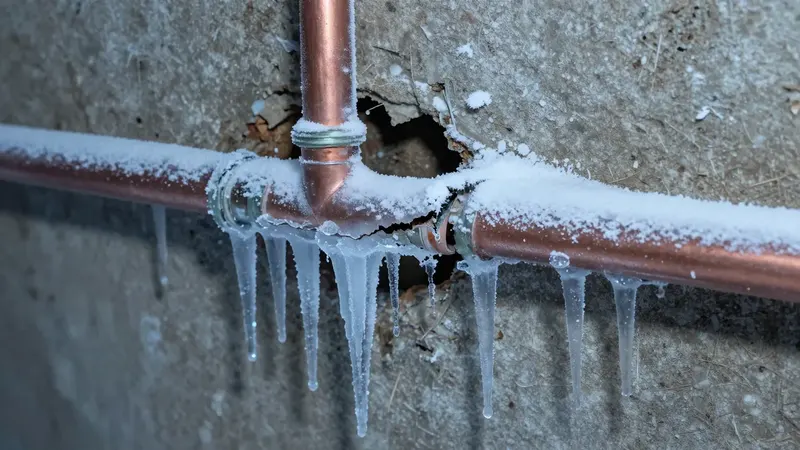
With frost on so many mornings, frozen and split pipes are a real seasonal issue, especially lines in exterior walls, crawlspaces, garages and outdoor spigots. The leak often shows up when the day warms and the ice plug melts. Water heaters, washing machine hoses and roof leaks during late-summer storms round out the usual causes.
Older buildings in and around the historic district may hide aging supply and drain lines. For water damage restoration, a contractor will typically shut off the source, extract water, map moisture and dry framing and subfloors. Freeze breaks get their own walkthrough on burst pipe water damage, while pumping out standing water is explained under water extraction.
Federal disaster declarations that included Yavapai County
FEMA records show Yavapai County was included in 4 major disaster declarations for weather or fire events from 2000 through 2026 (4 severe storm, by FEMA incident type). Declarations are made at the county level, so they do not mean every neighborhood in Cottonwood was affected. The most recent:
- 2010 – Severe Winter Storms and Flooding (DR-1888)
- 2005 – Severe Storms and Flooding (DR-1586)
- 2005 – Severe Storms and Flooding (DR-1581)
- 2000 – Severe Storms and Flooding (DR-1347)
Source: OpenFEMA Disaster Declarations Summaries, retrieved 2026-10-10. Counts include major disaster (DR) declarations with hurricane, flood, severe storm, tropical storm, fire, tornado, coastal storm, winter or ice storm, mudslide and dam/levee incident types.
Water, fire or storm damage in Cottonwood?
Call (866) 937-3230 and tell us what happened at your Cottonwood property.
Fire and smoke damage in older and newer buildings
Heating season brings wood stoves, fireplaces and space heaters into use, while dry summer heat raises the risk of outdoor fires reaching a home. Smoke from either can leave soot on walls and inside ductwork.
For historic properties, ask contractors how they handle original plaster, brick and wood before anything is torn out. Our fire damage restoration and smoke odor removal pages outline the usual approach.
Storm runoff, snowmelt and flood cleanup
Late-summer thunderstorms can drop heavy rain in a short time, and the rare big snow can melt into crawlspaces and basements. Low ground near drainages and properties close to the river deserve extra attention during wet periods.
Floodwater from outside is considered contaminated. A typical cleanup includes removing mud and soaked materials, sanitizing and drying. Read flood damage restoration for rising water and storm damage cleanup for wind or snow damage.
Mold after a winter leak or wet summer
A pipe that leaked inside a wall during a freeze, or a roof drip during monsoon rains, can lead to mold if materials stay damp. Crawlspaces and closets on exterior walls are common trouble spots.
EPA guidance indicates most homeowners can clean mold patches smaller than about 10 square feet with protective gear. Larger or recurring growth usually calls for mold removal by a contractor who uses containment.
Safety priorities for Cottonwood residents
- Call 911 for fire, smoke, a gas odor or anyone in danger.
- Find your main water shutoff before winter and close it the moment a pipe bursts.
- Keep clear of electrical outlets, cords and appliances in wet rooms.
- Avoid flowing water in roads or washes during storms.
- Take pictures before anything is moved, and save damaged items until your adjuster sees them if possible.
- Policy terms differ; your insurer or agent can explain what applies.
Neighborhoods and nearby communities
Areas in and around Cottonwood that callers often mention include:
- Old Town
- Clemenceau
Nearby communities with their own pages (straight-line distance from Cottonwood):
- Verde Village · 2 mi
- Camp Verde · 15 mi
- Sedona · 17 mi
- Prescott Valley · 20 mi
- Chino Valley · 25 mi
- Prescott · 29 mi
Cottonwood restoration FAQs
How often do pipes freeze in Cottonwood?
The city averages about 67 mornings below freezing each winter, so exposed pipes are at risk every year. Insulate vulnerable lines, disconnect hoses and keep the garage closed on cold nights.
Has Cottonwood had unusually heavy rain or snow?
Yes. Local records show 7.34 inches of rain in October 1972 and 45.5 inches of snow in December 1967. Events like those are uncommon but show why drainage and roofs matter here.
Is restoring a building in Old Town different?
It can be. Older materials and features may require careful cleaning or matching replacements, so ask contractors about their experience with historic buildings.
Do you take calls from Clarkdale and Verde Village?
Yes. We take calls from Cottonwood's neighbors, including Clarkdale, Verde Village and Camp Verde. Whether an independent contractor can help depends on availability.
Restoration guides
- Burst Pipe Water Damage
- Water Extraction
- Fire Damage Restoration
- Smoke Odor Removal
- Flood Damage Restoration
- Mold Removal