
Cullman County has appeared in ten federal major disaster declarations since 2000, most of them for severe storms, tornadoes and flooding. The plateau setting doesn't spare the city from wind, hail or the hard freezes that occasionally reach north Alabama.
Our role is narrow: Fire & Water Energy operates as a referral line and is not a restoration company. Ring (866) 937-3230 and we'll try to link you with an independent restoration contractor working in Cullman, depending on who is available. The referral disclosure explains the details.
Plateau weather: heavy rain, tornado history and winter lows
The city sits near the divide between the Tennessee River and Black Warrior River watersheds, and its drinking water comes from Lake Catoma, a city-owned lake inside the limits. Average precipitation is about 60.3 inches spread across roughly 105 days, and January nights average near 31°F, with an all-time record low of -17°F.
On April 27, 2011, the National Weather Service in Huntsville rated the tornado that crossed Cullman an EF-4, with peak winds of 175 mph along a 47-mile track up to a mile wide. The survey describes some of the worst damage just northeast of Highways 31 and 278, where Christ Lutheran Church largely collapsed and brick commercial buildings were badly hit. Other county declarations include Hurricanes Ivan (2004) and Katrina (2005), plus severe storms and flooding in 2009, 2016 and 2020.
Common causes of water damage in Cullman homes
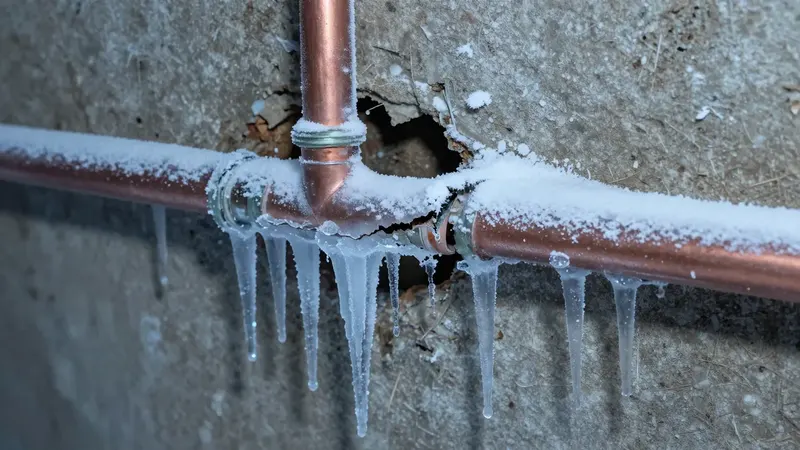
Because January lows regularly dip below freezing, burst supply lines in crawl spaces, garages and north-facing walls are a real winter concern here, more than in south Alabama. Ice dams are rare, but wind-driven rain during spring storms often finds its way past damaged shingles and around windows.
Other frequent sources include failed water heaters, washing machine hoses and leaking dishwashers. A contractor offering water damage restoration in Cullman will generally locate the source, extract water, remove saturated materials that can't be saved and run dehumidifiers until readings reach dry standard. Background reading: water damage repair and our page on burst pipe water damage.
Federal disaster declarations that included Cullman County
FEMA records show Cullman County was included in 10 major disaster declarations for weather or fire events from 2000 through 2026 (8 severe storm, 2 hurricane, by FEMA incident type). Declarations are made at the county level, so they do not mean every neighborhood in Cullman was affected. The most recent:
- 2020 – Severe Thunderstorms (DR-4555)
- 2020 – Severe Storms and Flooding (DR-4546)
- 2018 – Severe Storms and Tornadoes (DR-4362)
- 2016 – Severe Storms, Tornadoes, Straight-line Winds, and Flooding (DR-4251)
- 2011 – Severe Storms, Tornadoes, Straight-line Winds, and Flooding (DR-1971)
- 2009 – Severe Storms, Flooding, Tornadoes, and Straight-line Winds (DR-1836)
Source: OpenFEMA Disaster Declarations Summaries, retrieved 2026-10-10. Counts include major disaster (DR) declarations with hurricane, flood, severe storm, tropical storm, fire, tornado, coastal storm, winter or ice storm, mudslide and dam/levee incident types.
Water, fire or storm damage in Cullman?
Call (866) 937-3230 and tell us what happened at your Cullman property.
After a house fire: soot, odor and firefighting water
A kitchen or electrical fire can leave a whole house coated in fine residue even when the flames stayed in one room. Smoke travels through HVAC ducts and into closets, and the water used to fight the fire soaks floors and walls below.
Restoration firms typically secure the building, haul out debris, start drying, then clean soot with methods matched to the residue type before deodorizing. Ask whether duct cleaning is part of the plan. Our guides to fire damage cleanup and soot removal walk through each stage.
Storm and flood cleanup on Cullman's high ground
Elevation doesn't stop flash flooding: heavy rain on paved areas and saturated clay soil can push water into basements, garages and low-lying lots. Tornadoes and straight-line winds bring the other common emergency, with trees on roofs and broken windows letting rain inside.
Contractors commonly tarp roofs and board openings first, then dry the interior. Water that came in from outside is treated as contaminated, so affected drywall, insulation and carpet are generally removed rather than dried in place. See our storm damage cleanup page.
Mold after leaks and storms
North Alabama summers are hot and humid, and a slow leak behind a vanity or a wet crawl space can turn into visible mold within days. Musty smells after a storm often mean moisture is trapped inside a wall.
EPA guidance treats patches under about 10 square feet as something a homeowner may clean, while larger areas or mold linked to dirty water call for a professional. A reputable remediation company sets up containment, filters the air and fixes the moisture source so growth doesn't return. Visit mold removal.
Protecting your family and your claim in Cullman
- Call 911 for fires, injuries, downed power lines or a gas smell, and leave the building if it feels unsafe.
- During tornado warnings, follow official alerts; storms here can arrive fast in spring.
- If a supply line splits, find the main shutoff (often near the meter or where the line enters the house) and turn it off.
- Photograph damage and keep receipts for emergency purchases like tarps or fans.
- Your policy decides what's covered, so check with your insurer or agent before discarding damaged items.
Then reach us at (866) 937-3230, or see other Alabama communities we cover.
Neighborhoods and nearby communities
Nearby communities with their own pages (straight-line distance from Cullman):
Cullman restoration FAQs
How strong was the 2011 tornado that hit Cullman?
The National Weather Service rated it EF-4 with peak winds around 175 mph. It traveled about 47 miles and badly damaged downtown and an east-side residential area, though no one in the city was killed.
Should I worry about frozen pipes in Cullman?
Yes, more than in much of Alabama. Average January lows are near freezing, and the record low is -17 degrees, so insulate exposed pipes and keep crawl space vents closed during hard freezes.
Can flooding happen if Cullman sits on a plateau?
It can. Cullman County was included in FEMA declarations for severe storms and flooding in 2009, 2016 and 2020, and intense rain can overwhelm drainage on any lot regardless of elevation.
What should I ask a contractor after storm damage?
Ask whether they will document conditions with photos and moisture readings, how they decide what to remove versus dry, and whether they carry their own insurance. Check whether your state or city requires a license for the type of work.
Will someone from Fire & Water Energy come out to my Cullman house?
No. No, nobody from our company visits homes, because we only handle referrals by phone and pass callers along to independent firms that work locally. Dial (866) 937-3230 to start; whether a contractor can take the job hinges on which local firms have capacity.
Restoration guides
- Water Damage Repair
- Burst Pipe Water Damage
- Storm Damage Cleanup
- Fire Damage Cleanup
- Soot Removal
- Mold Removal