
From the Lake Anne townhouses of the mid-1960s to the newer blocks around the Town Center, this corner of Fairfax County mixes several generations of construction. Snowstorms, summer downpours and the occasional tropical remnant all leave their mark on roofs, basements and plumbing here.
Fire & Water Energy runs a referral line; nobody from our company does the restoration itself. Call (866) 937-3230 and we will try to link you with an independent restoration contractor serving Reston, subject to who is available nearby. Our process page and disclosure spell out what happens after you dial.
Snow, summer storms and the lakes: what Reston homes face
Wikipedia describes a humid subtropical climate with about 41 inches of precipitation spread over roughly 117 days a year, plus close to 23 inches of snow, most of it from December through February. The record low there is −18°F, set in January, so a hard cold snap is not hypothetical. Lake Anne, Lake Audubon, Lake Newport and Lake Thoreau, along with the 476-acre Lake Fairfax Park, put plenty of water close to homes, and trees shade about half the community.
Federal major disaster declarations covering Fairfax County since 2000 include Hurricane Isabel (2003), the 2006 severe storms, tornadoes and flooding, two 2010 snowstorm declarations, the remnants of Tropical Storm Lee (2011) and the 2016 winter storm and snowstorm. The county's own flooding page warns that many recent floods have topped the 100-year and even 500-year marks.
Leaks and burst plumbing in Reston's older clusters and newer towers
Houses and townhouses from the first wave of building around Lake Anne and Hickory Cluster are now around sixty years old, and the South Lakes and North Point areas followed from the late 1970s on. Original supply lines, water heaters and roof flashing in homes of that age can fail without much warning. In stacked townhouses and apartments, one unit's leak often shows up as a stained ceiling next door.
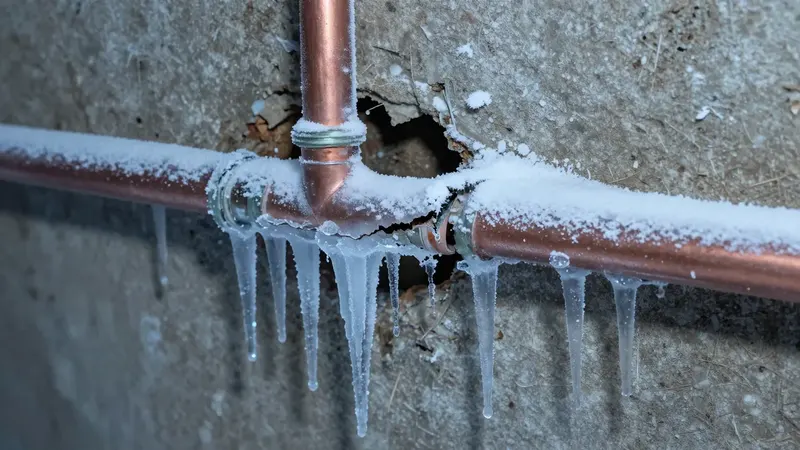
Frozen pipes along exterior walls are a real winter concern given those deep cold records, and ice dams after heavy snow can push meltwater under shingles. A contractor handling water damage restoration will commonly extract standing water, take moisture readings in walls and subfloors, and set up drying equipment. For burst pipe repairs, the plumber fixes the line first and the restoration crew dries out what got wet.
Federal disaster declarations that included Fairfax County
FEMA records show Fairfax County was included in 8 major disaster declarations for weather or fire events from 2000 through 2026 (4 severe storm, 3 winter storm, 1 hurricane, by FEMA incident type). Declarations are made at the county level, so they do not mean every neighborhood in Reston was affected. The most recent:
- 2016 – Severe Winter Storm and Snowstorm (DR-4262)
- 2011 – The Remnants of Tropical Storm Lee (DR-4045)
- 2010 – Severe Winter Storms and Snowstorms (DR-1905)
- 2010 – Severe Winter Storm and Snowstorm (DR-1874)
- 2006 – Severe Storms, Tornadoes, and Flooding (DR-1655)
- 2003 – Hurricane Isabel (DR-1491)
Source: OpenFEMA Disaster Declarations Summaries, retrieved 2026-10-10. Counts include major disaster (DR) declarations with hurricane, flood, severe storm, tropical storm, fire, tornado, coastal storm, winter or ice storm, mudslide and dam/levee incident types.
Water, fire or storm damage in Reston?
Call (866) 937-3230 and tell us what happened at your Reston property.
After a house fire: soot, odor and smoke residue
Even a small kitchen fire leaves fine soot on cabinets and ceilings and an odor that seeps into drywall and upholstery. In attached housing, smoke can travel through shared attics or wall cavities into neighboring units, so it is worth checking beyond the room that burned.
A reputable company usually starts with a walkthrough, removes charred material, cleans surfaces with methods suited to the type of soot, and treats lingering odors. See fire damage cleanup and smoke odor removal for more on the usual steps. Water from firefighting often needs drying too.
Storm runoff, wet basements and fallen limbs
Fairfax County lists low-lying ground, land near water, spots downstream of a dam and places that flooded before as its higher-risk areas. With so many wooded lots, a thunderstorm or tropical remnant can drop limbs onto roofs and open the attic to rain, while saturated soil sends water through basement walls.
Floodwater that came from outside is usually treated as contaminated, so porous items it touched are often discarded rather than dried. Contractors offering flood cleanup or storm damage cleanup typically tarp openings, pump out water, cut out soaked drywall and dry the structure before rebuilding.
Humid summers and mold growth
Muggy Northern Virginia summers keep indoor humidity high, and a basement that stayed damp after a storm can grow mold within a couple of days. Shaded lots under a dense canopy dry out more slowly, too.
The EPA suggests that a homeowner can usually handle mold covering less than about 10 square feet, while larger patches, mold inside HVAC ducts, or growth tied to sewage call for trained help. Professional mold remediation generally means containment, HEPA filtration, removal of affected material and fixing the moisture source.
First steps for Reston households
- Dial 911 for flames, injuries, a gas odor or someone trapped, and get everyone outside if ceilings sag or wiring sparks.
- Shut the breaker off only when the panel sits somewhere dry.
- Sign up for Fairfax Alerts through the county Department of Emergency Management and Security.
- Take photos of every wet or burned room, and hang on to receipts for fans, tarps or hotel nights. What gets paid depends on your own policy terms, so ask your agent or insurer.
- Check whether your state or county requires a license for the work before signing a contract.
Neighborhoods and nearby communities
Areas in and around Reston that callers often mention include:
- Lake Anne
- Hunters Woods
- Tall Oaks
- South Lakes
- North Point
- Reston Town Center
- Hickory Cluster
Nearby communities with their own pages (straight-line distance from Reston):
- Dranesville · 2 mi
- Herndon · 2 mi
- Great Falls · 3 mi
- Wolf Trap · 4 mi
- Sugarland Run · 5 mi
- Sterling · 5 mi
Reston restoration FAQs
How cold does it get in Reston, and do pipes really freeze?
Average January highs sit around 41°F, but the record low is −18°F. Pipes in exterior walls, crawl spaces or garages are the most exposed during deep cold snaps. Keeping cabinet doors open and letting a faucet drip can help on the coldest nights.
My home is not in a mapped floodplain. Do I need flood insurance?
Fairfax County encourages residents to consider flood insurance even outside the 100-year floodplain, noting that many recent floods exceeded those marks. Standard homeowners policies often exclude flood, so ask your agent. The county links to its digital flood maps from its flooding page.
How do I get emergency alerts for Reston?
Reston is unincorporated, so alerts come from Fairfax County. The Department of Emergency Management and Security runs Fairfax Alerts, which you can sign up for on the county website.
Who handles the restoration work when I call?
We are a referral line and do not send our own workers. We try to connect you with an independent contractor in the area, and you agree on scope and pricing directly with that company.
Can a leak in my townhouse affect the neighbors?
Yes. Water in attached homes can run along shared walls, floors and ceilings. Let your neighbor and any association know early so moisture in adjoining units gets checked too.
Restoration guides
- Water Damage Restoration
- Burst Pipe Water Damage
- Basement Flood Cleanup
- Storm Damage Cleanup
- Mold Remediation
- Fire Damage Cleanup