
Most houses and townhomes here are relatively young, yet even a newer home can take on gallons of water from a cracked washing machine hose or a roof opened up by wind. Summer thunderstorms are frequent, and January nights regularly drop into the mid-20s.
We are not a restoration company. Fire & Water Energy runs a referral line: dial (866) 937-3230 and we will try to put you in touch with an independent restoration contractor that serves Gainesville. Provider availability is never guaranteed. The fine print lives on our how it works and disclosure pages.
Climate, creeks and disaster history around Gainesville
According to Wikipedia, the area has a humid subtropical climate with roughly 36 inches of precipitation a year, hot humid summers and frequent summer thunderstorms. Winter lows in January average about 25°F. The community sits around 354 feet above sea level, and Broad Run and Bull Run historically framed the old Middle Grounds district.
Prince William County has been part of several FEMA major disaster declarations since 2000: Hurricane Isabel (2003), the Remnants of Tropical Storm Lee (2011), Hurricane Sandy (2012), and winter storm declarations in 2000, 2003, twice in 2010, and 2016. The county lists flooding, hurricanes, tornadoes, winter storms and dam safety among its hazards and is building a Flood Resilience Plan.
Common leaks in post-1994 subdivisions
Large-scale building started after the Crossroads townhome groundbreaking in 1994, and much of the residential growth came after 2000. Homes of that age are now reaching the point where original water heaters, PEX or copper fittings, dishwasher lines and sump pumps begin to fail. Finished basements make a leak more expensive because carpet, pad and drywall all absorb water.
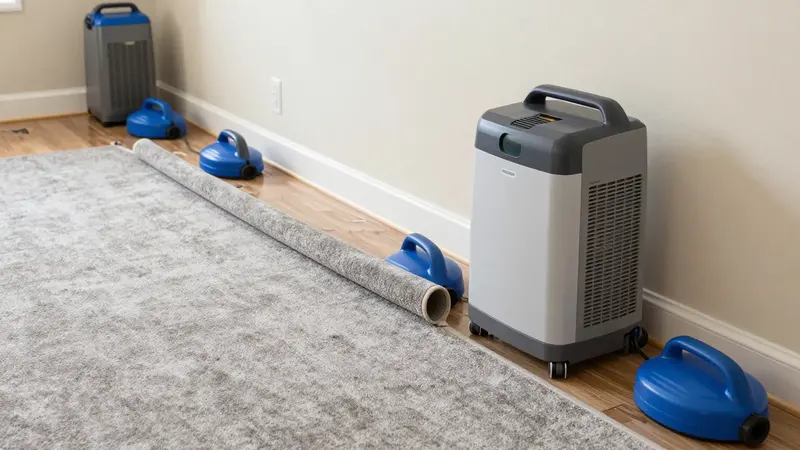
Anyone searching for water damage restoration in Gainesville should expect a contractor to find and stop the source, extract standing water, check hidden moisture with meters and run dehumidifiers until readings return to normal. Basement flood cleanup and water damage repair follow once drying is confirmed.
Federal disaster declarations that included Prince William County
FEMA records show Prince William County was included in 8 major disaster declarations for weather or fire events from 2000 through 2026 (3 winter storm, 3 severe storm, 2 hurricane, by FEMA incident type). Declarations are made at the county level, so they do not mean every neighborhood in Gainesville was affected. The most recent:
- 2016 – Severe Winter Storm and Snowstorm (DR-4262)
- 2012 – Hurricane Sandy (DR-4092)
- 2011 – The Remnants of Tropical Storm Lee (DR-4045)
- 2010 – Severe Winter Storms and Snowstorms (DR-1905)
- 2010 – Severe Winter Storm and Snowstorm (DR-1874)
- 2003 – Hurricane Isabel (DR-1491)
Source: OpenFEMA Disaster Declarations Summaries, retrieved 2026-10-10. Counts include major disaster (DR) declarations with hurricane, flood, severe storm, tropical storm, fire, tornado, coastal storm, winter or ice storm, mudslide and dam/levee incident types.
Water, fire or storm damage in Gainesville?
Call (866) 937-3230 and tell us what happened at your Gainesville property.
When a kitchen or garage fire leaves smoke behind
In tightly spaced townhome rows, smoke can travel through shared attics or wall openings into a neighbor's unit. Even a small stovetop fire coats cabinets and ceilings with residue that smears if wiped with the wrong product.
A firm doing fire damage cleanup will usually secure the structure, remove charred materials, clean soot with methods matched to the surface and address odor in HVAC ducts. Ask whether the company also handles the water left by fire hoses and the rebuilding that comes after.
Thunderstorm runoff, tropical rain and snowmelt
Tropical systems like Lee in 2011 dropped heavy rain across Northern Virginia, and snow from big winter storms can melt into window wells and basement doors. Grading that slopes toward the foundation, clogged gutters and failed sump pumps are frequent reasons water gets inside.
Outdoor floodwater may carry sewage and chemicals, so contractors treat it as contaminated. Flood damage restoration often means removing soaked drywall up to a set height, disinfecting framing and drying the cavity. Storm damage cleanup may add roof tarping and tree removal.
Keeping mold out of basements and crawlspaces
Hot, humid summers keep indoor humidity high, especially below grade. Mold can start on wet drywall, carpet backing or framing within 24 to 48 hours. A musty smell in a finished basement is often the first sign.
EPA guidance says moldy areas over roughly 10 square feet generally call for a professional. Mold remediation contractors isolate the area, filter the air and remove contaminated material, and they should insist the moisture problem is solved first.
Safety and paperwork checklist for Gainesville residents
- Call 911 for fire, injuries, gas odor or a sagging ceiling, and get everyone outside.
- Stay out of standing water if power is still on in that area.
- Sign up for Prince William County emergency alerts through the Office of Emergency Management.
- Record video of every affected room, and list damaged items with approximate ages.
- Report the loss to your insurer promptly; what is covered depends on your policy, and flood typically requires separate flood coverage.
Neighborhoods and nearby communities
Areas in and around Gainesville that callers often mention include:
- Crossroads
- The Settlement
Nearby communities with their own pages (straight-line distance from Gainesville):
- Linton Hall · 3 mi
- Sudley · 6 mi
- Manassas Park · 8 mi
- Manassas · 8 mi
- Centreville · 10 mi
- South Riding · 10 mi
Gainesville restoration FAQs
Is Gainesville near any streams that can flood?
Broad Run and Bull Run are both associated with the Gainesville area. Prince William County is developing a Flood Resilience Plan and invites residents to share flood experiences on an interactive map. Check the county's flooding page and FEMA flood maps for your specific address.
Are Gainesville winters cold enough to burst pipes?
Average January lows are around 25 degrees, and the county has had several winter storm disaster declarations, including two in 2010 and one in 2016. Pipes in exterior walls, garages and crawlspaces are most exposed. Keep the heat on and let faucets drip during hard freezes.
Our house went up after 2000; is a major leak really likely?
It happens more than people expect. Newer homes still depend on supply lines, water heaters and sump pumps that wear out. A failed appliance hose can soak a finished basement in hours.
Does Fire & Water Energy do the restoration work in Gainesville?
No. The company runs a phone line that tries to match you with an independent contractor nearby. Ask the contractor about licensing, insurance, estimates and timing before you sign anything.
Restoration guides
- Water Damage Restoration
- Basement Flood Cleanup
- Flood Damage Restoration
- Storm Damage Cleanup
- Fire Damage Cleanup
- Mold Remediation
Local resources for Gainesville residents
- Prince William County Office of Emergency Management
- Prince William County Flooding
- Prince William County Flood Resilience Plan