
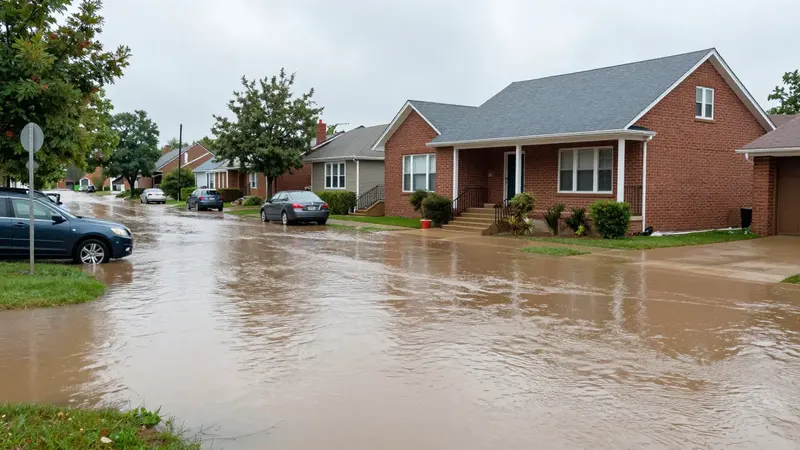
Miami Gardens covers roughly 19 square miles of north-central Miami-Dade County, bounded by I-95 on the east and the Broward County line on the north. It became a city in 2003, joining together long-settled communities such as Carol City, Norland and Scott Lake. The ground here is flat and low, so rainwater has few places to go quickly.
Fire & Water Energy is a referral service, not a restoration company. When you call (866) 937-3230, we try to match you with an independent contractor who works in your area. Which firms are available, and what they quote, is up to them. Read how the referral process works and our disclosure for details.
Rain, wind and low ground in north Miami-Dade
The city's own stormwater page points out that in summer it rains almost every day. Those afternoon storms send runoff across driveways and parking lots into storm drains, and when drains back up, water pools against foundations and garage doors. The city's Public Works department operates a Stormwater Utility and coordinates storm debris pickup alongside Miami-Dade County.
Tropical systems are the bigger threat. Since 2000, FEMA has included Miami-Dade County in major disaster declarations for severe storms and flooding (2000), Hurricanes Frances and Jeanne (2004), Katrina and Wilma (2005), Irma (2017), Ian and Nicole (2022) and Milton (2024). Those declarations cover the whole county, so they tell you about regional risk rather than which streets flooded.
Common sources of indoor water damage here
Many families settled in this area after I-95 was built in the late 1960s. In any house that has seen several decades of use, worn supply lines, tired water heaters and old drain lines deserve a periodic check. Constant air-conditioning use adds another: a clogged condensate line can overflow quietly for days.
If you need water damage restoration in Miami Gardens, a typical contractor will stop the source, extract standing water, take moisture readings and set up dehumidifiers. Smaller jobs may only need water damage repair such as replacing a stained ceiling panel or a section of baseboard.
Federal disaster declarations that included Miami-Dade County
FEMA records show Miami-Dade County was included in 11 major disaster declarations for weather or fire events from 2000 through 2026 (9 hurricane, 2 severe storm, by FEMA incident type). Declarations are made at the county level, so they do not mean every neighborhood in Miami Gardens was affected. The most recent:
- 2024 – Hurricane Milton (DR-4834)
- 2022 – Hurricane Nicole (DR-4680)
- 2022 – Hurricane Ian (DR-4673)
- 2017 – Hurricane Irma (DR-4337)
- 2005 – Hurricane Wilma (DR-1609)
- 2005 – Hurricane Katrina (DR-1602)
Source: OpenFEMA Disaster Declarations Summaries, retrieved 2026-10-10. Counts include major disaster (DR) declarations with hurricane, flood, severe storm, tropical storm, fire, tornado, coastal storm, winter or ice storm, mudslide and dam/levee incident types.
Water, fire or storm damage in Miami Gardens?
Call (866) 937-3230 and tell us what happened at your Miami Gardens property.
Smoke, soot and fire damage in a humid climate
Kitchen fires, dryer fires and electrical faults are the usual starting points for house fires anywhere, and South Florida humidity makes the aftermath harder. Damp air helps acidic soot settle into paint, grout and fabric, and odor can travel through the ductwork to rooms the fire never reached.
Contractors offering fire damage cleanup generally inventory what can be saved, clean surfaces with methods suited to the type of residue and treat the HVAC system before it runs again. Ask how they plan to handle smoke odor and whether that step is included in the written scope.
After a hurricane or a flooding downpour
Water that comes in from outside after a storm should be treated as contaminated, because it can carry sewage, fuel and lawn chemicals from the street. Wet drywall is commonly cut a couple of feet above the waterline, and soaked carpet pad and insulation usually go to the curb.
Providers that handle flood cleanup or hurricane damage cleanup may also tarp roofs, board windows and remove fallen limbs. Leave damaged belongings in place, or photograph them thoroughly, until your adjuster says they can be discarded.
Mold growth after leaks and storms
Warm, wet conditions let mold take hold on drywall, cabinet backs and closet walls within a day or two of a leak. Covering it with paint or bleach rarely solves anything if the material stays damp.
The EPA suggests that patches larger than about 10 square feet, or mold inside HVAC systems, call for a professional. When comparing mold remediation contractors, ask how they will isolate the work area and how they will confirm moisture levels are back to normal.
First steps for Miami Gardens homeowners and renters
- Call 911 for fire, a gas odor, injuries or downed lines.
- If the electrical panel sits in a dry spot, switch off affected circuits; if not, leave it for the utility or an electrician.
- Watch for guidance from Miami-Dade County emergency management before and after storms.
- Take dated photos and video of every affected room and keep repair receipts.
- Contact your insurer or agent early. Coverage depends on your policy, and flood is often a separate policy from wind.
Neighborhoods and nearby communities
Areas in and around Miami Gardens that callers often mention include:
- Andover
- Bunche Park
- Carol City
- Lake Lucerne
- Norland
- Opa-locka North
- Scott Lake
Nearby communities with their own pages (straight-line distance from Miami Gardens):
- Miramar · 3 mi
- Biscayne Gardens · 4 mi
- Pembroke Pines · 4 mi
- Country Club · 4 mi
- Miami Lakes · 5 mi
- North Miami · 5 mi
Miami Gardens restoration FAQs
Does the city pick up storm debris after a hurricane?
Miami Gardens Public Works says it coordinates debris management together with Miami-Dade County and a city contractor. Watch the city's announcements after a storm for pickup schedules. Restoration contractors can separately haul out debris from inside your home.
My street floods during summer storms. What can I do?
The city operates a Stormwater Utility through Public Works, so report recurring drainage problems there through the city website. Inside your home, keep valuables off the floor and check door thresholds after heavy rain. Keeping debris and chemicals out of storm drains also helps them flow.
Can you connect me with someone near Carol City or Scott Lake?
We try to connect callers anywhere in Miami Gardens with an independent contractor that serves their address, including Carol City, Scott Lake and Norland. Availability depends on local providers. Call (866) 937-3230 to start.
Is water from a hurricane treated differently from a pipe leak?
Yes. A clean supply-line leak caught early is usually dried and repaired, while outside floodwater is treated as contaminated and porous materials it touched are often removed. Insurers may also treat the two differently, so check with your agent.
Restoration guides
- Water Damage Restoration
- Flood Cleanup
- Hurricane Damage Cleanup
- Mold Remediation
- Fire Damage Cleanup
- Water Damage Repair