
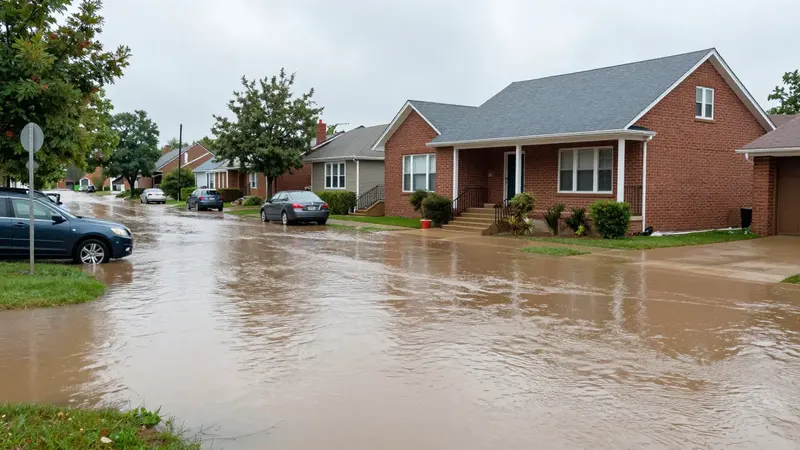
Few American cities hold as much water inside their limits as Jacksonville. Roughly 127 of its 874 square miles are rivers, creeks and marsh, and the consolidated city-county covers nearly all of Duval County, from the Westside to the beaches.
We don't do restoration work ourselves; Fire & Water Energy runs a referral line. Call (866) 937-3230 and we'll try to connect you with an independent restoration contractor who works in your part of Duval County. Whether someone is available depends on local providers, so we can't promise timing or pricing. The step-by-step overview and the disclosure page explain the arrangement in plain terms.
River, ocean and storm history on the First Coast
The city straddles the St. Johns River, and the Trout River, one of its tributaries, runs entirely within city boundaries. Official elevation is about 3 feet, which helps explain why storm surge and heavy rain can push water into low streets quickly.
Wikipedia describes Hurricane Irma in September 2017 as producing record flooding, the worst since 1846 and above the 1964 mark set by Hurricane Dora. Hurricane Matthew in October 2016 brought surge, flooding and wind damage and cut power to about 250,000 people. Earlier, Hurricanes Frances and Jeanne inundated the area in 2004, and Tropical Storm Fay left parts of the city without electricity for four days in 2008.
FEMA major disaster declarations covering Duval County since 2000 include Matthew, Irma, Dorian (2019), Ian and Nicole (2022), Idalia (2023), and Debby, Helene and Milton in 2024.
What usually causes water damage in Duval County homes
About 52 inches of rain falls here in a typical year, most of it between May and September, often as short, violent afternoon thunderstorms. That pattern stresses roof flashing, gutters and sliding-door thresholds. Indoors, air conditioners run for months, so clogged condensate lines and rusted drain pans are frequent sources of hidden leaks.
Freezes are uncommon but real: the area averages around 10 to 15 nights at or below freezing, and the record low was 7°F in January 1985. Pipes in exterior walls, attics or crawlspaces can split on those nights. If you're looking for water damage restoration in Jacksonville, a contractor will commonly start by finding the source, extracting standing water and setting up structural drying equipment, then confirming moisture levels before any water damage repair begins.
Federal disaster declarations that included Duval County
FEMA records show Duval County was included in 15 major disaster declarations for weather or fire events from 2000 through 2026 (12 hurricane, 2 severe storm, 1 tropical storm, by FEMA incident type). Declarations are made at the county level, so they do not mean every neighborhood in Jacksonville was affected. The most recent:
- 2024 – Hurricane Milton (DR-4834)
- 2024 – Hurricane Helene (DR-4828)
- 2024 – Hurricane Debby (DR-4806)
- 2023 – Hurricane Idalia (DR-4734)
- 2022 – Hurricane Nicole (DR-4680)
- 2022 – Hurricane Ian (DR-4673)
Source: OpenFEMA Disaster Declarations Summaries, retrieved 2026-10-10. Counts include major disaster (DR) declarations with hurricane, flood, severe storm, tropical storm, fire, tornado, coastal storm, winter or ice storm, mudslide and dam/levee incident types.
Water, fire or storm damage in Jacksonville?
Call (866) 937-3230 and tell us what happened at your Jacksonville property.
Fire and smoke cleanup in a city shaped by 1901
Fire has a special place in local history. The Great Fire of May 3, 1901, began at a wood-burning cook stove and destroyed 146 city blocks and more than 2,000 buildings, which is why so little of the downtown core predates it.
Today's house fires are usually smaller but still leave soot, acidic residue and odor in places you can't see, including HVAC ducts that run through humid attics. A reputable company will usually document the damage, remove ruined materials, clean surfaces and treat lingering odor. See fire damage restoration and smoke damage cleanup for what that process tends to involve.
After a hurricane or nor'easter: flood and storm cleanup
Floodwater from the river, tidal creeks or the ocean is treated as contaminated (Category 3) water. It can carry sewage, fuel and debris, so porous materials like carpet pad and the lower part of drywall are often cut out rather than dried in place. Wind can also peel shingles and drop limbs on roofs, letting rain in for days after the storm passes.
Contractors who handle flood cleanup and hurricane damage cleanup typically tarp openings, pump out water, haul away damaged contents and dry the structure. Photograph everything before it leaves the house.
Humidity and mold in Northeast Florida
Average relative humidity runs about 76 percent, close to 80 percent in late summer. In that air, wet drywall or cabinetry can start growing mold within a day or two if it isn't dried. The EPA suggests that areas larger than about 10 square feet are generally a job for a trained professional rather than a homeowner with a spray bottle.
Ask any mold remediation contractor how they will contain the work area, what moisture readings they expect to reach, and whether they recommend independent testing.
First steps for property owners in Jacksonville
- Call 911 for fire, injuries, gas odor or anyone trapped.
- Stay out of water that may be touching outlets or appliances, and don't enter a building with sagging ceilings or floors.
- Sign up for AlertJax and check your evacuation zone (A through F) on JaxReady, the City of Jacksonville Emergency Preparedness Division site.
- Take photos and video of damage and keep receipts for emergency purchases.
- Contact your insurer or agent; coverage depends on your policy, and flood is often a separate policy.
Neighborhoods and nearby communities
Areas in and around Jacksonville that callers often mention include:
- Riverside
- Avondale
- San Marco
- Springfield
- LaVilla
- Brooklyn
- Eastside
- Ortega
- Mandarin
- Arlington
- Northside
- Westside
- Southside
Nearby communities with their own pages (straight-line distance from Jacksonville):
- Lakeside · 16 mi
- Ponte Vedra Beach · 17 mi
- St. Marys, GA · 28 mi
- Kingsland, GA · 32 mi
- Brunswick, GA · 57 mi
- Palm Coast · 58 mi
Jacksonville restoration FAQs
Does a Jacksonville referral cover the beaches too?
We try to find independent contractors who serve the area you call from, including communities near the coast such as Jacksonville Beach and Ponte Vedra Beach. Availability depends on which providers are working in that area at the time. Calling (866) 937-3230 is the quickest way to ask.
When is flooding most likely along the St. Johns River?
Most rain falls from May through September, and the Atlantic hurricane season overlaps that period. Irma in 2017 and Matthew in 2016 both brought major flooding. Watch alerts from the city's Emergency Preparedness Division during any tropical system.
How do I know my evacuation zone?
The JaxReady site has an address lookup that shows your zone, lettered A through F. Officials announce which zones should leave during a storm. Knowing your zone ahead of time saves confusion later.
Can a rare freeze really damage pipes here?
Yes. Freezing nights are infrequent but the record low is 7 degrees, and plumbing in attics, garages or outside walls is exposed. Drip faucets and open cabinet doors under sinks when a hard freeze is forecast.
Is mold a bigger problem in older riverfront neighborhoods?
Any building that stays damp is at risk, and Northeast Florida's humidity speeds things up. Older homes may have crawlspaces or plaster walls that hold moisture differently, so ask the contractor how they will measure and dry those materials.
Restoration guides
- Flood Cleanup
- Hurricane Damage Cleanup
- Water Damage Restoration
- Structural Drying
- Mold Remediation
- Fire Damage Restoration