
Lake County's largest city lies about 22 miles west of Orlando, at roughly 125 feet of elevation on terrain that Wikipedia calls atypical for the Florida peninsula. Its population more than quadrupled between 2000 and 2020, and housing units climbed from about 4,400 to over 18,600 in that span, so a large share of homes are fairly new while the downtown core and Historic Village are much older.
Fire & Water Energy is a referral service, not a builder or restoration firm. Call (866) 937-3230 and we will try to connect you with an independent restoration contractor who serves Clermont. Contractors set their own fees and schedules, and we cannot promise one is open. Our how it works and referral disclosure pages say more.
Ridge-top hills, summer storms and freezing nights
The climate is humid subtropical, averaging a little over 50 inches of precipitation a year. June through August are the wettest months, and August alone averages around 8 inches. Wikipedia lists an all-time low of 17°F and notes that recurring freezes helped push the area's citrus groves into decline, a reminder that pipes here are not immune to cold.
Inland location does not keep tropical systems away. FEMA major disaster declarations covering Lake County since 2000 include Frances, Ivan and Jeanne in 2004, severe storms and tornadoes in 2007, Tropical Storm Fay in 2008, Matthew in 2016, Irma in 2017, Ian and Nicole in 2022, Idalia in 2023, and Debby and Milton in 2024.
Water damage restoration in Clermont's newer and older homes
Newer subdivisions bring their own issues: PEX fittings that were not crimped properly, washing machine supply hoses, refrigerator ice-maker lines and attic air handlers whose condensate lines clog during humid months. Older houses near downtown may still have aging galvanized pipe or cast-iron drains. On a cold January night, a hose bib or an exposed line in a garage can split.
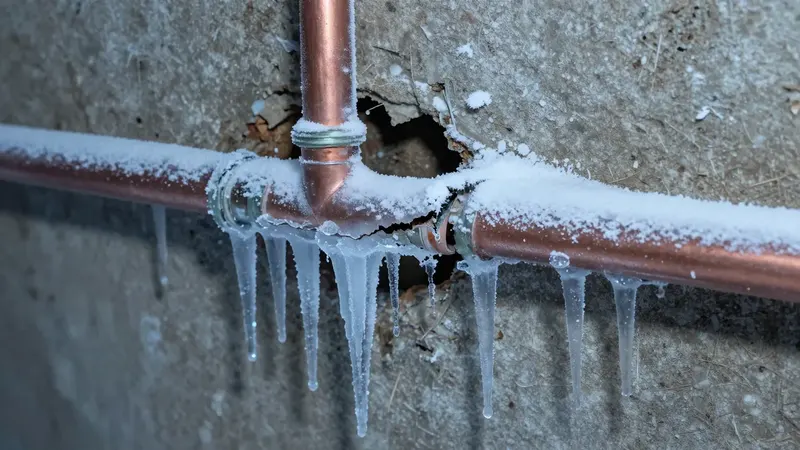
A contractor handling water damage restoration in Clermont will usually find and stop the leak, extract water and run drying equipment while logging moisture readings. For a frozen or split line, our burst pipe water damage page explains the usual steps.
Federal disaster declarations that included Lake County
FEMA records show Lake County was included in 13 major disaster declarations for weather or fire events from 2000 through 2026 (10 hurricane, 2 severe storm, 1 tropical storm, by FEMA incident type). Declarations are made at the county level, so they do not mean every neighborhood in Clermont was affected. The most recent:
- 2024 – Hurricane Milton (DR-4834)
- 2024 – Hurricane Debby (DR-4806)
- 2023 – Hurricane Idalia (DR-4734)
- 2022 – Hurricane Nicole (DR-4680)
- 2022 – Hurricane Ian (DR-4673)
- 2017 – Hurricane Irma (DR-4337)
Source: OpenFEMA Disaster Declarations Summaries, retrieved 2026-10-10. Counts include major disaster (DR) declarations with hurricane, flood, severe storm, tropical storm, fire, tornado, coastal storm, winter or ice storm, mudslide and dam/levee incident types.
Water, fire or storm damage in Clermont?
Call (866) 937-3230 and tell us what happened at your Clermont property.
After a house fire: soot, smoke and air quality
Smoke particles drift through return vents and settle in places that never saw flame, such as closets, upstairs bedrooms and inside cabinets. Plastics that burned give off a sticky, strong-smelling residue that needs different treatment than dry wood ash.
Restoration contractors commonly remove charred materials, clean ductwork and surfaces, and then deodorize. The steps are laid out on our fire damage restoration and soot removal pages.
Inland tropical storms, tornado warnings and runoff
Even on a ridge, heavy downpours can overwhelm gutters, sheet across slopes and back up into garages or ground-floor rooms. Wikipedia notes that runoff from residential development has already harmed the city's lakes, which shows how much water moves across paved surfaces in a hard rain. High winds from tropical systems and severe thunderstorms can also drop limbs onto roofs.
Contractors offering storm water damage restoration and flood cleanup typically secure the roof first, remove wet materials that cannot be saved and then dry the structure.
Mold after a wet August
Midsummer heat and humidity let mold start on damp drywall, carpet pad or attic sheathing in a short time. A musty smell in a closet or behind a bathroom vanity is often the first clue that a slow leak has been running.
Per EPA guidance, growth covering more than about 10 square feet should be handled by a trained professional. Our mold remediation page outlines containment and clearance.
What to do right away in Clermont
- Call 911 for any fire, gas smell, injury or fallen power line.
- Turn off water at the main if you can reach it without stepping into water near electricity.
- Find your evacuation zone and county emergency contacts through the Florida Division of Emergency Management, which lists every county's emergency management office.
- Take pictures of every damaged area, and hold on to receipts for fans, tarps or a hotel stay.
- Contact your insurer or agent to learn how your policy treats the loss; rising water is usually a flood-policy matter.
Neighborhoods and nearby communities
Areas in and around Clermont that callers often mention include:
- Downtown Clermont
- Historic Village
Nearby communities with their own pages (straight-line distance from Clermont):
- Winter Garden · 11 mi
- Ocoee · 14 mi
- Apopka · 18 mi
- Pine Hills · 19 mi
- Orlando · 24 mi
- Altamonte Springs · 26 mi
Clermont restoration FAQs
Do pipes really freeze in Clermont?
It is uncommon, but Wikipedia records an all-time low of 17°F, and repeated freezes contributed to the end of many local citrus groves. Insulating exposed lines and dripping faucets on the coldest nights can prevent a split pipe.
Clermont is inland and on high ground. Can it still flood?
Yes. Hilly terrain sends heavy rain downhill quickly, and pooled water can enter garages and low rooms. Lake County has been included in FEMA disaster declarations for storms such as Ian, Nicole, Idalia and Milton.
Which months bring the most rain?
June, July and August are the wettest, with August averaging about 8 inches. That is also when roof leaks and AC condensate overflows tend to show up.
How does a referral from Fire & Water Energy work?
You call us, describe the damage and your location, and we try to connect you with an independent contractor serving the area. You then deal directly with that contractor on pricing, scheduling and the work.
Restoration guides
- Water Damage Restoration
- Burst Pipe Water Damage
- Storm Water Damage Restoration
- Flood Cleanup
- Mold Remediation
- Fire Damage Restoration