
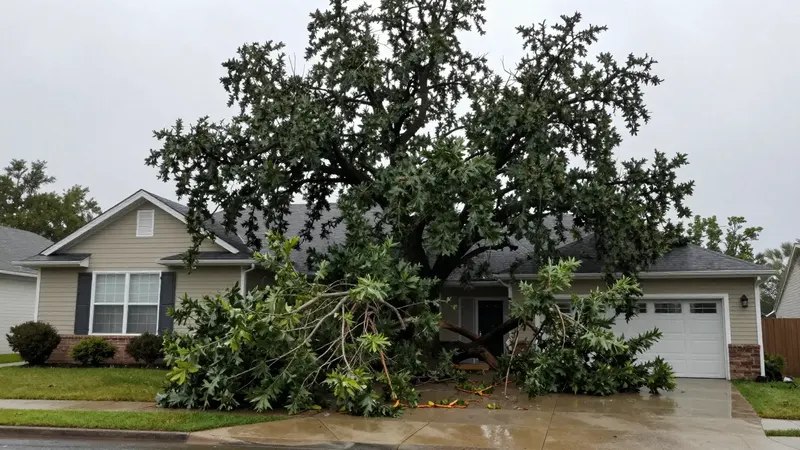
From Highland Park and Southside down to Five Points West, Birmingham homes face a mix of heavy spring storms, summer downpours and the occasional hard freeze. Jefferson County has been part of more than a dozen federal major disaster declarations since 2000, most of them tied to severe storms, tornadoes and flooding.
We do not do restoration work ourselves; Fire & Water Energy only makes referrals. Call (866) 937-3230 and we will try to connect you with an independent restoration contractor serving Birmingham. Availability depends on the providers working in your area at the time you call. The process page and referral disclosure explain what we can and cannot arrange.
What Jones Valley weather does to Birmingham houses
The city lies in Jones Valley, with Red Mountain rising just south of downtown and Ruffner Mountain to the east. Village Creek and Valley Creek drain the valley toward the Black Warrior River, and the Cahaba River basin lies beyond Shades Valley. Runoff from those ridges is one reason low spots and basements take on water during intense rain.
Wikipedia lists average annual precipitation at 56.62 inches, along with roughly 47 nights a year at or below freezing. Tornadoes are the headline risk: an F5 struck the northern suburbs in 1977, the 1998 Oak Grove–Birmingham tornado was also rated F5, and on April 27, 2011 the National Weather Service counted 29 confirmed tornadoes across Central Alabama, including the EF-4 Tuscaloosa–Birmingham tornado that crossed into Jefferson County. The March 1993 “Storm of the Century” dropped a record 10.3 inches of snow.
Common sources of indoor water in the Magic City
Most calls for water damage restoration in Birmingham start with something ordinary: a supply line that split under a sink, a water heater that let go, or wind-driven rain working past flashing during a spring squall. Because the area sees dozens of freezing nights in an average winter, pipes in crawl spaces and exterior walls can crack during a cold snap and leak once they thaw.
Summer humidity adds its own problem, as clogged air-conditioner condensate lines overflow into ceilings and closets. Hillside lots along the ridges can push groundwater against foundation walls. For help with drying and water damage repair, or a burst pipe, a typical contractor will extract standing water, set up air movers and dehumidifiers, and check readings with a moisture meter before rebuilding anything.
Federal disaster declarations that included Jefferson County
FEMA records show Jefferson County was included in 16 major disaster declarations for weather or fire events from 2000 through 2026 (13 severe storm, 3 hurricane, by FEMA incident type). Declarations are made at the county level, so they do not mean every neighborhood in Birmingham was affected. The most recent:
- 2021 – Severe Storms and Flooding (DR-4632)
- 2021 – Severe Storms, Straight-line Winds, and Tornadoes (DR-4596)
- 2014 – Severe Storms, Tornadoes, Straight-line Winds, and Flooding (DR-4176)
- 2012 – Severe Storms, Tornadoes, Straight-line Winds, and Flooding (DR-4052)
- 2011 – Severe Storms, Tornadoes, Straight-line Winds, and Flooding (DR-1971)
- 2009 – Severe Storms, Flooding, Tornadoes, and Straight-line Winds (DR-1836)
Source: OpenFEMA Disaster Declarations Summaries, retrieved 2026-10-10. Counts include major disaster (DR) declarations with hurricane, flood, severe storm, tropical storm, fire, tornado, coastal storm, winter or ice storm, mudslide and dam/levee incident types.
Water, fire or storm damage in Birmingham?
Call (866) 937-3230 and tell us what happened at your Birmingham property.
After a house fire: soot, smoke and what follows
Kitchen fires, space heaters during cold spells and electrical faults are frequent starting points for residential fires anywhere, and Birmingham is no exception. Even a small fire spreads soot through return vents and leaves an odor in drywall, insulation and fabrics.
Firefighting water is a second hazard, because what puts the fire out also soaks floors and wall cavities. Contractors commonly handle fire damage cleanup in stages: board-up and tarping, debris removal, drying, soot removal and odor treatment. Wait for the fire department to clear the structure before going back inside.
Tornado, wind and flood cleanup around Jefferson County
Federal declarations covering Jefferson County include severe storms and flooding in 2021 (DR-4632) and severe storms, tornadoes, straight-line winds and flooding in 2011 (DR-1971) and 2014 (DR-4176). Remnants of Hurricane Ivan in 2004 and Hurricane Katrina in 2005 also brought declarations here, a reminder that Gulf storms can reach far inland.
After a tornado or straight-line wind event, the first job is usually emergency tarping, tree removal and securing broken windows so rain stops coming in. Floodwater from creeks or street runoff is treated as contaminated, which means porous materials it touched are typically removed rather than dried. See storm damage cleanup and flood cleanup for how that work is usually organized.
Mold growth in a humid Alabama climate
Long, humid summers mean wet materials can start growing mold within a day or two. Basements, crawl spaces and wall cavities behind a slow leak are the usual hiding places. The EPA suggests that an area larger than about 10 square feet is a job for a professional, and anyone with asthma or mold sensitivity should stay out of the work zone.
A reputable company will usually contain the area, remove damaged materials, clean what can be saved and fix the moisture source so the problem does not return. Read more on mold remediation.
First steps to take if your Birmingham home is damaged
- Call 911 if anyone is hurt, you smell gas or there is a fire or downed power line.
- Shut off electricity at the breaker only if you can reach it while standing somewhere dry.
- Follow warnings from the National Weather Service in Birmingham and Jefferson County officials during severe weather.
- Photograph every room and damaged item before cleanup begins, and keep receipts.
- Contact your insurer or agent early. Coverage depends on your policy, and standard homeowners policies often exclude flood.
When you are ready, call (866) 937-3230 for a referral. More statewide information is on our Alabama service area page.
Neighborhoods and nearby communities
Areas in and around Birmingham that callers often mention include:
- Highland Park
- Southside
- Five Points South
- Five Points West
- Lakeview
- Avondale Park
- Woodlawn
- Rising-West Princeton
Nearby communities with their own pages (straight-line distance from Birmingham):
- Mountain Brook · 3 mi
- Homewood · 3 mi
- Vestavia Hills · 5 mi
- Irondale · 6 mi
- Fultondale · 6 mi
- Fairfield · 7 mi
Birmingham restoration FAQs
When is tornado season most active around Birmingham?
Spring is the most familiar peak, and the April 27, 2011 outbreak is the event most residents remember, but central Alabama also sees late-fall tornadoes. Keep a weather radio or phone alerts on during any severe weather watch. If a storm damages your roof, tarping it quickly limits interior water damage.
Do Birmingham homes really need to worry about frozen pipes?
Yes. Winters are mild on average, but the city still records dozens of nights at or below freezing each year. Pipes in crawl spaces, garages and outside walls are most exposed. Let faucets drip during hard freezes and know where your main shutoff is.
Can rain running off Red Mountain or the other ridges flood a basement?
It can. Heavy rain on steep slopes moves quickly downhill toward foundations and low streets in the valley. Gutters, downspout extensions and grading that sends water away from the house help, and a sump pump is worth considering for basements that stay damp.
Do you send your own crew to Birmingham?
No. Fire & Water Energy is a referral service that tries to connect you with an independent restoration contractor in the area. Ask any contractor about licensing, insurance and whether their technicians hold IICRC certification before you sign anything.
Does a hurricane far away on the Gulf Coast affect Birmingham?
Sometimes. Jefferson County was included in federal declarations for Hurricane Ivan in 2004 and Hurricanes Dennis and Katrina in 2005. Inland, these storms usually arrive as heavy rain, gusty wind and spin-up tornadoes rather than storm surge.
Restoration guides
- Storm Damage Cleanup
- Water Damage Restoration
- Burst Pipe Water Damage
- Flood Cleanup
- Fire Damage Cleanup
- Mold Remediation