
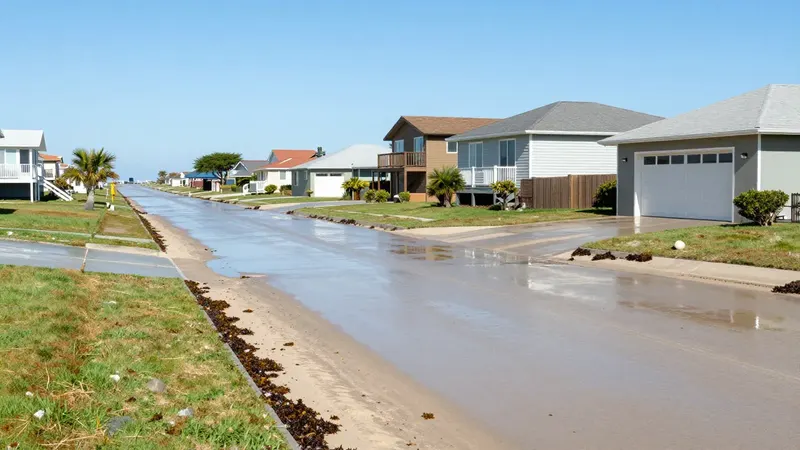
The Beaufort County seat has a waterfront green, a historic core with buildings from the colonial and Victorian eras, and many neighborhoods inside the 100-year floodplain. Shoreline flooding, flash flooding and hurricane surge are all part of life here.
Fire & Water Energy handles referrals by phone and is not a restoration contractor. Call (866) 937-3230 and we'll try to find an independent restoration contractor who serves Washington, as availability allows. Read what happens when you call and see our referral disclosure.
Low ground on the Pamlico and a long hurricane list
The city's own flood page describes two main threats: river water rising along the shoreline, and flash flooding from intense rain over a short time. Hurricane storm surge can also push water back up into the drainage system, flooding streets well away from the river.
Beaufort County has been part of nine FEMA major disaster declarations since 2003: Hurricane Isabel (2003), Tropical Storm Hanna (2008), Severe Storms, Flooding, and Straight-line Winds (2010), Hurricane Irene (2011), Hurricane Matthew (2016), Hurricane Florence (2018), Hurricane Dorian (2019), Hurricane Isaias (2020) and Tropical Storm Eta (DR-4588). Annual precipitation runs about 49 inches.
Water damage repair in historic and low-lying homes
Colonial and Victorian-era buildings in the Washington Historic District and along North Market Street may have crawl spaces beneath them, and in buildings that old the plumbing, roofing and sills have often been patched more than once. Leaks under old floors or around chimneys can rot framing before they are spotted.
Elsewhere, common sources include failed water heaters, washing machine hoses, and HVAC condensate lines that clog in humid weather. For water damage repair in Washington, a contractor typically shuts off the source, extracts standing water, measures moisture in hidden areas and runs drying equipment. See water damage repair and structural drying for more.
Federal disaster declarations that included Beaufort County
FEMA records show Beaufort County was included in 9 major disaster declarations for weather or fire events from 2000 through 2026 (6 hurricane, 3 severe storm, by FEMA incident type). Declarations are made at the county level, so they do not mean every neighborhood in Washington was affected. The most recent:
- 2021 – Tropical Storm Eta (DR-4588)
- 2020 – Hurricane Isaias (DR-4568)
- 2019 – Hurricane Dorian (DR-4465)
- 2018 – Hurricane Florence (DR-4393)
- 2016 – Hurricane Matthew (DR-4285)
- 2011 – Hurricane Irene (DR-4019)
Source: OpenFEMA Disaster Declarations Summaries, retrieved 2026-10-10. Counts include major disaster (DR) declarations with hurricane, flood, severe storm, tropical storm, fire, tornado, coastal storm, winter or ice storm, mudslide and dam/levee incident types.
Water, fire or storm damage in Washington?
Call (866) 937-3230 and tell us what happened at your Washington property.
Fire and smoke damage in older wood structures
Older wood-frame houses and historic downtown buildings can burn quickly, and smoke often travels through hollow walls and attic spaces. Plaster, heart-pine floors and antiques absorb odor, so cleaning has to be thorough.
A reputable contractor generally secures the building, removes debris, dries out firefighting water and cleans soot from surfaces and belongings before deodorizing. Our fire damage restoration and soot removal pages describe each phase for Beaufort County owners.
Surge, river flooding and storm cleanup
Storms like Isabel, Irene and Florence can raise the Pamlico and fill low streets at the same time. Floodwater from the river or streets is contaminated, so soaked flooring, insulation and drywall below the waterline are usually removed and the structure is sanitized before drying.
Wind adds roof damage, fallen trees and broken windows. The city keeps ditches clear and operates a pumping station at Jack's Creek, but residents are asked not to drive through flooded streets, since wakes push water into buildings. Read hurricane damage cleanup and flood cleanup.
Mold after high water in a humid river town
Warm, humid air off the river and long summers give mold an easy start once materials get wet. After a flood, crawl spaces and wall cavities can grow mold within one to two days if not opened and dried.
Per EPA guidance, small areas under roughly 10 square feet can usually be cleaned by the homeowner. Larger growth, mold following floodwater or sewage, or contamination in ducts calls for a remediation contractor using containment. See mold remediation.
Washington storm and safety checklist
- Call 911 for fire, injuries, gas smells, downed lines or rising water inside a home.
- Follow the city's Storm Preparedness pages for hurricanes, evacuation and after-the-storm guidance.
- The city runs its own electric, water and sewer, and stormwater utilities; use its website for service problems.
- Check the Flood Insurance Rate Maps on file with the city's Inspections Office to see your flood zone.
- Photograph damage and file claims promptly; flood loss usually needs separate flood coverage, so ask your agent.
For a referral, call (866) 937-3230 or visit our North Carolina locations.
Neighborhoods and nearby communities
Areas in and around Washington that callers often mention include:
- Washington Historic District
- North Market Street Historic District
Nearby communities with their own pages (straight-line distance from Washington):
Washington restoration FAQs
How do I find out if my Washington home is in a flood zone?
The city keeps Flood Insurance Rate Maps at its Inspections Office, and its Floodplain Management page is a starting point. Many areas in the city fall within the 100-year floodplain.
Why does flooding reach streets far from the river?
According to the city, hurricane surge can push water into the drainage system, and flash floods can happen with little warning at any time of year. Most land in town is at or below 11 feet.
Is it okay to drive through flooded streets?
The city discourages it because vehicle wakes push water into buildings and damage yards, and reckless driving citations can apply. Turn around and find another route.
Can you help in Greenville or Williamston?
Yes, call about Greenville, Williamston, Winterville and other places nearby. A referral depends on an independent contractor having capacity in that area, especially after a big storm.
Who performs the actual restoration?
An independent contractor you choose. Fire & Water Energy only makes the referral, so review the contractor's estimate, insurance and any required license before work starts.
Restoration guides
- Water Damage Repair
- Structural Drying
- Fire Damage Restoration
- Hurricane Damage Cleanup
- Flood Cleanup
- Mold Remediation
Local resources for Washington residents
- City of Washington: Flooding
- City of Washington: Storm Preparedness
- City of Washington: Floodplain Management