
The town takes its name from springs feeding a stream and a small lake ringed by holly trees, and it sits about 423 feet above sea level between Apex to the north and Fuquay-Varina to the south. Its housing count roughly quadrupled between 2000 and 2020, so most homes here are fairly new, yet new construction still floods, leaks and catches fire.
Fire & Water Energy works only as a referral connection; independent contractors do the actual restoration. Ring (866) 937-3230 and we will try to find one that serves Holly Springs, though availability depends on local providers. Details are on how it works and our referral disclosure page.
Tornadoes, tropical rain and winter ice in southern Wake
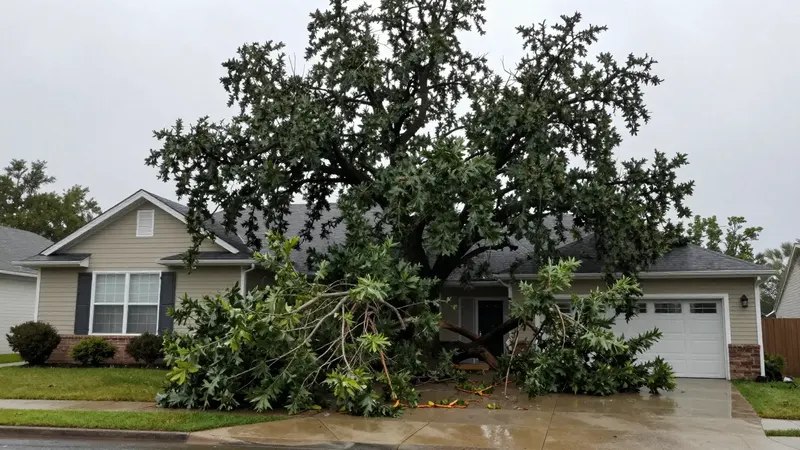
The 2011 tornado was part of a large outbreak across the Southeast. According to Wikipedia's account, it held EF0 to EF1 strength as it crossed Holly Springs and injured several people, with damage elsewhere in the county reaching EF2. FEMA's declaration for those severe storms, tornadoes and flooding (DR-1969) included Wake County.
Other declarations covering the county since 2000 are the Severe Winter Storm of 2000, the Severe Ice Storm of 2002, Hurricane Isabel in 2003 and Hurricane Matthew in 2016. Ice and wind tend to cause roof punctures and fallen limbs, while tropical systems bring long, soaking rain.
Common leak sources in newer subdivisions
With so many houses built in the last two decades, a lot of water damage in town comes from modern fixtures rather than old pipes: braided supply lines under sinks, refrigerator ice-maker lines, washing machine hoses, tankless or tank water heaters, and second-floor laundry rooms that leak through to ceilings below. Builder-grade roofs can lose shingles in high wind, letting rain into attics.
Searching for water damage restoration in Holly Springs? A reliable contractor will trace the source, map wet areas with meters and thermal imaging, extract standing water and dry the structure before any drywall or flooring is replaced. If your home is still under a builder warranty, check its terms before work begins. Related pages: emergency water removal and ceiling water damage repair.
Federal disaster declarations that included Wake County
FEMA records show Wake County was included in 5 major disaster declarations for weather or fire events from 2000 through 2026 (2 hurricane, 2 severe storm, 1 severe ice storm, by FEMA incident type). Declarations are made at the county level, so they do not mean every neighborhood in Holly Springs was affected. The most recent:
- 2016 – Hurricane Matthew (DR-4285)
- 2011 – Severe Storms, Tornadoes, and Flooding (DR-1969)
- 2003 – Hurricane Isabel (DR-1490)
- 2002 – Severe Ice Storm (DR-1448)
- 2000 – Severe Winter Storm (DR-1312)
Source: OpenFEMA Disaster Declarations Summaries, retrieved 2026-10-10. Counts include major disaster (DR) declarations with hurricane, flood, severe storm, tropical storm, fire, tornado, coastal storm, winter or ice storm, mudslide and dam/levee incident types.
Water, fire or storm damage in Holly Springs?
Call (866) 937-3230 and tell us what happened at your Holly Springs property.
Fire and smoke in modern homes
Newer houses are full of synthetic materials, and when they burn the smoke is often oily and dark, coating walls, cabinets and electronics. Open floor plans let smoke travel quickly from a kitchen fire into every connected room, and HVAC systems can spread residue further.
Contractors commonly start fire damage restoration by securing the home, removing charred material, drying out firefighting water and cleaning surfaces by residue type. Ask how they plan to deal with odor in insulation and ducts, and whether they will help you document contents for your claim. More detail is on smoke odor removal.
Cleaning up after a severe storm or heavy rain
The 2011 tornado showed what wind can do in minutes: trees through roofs, broken windows and rain pouring into living spaces. Hurricanes like Matthew add hours of heavy rain that can overwhelm gutters, grading and yard drains, pushing water into crawl spaces, garages and finished lower levels.
A company that offers storm damage cleanup will often coordinate emergency tarping and board-up, then remove wet materials and start drying. Water that came from outside should be treated as contaminated. For larger water events, see flood cleanup.
Preventing mold after the water is gone
In Holly Springs, tight, energy-efficient construction holds moisture in if a leak is not dried quickly, and mold can start within a day or two in wall cavities, under carpet or on attic sheathing. Warm, humid Carolina summers speed this up.
The EPA's rule of thumb is that areas smaller than about 10 square feet can usually be cleaned by a homeowner after fixing the moisture problem. Anything larger, or mold linked to sewage or floodwater, is a job for a mold remediation professional who uses containment and HEPA filtration.
Your first hour after damage
- Call 911 for fire, injuries, a gas smell or a damaged structure, and wait outside.
- Turn off the main water valve if a pipe or appliance is leaking.
- Do not walk into rooms where water may be touching outlets or cords.
- Take photos and short videos of every affected area and item.
- During tornado watches, hurricanes or ice storms, follow alerts and shelter updates through ReadyNC.
- Notify your insurer or agent; coverage depends on your policy, and flood damage generally requires a separate flood policy.
Neighborhoods and nearby communities
Nearby communities with their own pages (straight-line distance from Holly Springs):
Holly Springs restoration FAQs
Has Holly Springs been hit by a tornado?
Yes. On April 16, 2011, a tornado touched down near the town center, uprooting trees and destroying homes and buildings. It was rated EF0 to EF1 in the community and injured several people.
Why would a newer Holly Springs house develop a leak?
New homes still rely on supply lines, valves, water heaters and roof flashing that can fail or be installed poorly. Upstairs laundry rooms and ice-maker lines are frequent sources. Check whether any builder or appliance warranty applies before repairs start.
Which federal disasters have included Wake County?
Since 2000, FEMA declarations for Wake County include winter storms in 2000, the 2002 ice storm, Hurricane Isabel in 2003, the April 2011 severe storms and tornadoes, and Hurricane Matthew in 2016.
Can you help homeowners in Apex or Fuquay-Varina?
We can try. Fire & Water Energy is a referral service, so calling (866) 937-3230 starts a search for an independent contractor serving your address. We cannot promise a match, since it hinges on which companies are taking jobs.
Restoration guides
- Storm Damage Cleanup
- Emergency Water Removal
- Ceiling Water Damage Repair
- Fire Damage Restoration
- Mold Remediation
- Water Damage Restoration