
Incorporated in 1904, the town grew on timber and was later known for pickle processing. It is part of the Gulfport-Biloxi metro area, home to the entrance of Flint Creek Water Park and about 4,270 residents. Stone County itself was carved from northern Harrison County in 1916. Gulfport is roughly 34 miles away and Hattiesburg about 34.
Fire & Water Energy connects callers with contractors; it does not do restoration. Call (866) 937-3230 and we'll attempt to reach an independent restoration provider serving Wiggins and the rest of Stone County. We can't promise who will be available. Anyone curious how the arrangement works and what we can and cannot promise should read the referral disclosure.
Gulf storms reaching inland to Stone County
Wiggins is far enough inland to avoid surge, but not tropical wind and rain. FEMA has included Stone County in declarations for Tropical Storm Isidore (2002), Hurricane Ivan (2004), Dennis and Katrina (2005), Gustav (2008), Isaac (2012), Nate (2017), Zeta (2020), Ida (2021) and Tropical Storm Arthur (2026). A 2009 declaration covered storms, flooding and tornadoes, and a severe winter storm was declared in 2026.
Rainfall is the other constant. Local records average 67.36 inches across about 106 days a year. Winters are short and mild, though the January record low of 1 degree shows a hard freeze can still arrive.
Restoring water-damaged homes in Wiggins
With that much rain, roofs, valleys and window flashing are tested constantly, and wind-driven rain during tropical systems can push water through soffits and around doors. Air conditioners run for months, so clogged condensate lines and overflowing drain pans are common sources of ceiling and floor damage. Plumbing failures like water heater leaks and supply hose bursts happen year-round.
When you look for water damage restoration in Wiggins, expect a contractor to locate the source, extract water, map moisture and dry with dehumidifiers and air movers until readings are normal. See our emergency water removal guide for the first steps.
Federal disaster declarations that included Stone County
FEMA records show Stone County was included in 12 major disaster declarations for weather or fire events from 2000 through 2026 (9 hurricane, 1 tropical storm, 1 winter storm, 1 severe storm, by FEMA incident type). Declarations are made at the county level, so they do not mean every neighborhood in Wiggins was affected. The most recent:
- 2026 – Tropical Storm Arthur (DR-4930)
- 2026 – Severe Winter Storm (DR-4899)
- 2021 – Hurricane Ida (DR-4626)
- 2020 – Hurricane Zeta (DR-4576)
- 2017 – Hurricane Nate (DR-4350)
- 2012 – Hurricane Isaac (DR-4081)
Source: OpenFEMA Disaster Declarations Summaries, retrieved 2026-10-10. Counts include major disaster (DR) declarations with hurricane, flood, severe storm, tropical storm, fire, tornado, coastal storm, winter or ice storm, mudslide and dam/levee incident types.
Water, fire or storm damage in Wiggins?
Call (866) 937-3230 and tell us what happened at your Wiggins property.
A town that knows about fire
On January 21, 1910, a fire destroyed more than half of the Wiggins business district, taking 41 establishments with it; downtown was rebuilt around Pine Avenue. Today, typical house fire causes include cooking, electrical faults and heating equipment, and post-hurricane outages bring generator and candle hazards.
After a fire, contractors commonly secure the building, haul out debris, dry firefighting water and clean soot from walls, contents and ducts, then work on odor. Read more about fire damage restoration and smoke odor removal to understand each stage.
Hurricane debris, downed trees and flood cleanup
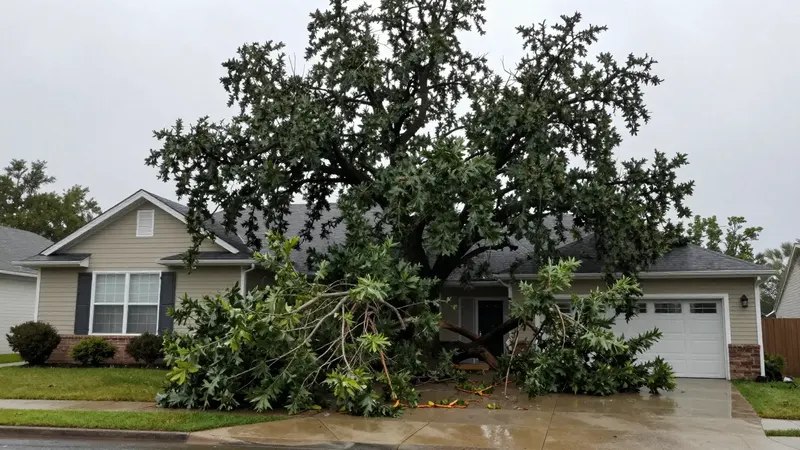
Tropical storms moving inland from the coast can bring down trees across Stone County, punching holes in roofs and blocking driveways. Prolonged heavy rain can also flood low yards, ditches and roads.
Any water from outdoors is handled as contaminated, so contractors typically remove soaked drywall, insulation and carpet, disinfect and dry. Tarping and tree removal come first. Our hurricane damage cleanup page walks through the process.
Mold where rainfall tops 67 inches
Few things grow mold faster than wet building materials in a hot, humid climate with frequent rain. Homes that waited days for power or a tarp after a storm often have hidden growth in insulation, under flooring and behind baseboards.
The EPA advises professional cleanup for more than about 10 square feet of mold, or when contaminated water was involved. Look for containment, HEPA filtration, removal of affected material and a fix for the moisture source. More on mold remediation.
Before and after a storm: steps for Stone County households
- Follow instructions from Stone County officials when a hurricane threatens.
- Call 911 for fire, injuries, gas leaks or lines on the ground.
- Run generators outside only, far from doors and windows.
- Photograph the damage, list damaged items and keep receipts for tarps and supplies.
- Contact your insurer or agent early; wind and flood are often covered by different policies, so check what yours includes.
Call (866) 937-3230 for help finding a contractor, or see our Mississippi page.
Neighborhoods and nearby communities
Nearby communities with their own pages (straight-line distance from Wiggins):
- Latimer · 27 mi
- D'Iberville · 33 mi
- Hattiesburg · 34 mi
- Gulfport · 34 mi
- Gulf Hills · 34 mi
- Vancleave · 34 mi
Wiggins restoration FAQs
How much rain does Wiggins get?
Local records average about 67.36 inches of precipitation a year on roughly 106 days. That is a lot of water for roofs and gutters to handle, so inspect them after big storms.
Does storm surge reach Wiggins?
Wiggins is inland at about 260 feet of elevation, so surge is not the main threat. Wind, fallen trees and heavy rain from tropical systems are the usual sources of damage here.
Which hurricanes have affected Stone County?
FEMA declarations for the county since 2000 include Ivan, Dennis, Katrina, Gustav, Isaac, Nate, Zeta and Ida, plus Tropical Storms Isidore and Arthur. Each brought wind and rain inland from the coast.
Does Fire & Water Energy send crews to Stone County?
No. We are a referral service and send no one ourselves. We try to connect you with independent contractors; ask about their insurance, any required licensing and a written scope before hiring.
Restoration guides
- Hurricane Damage Cleanup
- Emergency Water Removal
- Water Damage Restoration
- Fire Damage Restoration
- Smoke Odor Removal
- Mold Remediation