
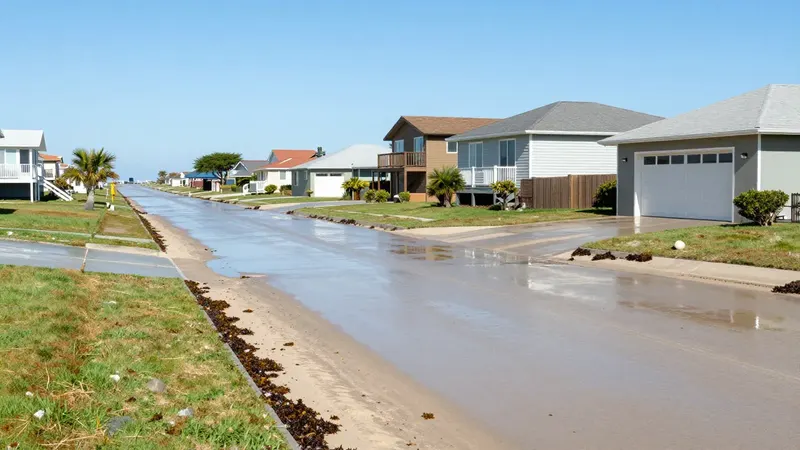
Maryland's capital and Anne Arundel County's only incorporated city mixes 18th-century landmarks like the Hammond-Harwood House with waterfront neighborhoods such as Eastport and later suburbs like Admiral Heights. Downtown streets around City Dock regularly take on water at high tide, and the city's sea level has risen about 15 inches over the past century.
Fire & Water Energy is a referral service only and has no restoration crews. Call (866) 937-3230 and we will try to reach an independent restoration contractor that works in Annapolis, depending on local availability. The how it works page and our referral disclosure lay out what we do and do not do.
Storm surge, sunny-day flooding and a 2021 tornado
Hurricane Isabel on September 18–19, 2003, pushed the highest storm surge in the city's recorded history, 7.58 feet, beating the 1933 storm and Hurricane Hazel in 1954. Nuisance flooding has grown since: Wikipedia cites NASA counting 18 non-storm flood days from May 2019 to April 2020, and the city logged a record 120 flooding events in 2024. A sea wall was finished in 2024, and work on a City Dock flood protection project began in November 2025.
Wind is a threat too. On September 1, 2021, the remnants of Hurricane Ida spawned an EF-2 tornado on the city's western edge. The climate is humid subtropical with about 44 inches of precipitation a year, and FEMA has included Anne Arundel County in seven major declarations since 2000, among them Isabel, the remnants of Tropical Storm Lee (2011), Hurricane Sandy (2012) and four winter storm events.
Leaks in historic and waterfront homes
Colonial and 19th-century buildings in the historic district often have plaster walls, wood floors and plumbing that has been updated piecemeal. Waterfront houses face salt air, wind-driven rain and crawl spaces close to the water table. A broken supply line or failing water heater can do serious harm before anyone notices.
Owners looking for water damage restoration in Annapolis can expect a contractor to stop the source, extract water, assess plaster and woodwork, and dry with dehumidifiers while monitoring moisture. Old materials dry slowly and need careful handling, so ask about experience with historic properties. See structural drying for how that phase works.
Federal disaster declarations that included Anne Arundel County
FEMA records show Anne Arundel County was included in 7 major disaster declarations for weather or fire events from 2000 through 2026 (3 winter storm, 2 hurricane, 1 flood, 1 severe storm, by FEMA incident type). Declarations are made at the county level, so they do not mean every neighborhood in Annapolis was affected. The most recent:
- 2016 – Severe Winter Storm and Snowstorm (DR-4261)
- 2012 – Hurricane Sandy (DR-4091)
- 2011 – Remnants of Tropical Storm Lee (DR-4038)
- 2010 – Severe Winter Storms and Snowstorms (DR-1910)
- 2010 – Severe Winter Storm and Snowstorm (DR-1875)
- 2003 – Hurricane Isabel (DR-1492)
Source: OpenFEMA Disaster Declarations Summaries, retrieved 2026-10-10. Counts include major disaster (DR) declarations with hurricane, flood, severe storm, tropical storm, fire, tornado, coastal storm, winter or ice storm, mudslide and dam/levee incident types.
Water, fire or storm damage in Annapolis?
Call (866) 937-3230 and tell us what happened at your Annapolis property.
Fire and smoke cleanup in a dense old city
Downtown blocks are tightly packed, and smoke from one building can affect neighbors. Older wiring, fireplaces and space heaters are common concerns in historic housing, and restaurants along Main Street carry their own kitchen risks.
A restoration company will typically secure the building, remove debris, clean soot from walls, contents and HVAC, and deodorize. Historic finishes may need gentler cleaning methods. Each step is described on our fire damage cleanup and soot removal pages.
Tidal water, hurricanes and storm cleanup
Floodwater here is often brackish Bay water mixed with street runoff, which can carry contaminants. Contractors usually treat it as contaminated, removing soaked drywall, insulation and flooring rather than just drying them, then cleaning and sanitizing before drying the structure.
Wind events like the 2021 tornado and hurricanes such as Isabel and Sandy can tear off roofing and drop trees on homes. Look into hurricane damage cleanup and flood damage restoration for what those jobs usually involve.
Humidity, crawl spaces and mold
Bay humidity, hot summers and low-lying crawl spaces make mold a steady concern, especially after any tidal intrusion. Check closets on outside walls, basements and under sinks, and run dehumidifiers in summer.
EPA guidance says patches under about 10 square feet can often be cleaned by the homeowner after the moisture source is fixed. Larger areas or mold after floodwater are better handled by mold remediation specialists.
Before and after a flood in Annapolis
- Call 911 for fire, injuries, gas odors or anyone caught by rising water.
- Avoid driving or walking through tidal floodwater downtown; depth and contamination are hard to judge.
- Sign up for Anne Arundel County's AAALERT text alerts, and use the county's citizen damage reporting portal after a major storm.
- Turn off power at the panel only if you can reach it without standing in water.
- Shoot photos and video of high-water marks and ruined belongings before anything goes to the curb.
- Talk with your insurer; standard homeowners policies generally exclude flood, which needs separate coverage.
Neighborhoods and nearby communities
Areas in and around Annapolis that callers often mention include:
- Eastport
- West Annapolis
- Admiral Heights
- Main Street/City Dock
- Church Circle/St. Anne's
- State Circle/Maryland Avenue
- West Street/Arts District
Nearby communities with their own pages (straight-line distance from Annapolis):
Annapolis restoration FAQs
How bad was Hurricane Isabel in Annapolis?
Isabel's surge in September 2003 crested at 7.58 feet, the highest in the city's recorded history, and caused heavy flood damage across the city. It remains the benchmark for storm surge planning in the city.
Why does downtown flood on sunny days?
Sea level at Annapolis has risen roughly 15 inches over a century, so ordinary high tides now reach low streets near City Dock far more often. The city recorded 120 flooding events in 2024 and has been building a sea wall and the City Dock flood protection project.
Is tidal floodwater safe to clean up myself?
Floodwater mixed with street runoff can carry bacteria and chemicals, so wear protective gear and avoid skin contact. Porous materials soaked by it are usually removed, and larger jobs are usually handed to a professional contractor.
Can you help in Eastport, Parole or Arnold?
We take calls from Annapolis neighborhoods like Eastport and West Annapolis, and from nearby Parole, Arnold and Severna Park. We try to find an independent contractor for each call, but availability varies.
Restoration guides
- Flood Damage Restoration
- Hurricane Damage Cleanup
- Water Damage Restoration
- Structural Drying
- Mold Remediation
- Fire Damage Cleanup
Local resources for Annapolis residents
- Anne Arundel County Office of Emergency Management
- Anne Arundel County Citizen Damage Reporting Portal