
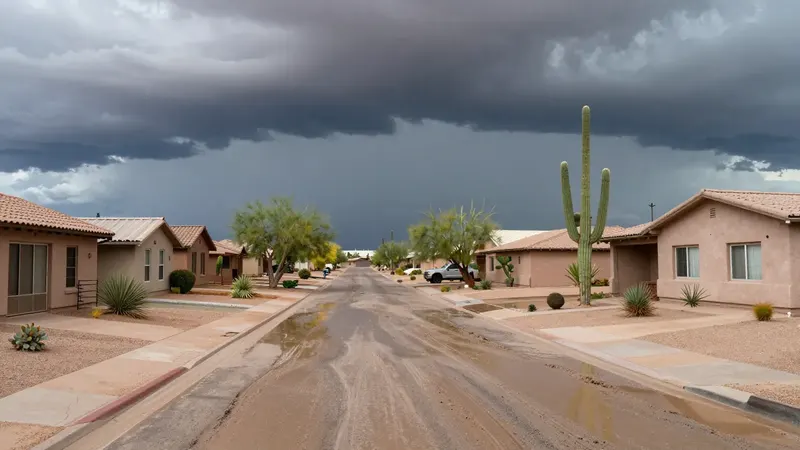
Most of the year the Salt River bed through Phoenix sits dry, and that can make flooding feel like someone else's problem. Then summer storms roll off the mountains, washes fill in minutes, and roofs, patios and slab edges take water they rarely see. Plumbing failures, AC condensate overflows and kitchen fires keep homeowners busy the rest of the year.
We are a referral line rather than a restoration company, so nobody from Fire & Water Energy shows up with equipment. Call (866) 937-3230 and we'll try to connect you with an independent restoration contractor serving your part of the Valley. Availability depends on local providers, and the how it works page explains the process.
Desert storms, extreme heat and the Salt River valley
The National Weather Service treats June 15 through September 30 as monsoon season here. Those storms can bring flash flooding, hail, damaging winds and dust walls strong enough to be called haboobs. The terrain around the city is mostly flat at roughly 1,086 feet, ringed by South Mountain, the White Tanks and the McDowells, so runoff spreads across streets and canal corridors rather than draining quickly.
One of the clearest examples came on September 8, 2014, when moisture from the remnants of Hurricane Norbert dumped 3.30 inches on Sky Harbor in about seven hours, breaking a 75-year-old daily record and closing stretches of Interstates 10 and 17. Maricopa County was also part of FEMA severe storm and flooding declarations in 2000, 2005 and 2014 (DR-1347, DR-1586 and DR-4203).
Heat matters too. Phoenix hit 122°F on June 26, 1990, and logged a record 70 days at or above 110°F in 2024, conditions that stress roofing, supply lines and cooling equipment.
Why Valley homes leak: pipes, coolers and AC drains
Searches for water damage restoration in Phoenix usually start indoors, not with a storm. Common culprits include burst or pinhole-leaking supply lines, failed water heaters, slab leaks under concrete foundations, clogged air conditioner condensate lines and roof penetrations that cracked under years of sun. Hard freezes are rare, so frozen pipes are seldom the cause.
Dry air helps surfaces feel dry quickly, but drywall, insulation and cabinet bases can stay wet inside. A reputable company will usually take moisture readings, extract standing water and set up structural drying equipment before any water damage repair or rebuilding starts.
Federal disaster declarations that included Maricopa County
FEMA records show Maricopa County was included in 3 major disaster declarations for weather or fire events from 2000 through 2026 (2 severe storm, 1 flood, by FEMA incident type). Declarations are made at the county level, so they do not mean every neighborhood in Phoenix was affected. The most recent:
- 2014 – Severe Storms and Flooding (DR-4203)
- 2005 – Severe Storms and Flooding (DR-1586)
- 2000 – Severe Storms and Flooding (DR-1347)
Source: OpenFEMA Disaster Declarations Summaries, retrieved 2026-10-10. Counts include major disaster (DR) declarations with hurricane, flood, severe storm, tropical storm, fire, tornado, coastal storm, winter or ice storm, mudslide and dam/levee incident types.
Water, fire or storm damage in Phoenix?
Call (866) 937-3230 and tell us what happened at your Phoenix property.
After a house fire: smoke, soot and summer heat
Kitchen fires, electrical faults and overworked appliances are typical starting points. Once flames are out, soot and acidic residue keep working on finishes, and indoor heat can make smoke odor settle into fabrics and drywall faster.
Contractors commonly secure openings, remove charred debris, clean soot from hard surfaces and treat lingering odor. See fire damage restoration and smoke damage cleanup for what those steps involve. Wait for the fire department to release the building before going back inside.
Flash flood and dust storm cleanup across Maricopa County
Monsoon runoff often carries mud, gravel and debris from washes and yards, so it should be treated as contaminated water. Wind gusts can lift shingles and tiles, drop palm fronds and branches, and leave openings where the next cell's rain gets in.
Typical flood cleanup includes pumping out water, removing soaked carpet pad and lower drywall, sanitizing and drying. For roof and wind damage, storm damage cleanup usually begins with tarping and board-up so the interior stays dry.
Mold after a leak in a dry climate
Low humidity does not prevent mold behind walls, under sinks or inside an AC closet where water sat for days. Monsoon months also bring muggier stretches that help growth along.
EPA guidance says a homeowner can often handle mold covering less than about 10 square feet; larger areas, or growth tied to sewage or hidden cavities, generally call for a professional. Learn more on our mold remediation page.
First moves for Phoenix households
- Call 911 if anyone is hurt, trapped or you smell gas.
- Never drive into a flooded wash or underpass; currents can sweep vehicles away.
- Shut off power at the panel only if you can reach it without standing in water.
- Stop the water source with the main shutoff if the cause is plumbing.
- Photograph damage before moving anything, and keep receipts for emergency purchases.
- Coverage depends on your policy; check with your insurer or agent before agreeing to work.
Neighborhoods and nearby communities
Areas in and around Phoenix that callers often mention include:
- Ahwatukee Foothills
- Alhambra
- Camelback East
- Central City
- Deer Valley
- Desert View
- Encanto
- Estrella
- Laveen
- Maryvale
- North Gateway
- North Mountain
- Paradise Valley
- Rio Vista
- South Mountain
- Arcadia
- Sunnyslope
- Melrose District
- Biltmore Area
Nearby communities with their own pages (straight-line distance from Phoenix):
Phoenix restoration FAQs
When is monsoon flood risk highest in Phoenix?
The National Weather Service defines the season as June 15 to September 30. Storms can build quickly in the afternoon or evening, so watch for flash flood warnings and avoid low crossings during that window.
Can late-season tropical moisture really flood the Valley?
Yes. In September 2014, remnants of Hurricane Norbert brought 3.30 inches to Sky Harbor in about seven hours and closed parts of I-10 and I-17. Tropical moisture is uncommon, but it can produce rainfall far beyond the usual monsoon storm.
Where can I check how much rain fell near my house?
The Flood Control District of Maricopa County runs a network of automated rain gages and posts the readings online. Comparing nearby gages can help you describe a storm to your insurer or a contractor.
Do I need to worry about frozen pipes here?
Rarely. Temperatures seldom fall to 32°F, though the city has recorded lows as cold as 16°F. Exposed pipes on outdoor plumbing and irrigation are the most vulnerable on those uncommon nights.
Do you cover nearby cities like Tempe, Glendale or Scottsdale?
We take calls from across the Phoenix area, including Tempe, Glendale, Scottsdale, Peoria and Mesa. Whether an independent contractor is available depends on providers working in your area at the time.
Restoration guides
- Water Damage Restoration
- Flood Cleanup
- Storm Damage Cleanup
- Structural Drying
- Fire Damage Restoration
- Mold Remediation