
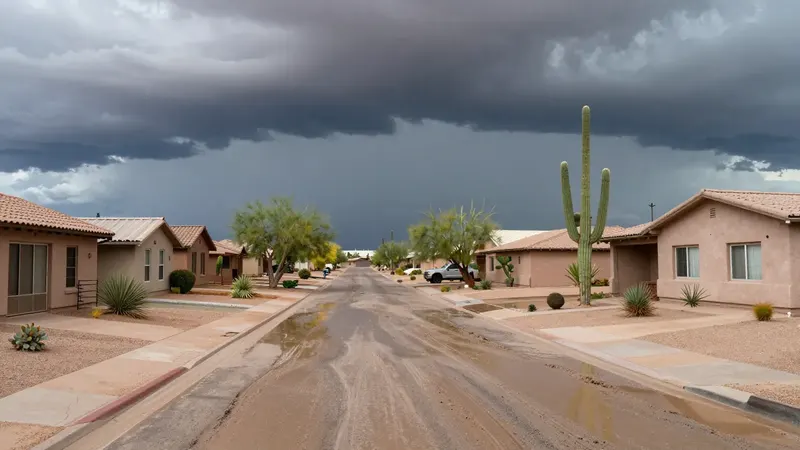
Catalina sits at about 3,123 feet in the high desert of southern Arizona, an unincorporated Pima County community whose subdivisions such as Twin Lakes and Rail N. Ranch spread out beside the still-working Golder Ranch. Homes here deal with long dry stretches, a late-summer monsoon, and the wildfire smoke that drifts down from the mountains.
Fire & Water Energy is a referral line for Pima County homeowners, and we do no restoration work ourselves. Call (866) 937-3230 and we will try to put you in touch with an independent restoration contractor serving Catalina when one is available. Before you call, you can read how the process runs and our referral disclosure for the fine print.
Desert foothills hazards around Catalina
The Santa Catalina Mountains rise nearby, and the state park named for them sits in their western foothills. Precipitation in the range follows two seasons: steady winter rain, then the North American Monsoon in late summer. The lower desert stays hot and mostly dry the rest of the year, which means soils and roofs go from parched to soaked in a single afternoon storm.
Fire is the other recurring threat. On June 5, 2020, lightning started the Bighorn Fire, which burned through the range until late July and scorched parts of the park. Pima County was also part of the 2003 Aspen Fire disaster declaration (DR-1477) and the 2006 severe storms and flooding declaration (DR-1660). Those declarations covered the whole county, so they do not show which streets in this community were affected.
Leaks, pipes and swamp coolers: water damage in Catalina homes
The 2020 census counted 3,427 housing units here. Common sources of indoor water damage in this climate include supply-line and water-heater failures, leaking evaporative coolers on the roof, AC condensate lines that clog during humid monsoon weeks, and roofs that let in wind-driven rain once the storms arrive. Long, dry summers can hide a slow leak behind cabinets until flooring starts to cup.
For water damage restoration in Catalina, AZ, a typical contractor will stop the source, extract standing water, measure moisture in walls and subfloors, and set up drying equipment until readings return to normal. Ask for written moisture logs. Related services: water damage restoration, water damage repair and ceiling water damage repair.
Federal disaster declarations that included Pima County
FEMA records show Pima County was included in 2 major disaster declarations for weather or fire events from 2000 through 2026 (1 severe storm, 1 fire, by FEMA incident type). Declarations are made at the county level, so they do not mean every neighborhood in Catalina was affected. The most recent:
Source: OpenFEMA Disaster Declarations Summaries, retrieved 2026-10-10. Counts include major disaster (DR) declarations with hurricane, flood, severe storm, tropical storm, fire, tornado, coastal storm, winter or ice storm, mudslide and dam/levee incident types.
Water, fire or storm damage in Catalina?
Call (866) 937-3230 and tell us what happened at your Catalina property.
After a house fire or a smoky wildfire season
When fires burn in the nearby mountains, smoke can settle over the communities below. Fine ash slips through evaporative coolers, attic vents and door gaps, leaving a gritty film and a lingering odor in fabrics and ductwork. Indoor fires bring their own problems: soot that smears when wiped, corroded metal and water from firefighting.
A reputable company will usually start by testing which cleaning method suits each surface, then treat odor at its source rather than masking it. Do not run a cooler or HVAC system full of ash before the filters are changed. Our pages on smoke damage cleanup and fire damage restoration describe the usual process in more depth.
Monsoon runoff and storm cleanup
Late-summer thunderstorms can drop heavy rain on hard desert ground that sheds water instead of absorbing it. Runoff from the foothills can push mud and debris into garages, carports and low entries, and strong gusts can strip shingles or tear loose cooler covers. Burned slopes after a wildfire tend to shed water faster than unburned ground.
Treat floodwater from outside as contaminated. Contractors commonly remove soaked drywall and insulation above the waterline, clean and disinfect, then dry the framing. Useful pages: flood cleanup and storm damage cleanup.
Why mold still matters in a dry climate
Dry air helps surfaces dry, but it does not stop mold where water stays trapped: inside wall cavities, under vinyl flooring, or in a closet next to a leaking cooler line. Monsoon humidity can speed growth in spaces that were already damp.
EPA guidance says a homeowner can often handle a moldy patch smaller than about 10 square feet, while larger areas, or growth tied to sewage or contaminated water, are better left to professionals using containment. Fixing the moisture source comes first. See mold remediation.
First steps for Catalina households
- Call 911 for fire, a gas odor or anyone hurt, and leave the house if it feels unsafe.
- When a wildfire is nearby, follow evacuation orders from Pima County authorities right away.
- Never drive or walk through moving water in a wash or road dip.
- Shut off water or power only when you are standing somewhere dry and safe.
- Take photos and video before cleanup, save receipts and keep damaged items until your adjuster sees them. What is covered depends on your policy, so ask your insurer or agent.
Picking a contractor in Pima County
Ask any company for proof of insurance, a written scope of work, and whether its technicians hold IICRC certification. Check whether Arizona requires a contractor license for the repairs involved, and get the drying and rebuild steps itemized separately. Avoid anyone who asks you to sign over insurance benefits before you understand the work.
Neighborhoods and nearby communities
Areas in and around Catalina that callers often mention include:
- Twin Lakes
- Rail N. Ranch
Nearby communities with their own pages (straight-line distance from Catalina):
- Saddlebrooke · 3 mi
- Oro Valley · 8 mi
- Casas Adobes · 13 mi
- Catalina Foothills · 14 mi
- Flowing Wells · 16 mi
- Marana · 18 mi
Catalina restoration FAQs
When is the riskiest time of year for water damage in Catalina?
Late summer, when the North American Monsoon brings heavy afternoon storms after months of dry weather. Roof leaks, cooler leaks and runoff into garages are most common then. Winter rains can also expose roof problems.
Can wildfire smoke from the mountains damage my home even if the fire never reaches it?
It can. Smoke and ash often travel well beyond a fire's edge, and the 2020 Bighorn Fire burned in the nearby mountains. Fine particles can coat surfaces and get into ducts and coolers, so filters, fabrics and HVAC systems may need cleaning afterward.
Is there a town government to contact to contact after a disaster?
No. This community is an unincorporated census-designated place, so emergency management and alerts come from Pima County. Follow county instructions during fires and floods.
Were the 2003 and 2006 disasters specific to Catalina?
No. FEMA declarations DR-1477 (Aspen Fire, 2003) and DR-1660 (severe storms and flooding, 2006) covered Pima County as a whole. They show the county's exposure, not damage to particular local streets.
Is there a contractor in Catalina I can reach through this number?
Calling (866) 937-3230 lets us try to connect you with an independent contractor who serves the area, including nearby Oro Valley and Saddlebrooke. Availability depends on local providers, so we cannot promise a match.
Restoration guides
- Water Damage Restoration
- Smoke Damage Cleanup
- Fire Damage Restoration
- Flood Cleanup
- Storm Damage Cleanup
- Mold Remediation