
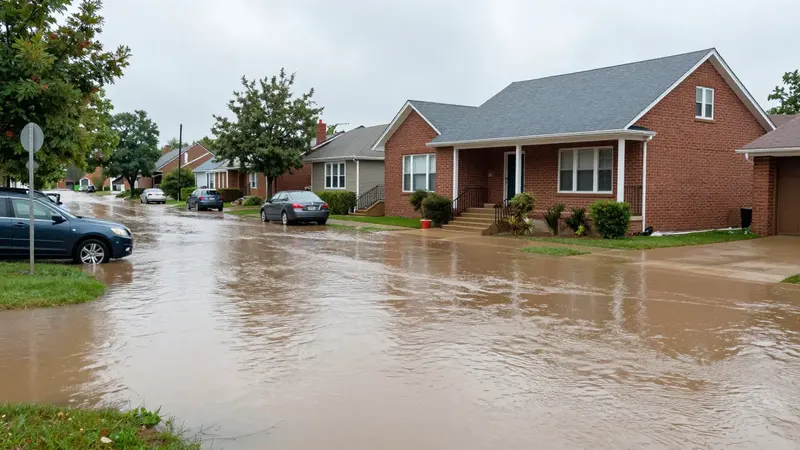
Hartsville is the largest city in Darlington County, sitting about 220 feet above sea level with Prestwood Lake, an impoundment on Black Creek, forming its northern edge. Black Creek drains to the Pee Dee River system, and the city sees somewhere between 46 and 48.5 inches of rain a year spread across more than 100 wet days. Downtown and the older neighborhoods follow a grid laid out in the city's early years, while newer areas such as those around Hartsville Crossing have more winding streets.
Fire & Water Energy is a referral service that tries to put callers in touch with independent restoration companies. Dial (866) 937-3230 and we will look for someone serving Hartsville and the rest of Darlington County, depending on who is available. For the details behind that arrangement, read how it works along with the referral disclosure before you call about a Darlington County home.
Pee Dee hurricanes, heavy rain and the occasional ice storm
Darlington County has been part of eight FEMA major disaster declarations since 2000, and five came from the tropics or tropical moisture: Tropical Storm Frances (2004), Hurricane Matthew (2016, DR-4286), Hurricane Irma (2017), Hurricane Florence (2018, DR-4394) and Hurricane Ian (2022). The county was also part of the 2015 Severe Storms and Flooding declaration (DR-4241), when heavy rain fell across much of the state.
Winters are mostly mild, with January lows around 31°F and only about half an inch of snow a year, but ice still causes trouble. FEMA declared a Severe Winter Storm in 2000 and a Severe Ice Storm in 2004 (DR-1509) that included the county.
Typical indoor water problems and how restoration works
Long, hot summers with July highs near 92°F keep air conditioners running for months, and clogged condensate lines and rusted drain pans are frequent sources of ceiling and closet leaks. Add wind-driven rain during tropical storms, failing water heaters, and supply lines under sinks, and you have most of the water damage calls in the area. Older homes on the downtown grid may also have aging plumbing and roofs.
For water damage restoration in Hartsville, a reputable company generally stops the water, extracts what is standing, maps moisture with meters and thermal tools, removes damaged drywall or flooring and dries the structure with commercial equipment. Restoring finishes afterward is part of water damage repair.
Federal disaster declarations that included Darlington County
FEMA records show Darlington County was included in 8 major disaster declarations for weather or fire events from 2000 through 2026 (5 hurricane, 1 flood, 1 severe ice storm, 1 severe storm, by FEMA incident type). Declarations are made at the county level, so they do not mean every neighborhood in Hartsville was affected. The most recent:
- 2022 – Hurricane Ian (DR-4677)
- 2018 – Hurricane Florence (DR-4394)
- 2017 – Hurricane Irma (DR-4346)
- 2016 – Hurricane Matthew (DR-4286)
- 2015 – Severe Storms and Flooding (DR-4241)
- 2004 – Tropical Storm Frances (DR-1566)
Source: OpenFEMA Disaster Declarations Summaries, retrieved 2026-10-10. Counts include major disaster (DR) declarations with hurricane, flood, severe storm, tropical storm, fire, tornado, coastal storm, winter or ice storm, mudslide and dam/levee incident types.
Water, fire or storm damage in Hartsville?
Call (866) 937-3230 and tell us what happened at your Hartsville property.
Fire damage and lingering smoke
Cooking, dryer vents, electrical problems and space heaters during cold snaps start many home fires. Smoke and soot spread well beyond the burned room, and firefighting water soaks floors and walls that then need drying.
Fire damage restoration usually follows a sequence of securing the structure, removing debris, cleaning soot from surfaces and contents, treating odor and rebuilding. If smoke smell remains in fabrics or ducts, smoke odor removal is often a separate step.
Black Creek, Prestwood Lake and storm runoff
With a lake on its northern border and a creek running through the Pee Dee watershed, parts of the area can see water rise when tropical systems stall and dump rain for hours. Low spots, crawl spaces and slab homes with poor drainage are the most vulnerable. Check the FEMA flood map for your address rather than assuming you are safe.
Floodwater is considered contaminated, so flood cleanup typically includes pumping, removing soaked porous materials and disinfecting before drying. Wind damage from hurricane remnants, such as fallen trees or lifted shingles, is handled through hurricane damage cleanup.
Humidity and mold in the Pee Dee
Warm, muggy weather much of the year lets mold take hold on wet materials within a day or two. After a flood or long leak, look closely at baseboards, the backs of cabinets and crawl spaces.
EPA guidance says homeowners can often clean mold patches under about 10 square feet with care. Larger growth, or mold resulting from contaminated water, generally warrants mold remediation with containment and HEPA filtration.
Staying safe and informed in Hartsville
- Call 911 for fire, injuries, gas odors or anyone trapped by rising water.
- Sign up for Darlington County's CodeRED emergency alerts and follow forecasts from the National Weather Service office in Wilmington.
- Turn around at flooded low spots on Pee Dee back roads instead of trying to drive across.
- Photograph damage before cleanup begins and keep receipts.
- Contact your insurance agent promptly. Your own policy language decides what is covered, and rising-water losses are normally excluded unless you carry an NFIP or private flood policy.
For more of the region, see our South Carolina service areas.
Neighborhoods and nearby communities
Nearby communities with their own pages (straight-line distance from Hartsville):
Hartsville restoration FAQs
How do I get emergency alerts in Darlington County?
Darlington County Emergency Management uses CodeRED. You can enroll through the county's emergency management web page and install the CodeRED mobile app for warnings about severe weather and other hazards.
How much rain does Hartsville get?
Roughly 46 to 48.5 inches a year, with measurable precipitation on more than 100 days. Summer thunderstorms and tropical systems can deliver a large share of that in short bursts, which stresses roofs and drainage.
Which Pee Dee hurricanes triggered federal declarations covering Darlington County?
FEMA declarations that included Darlington County were issued for Hurricane Matthew in 2016, Irma in 2017, Florence in 2018 and Ian in 2022, along with Tropical Storm Frances in 2004 and the 2015 flooding.
Is my home near Prestwood Lake at risk of flooding?
Being near water does not automatically mean high risk, but it is worth checking. Look up your address on the FEMA flood map and ask your agent whether flood insurance is advisable, since standard homeowners policies typically exclude flood.
Will Fire & Water Energy send someone to my house?
Not directly. We are a referral service. When you call (866) 937-3230, we try to connect you with an independent contractor who works in the area, subject to availability.
Restoration guides
- Flood Cleanup
- Water Damage Restoration
- Hurricane Damage Cleanup
- Fire Damage Restoration
- Smoke Odor Removal
- Mold Remediation