
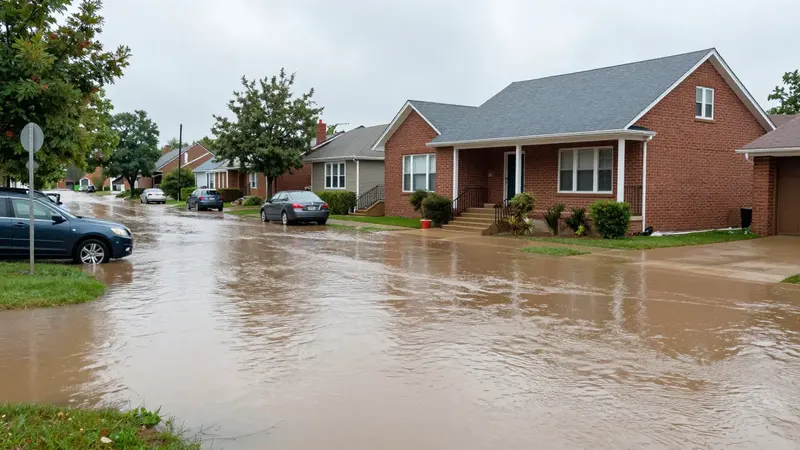
Cumberland County has shared in FEMA major disaster declarations for Hurricane Isabel, Tropical Storm Frances, the April 2011 tornado outbreak, Hurricane Matthew and Hurricane Florence. Add roughly 44.6 inches of yearly precipitation and humid summer thunderstorms, and local homes face a steady mix of roof leaks, rising water and wind damage.
We are a referral service for property owners around Fort Bragg and the Sandhills, not the company that does the work. Ring (866) 937-3230 and we'll try to reach an independent restoration contractor serving Cumberland County, though availability is never assured. Our how-it-works page and referral disclosure cover the details.
Sandhills weather: hurricanes, tornadoes and Cape Fear flooding
Fayetteville sits at about 223 feet on the western edge of the Coastal Plain. The 202-mile Cape Fear River passes by on its way to the Atlantic, and Cross Creek rises on the west side of town before flowing into it. When tropical systems dump heavy rain upstream, these waterways can rise into nearby low ground.
Wikipedia records an EF3 tornado striking the city on April 16, 2011, during the largest tornado outbreak in North Carolina history, and notes that Hurricane Helene in 2024 caused severe flooding in parts of the city. FEMA declarations for the county also cover Isabel (2003), Frances (2004), Matthew (2016) and Florence (2018).
Everyday leaks behind Cumberland County drywall
Not every water problem starts with a storm. Long, hot summers keep air conditioners running for months, and a clogged condensate line or rusted drain pan can quietly soak a ceiling or subfloor. Water heaters, dishwasher lines and toilet supply hoses are other usual suspects, along with roof leaks that show up only during wind-driven rain.
When you need water damage restoration in Fayetteville, a typical contractor will track down the leak, use a moisture meter to map wet areas, extract water, remove what can't be saved and dry the structure with commercial equipment. See water extraction and water damage restoration.
Federal disaster declarations that included Cumberland County
FEMA records show Cumberland County was included in 5 major disaster declarations for weather or fire events from 2000 through 2026 (4 hurricane, 1 severe storm, by FEMA incident type). Declarations are made at the county level, so they do not mean every neighborhood in Fayetteville was affected. The most recent:
- 2018 – Hurricane Florence (DR-4393)
- 2016 – Hurricane Matthew (DR-4285)
- 2011 – Severe Storms, Tornadoes, and Flooding (DR-1969)
- 2004 – Tropical Storm Frances (DR-1546)
- 2003 – Hurricane Isabel (DR-1490)
Source: OpenFEMA Disaster Declarations Summaries, retrieved 2026-10-10. Counts include major disaster (DR) declarations with hurricane, flood, severe storm, tropical storm, fire, tornado, coastal storm, winter or ice storm, mudslide and dam/levee incident types.
Water, fire or storm damage in Fayetteville?
Call (866) 937-3230 and tell us what happened at your Fayetteville property.
Soot, smoke odor and firefighting water
Fayetteville knows fire well; its 1831 Great Fire destroyed hundreds of homes and businesses along with the old State House. Today most fire losses happen one house at a time, but the cleanup is still involved: soot settles on every surface, odor clings to fabrics and insulation, and water from hoses soaks into floors.
Contractors commonly secure openings, remove debris, clean or inventory contents, wipe down soot and run deodorization equipment. Our guides to fire damage cleanup and soot removal go deeper.
After the river rises or the wind tears through
River and creek flooding brings in water that should be treated as contaminated, so soaked drywall, insulation and carpet usually come out rather than being dried in place. Crawl spaces need special attention, since mud and moisture left underneath can feed mold and rot for months.
Wind events such as the 2011 tornado and hurricane bands can strip shingles, drop pines on roofs and break windows. Tarping, board-up and debris removal usually happen first. Explore hurricane damage cleanup and flood cleanup.
Humidity and hidden mold in Fayetteville homes
Summer humidity here can stay high for weeks, which lets mold take hold on wet drywall, wood framing or carpet pad faster than many people expect. Musty smells after a storm often point to moisture trapped in walls or under floors.
The EPA advises that homeowners can usually clean areas smaller than about 10 square feet, but larger growth, mold in ductwork, or contamination from floodwater or sewage should go to a professional who uses containment and air filtration. Read more on mold remediation.
Safety and paperwork checklist
- Call 911 for fire, injuries, gas leaks or downed lines.
- Follow evacuation orders from Cumberland County officials during river flooding.
- Keep out of floodwater and turn off power only if you can reach the panel safely.
- Photograph damage room by room and save damaged item lists.
- Talk to your insurer or agent; flood damage is often handled separately from homeowners coverage, so check your policy.
Then call (866) 937-3230 or browse our North Carolina pages.
Neighborhoods and nearby communities
Areas in and around Fayetteville that callers often mention include:
- Downtown
- Hay Street
- Campbelton
- Cross Creek
- Seventy-First Township
Nearby communities with their own pages (straight-line distance from Fayetteville):
- Hope Mills · 7 mi
- Spring Lake · 10 mi
- Dunn · 23 mi
- Southern Pines · 30 mi
- Lumberton · 31 mi
- Clinton · 32 mi
Fayetteville restoration FAQs
Does the Cape Fear River flood homes in Fayetteville?
The river and its tributaries, including Cross Creek, can rise when tropical systems bring heavy rain, and Hurricane Helene caused severe flooding in parts of the city in 2024. Risk depends heavily on your property's elevation and distance from the water. Check flood maps and stay alert to county warnings when storms approach.
Has a tornado ever hit the city?
Yes. An EF3 tornado struck on April 16, 2011, during North Carolina's largest recorded tornado outbreak. Cumberland County was later included in a FEMA declaration for those severe storms, tornadoes and flooding.
Why does my AC cause water damage?
Air conditioners pull a lot of moisture out of humid Sandhills air, and that water drains through a condensate line. If the line clogs or the pan rusts through, water can leak into ceilings or floors. Clearing the line each spring helps.
Can you help near Hope Mills or Spring Lake?
You can call about properties in nearby communities too. Whether an independent contractor can take the job depends on their schedule and service area, so we can't promise availability.
Does Fire & Water Energy send its own crew to Fayetteville jobs?
No. We take your call and try to match you with an independent restoration company. Always confirm the contractor's credentials and get the scope in writing.
Restoration guides
- Water Damage Restoration
- Water Extraction
- Fire Damage Cleanup
- Hurricane Damage Cleanup
- Flood Cleanup
- Mold Remediation